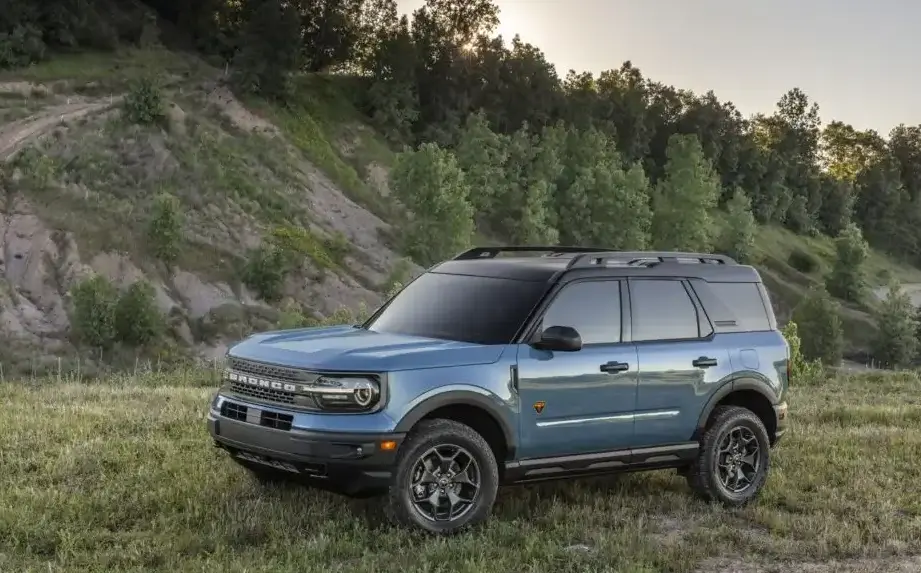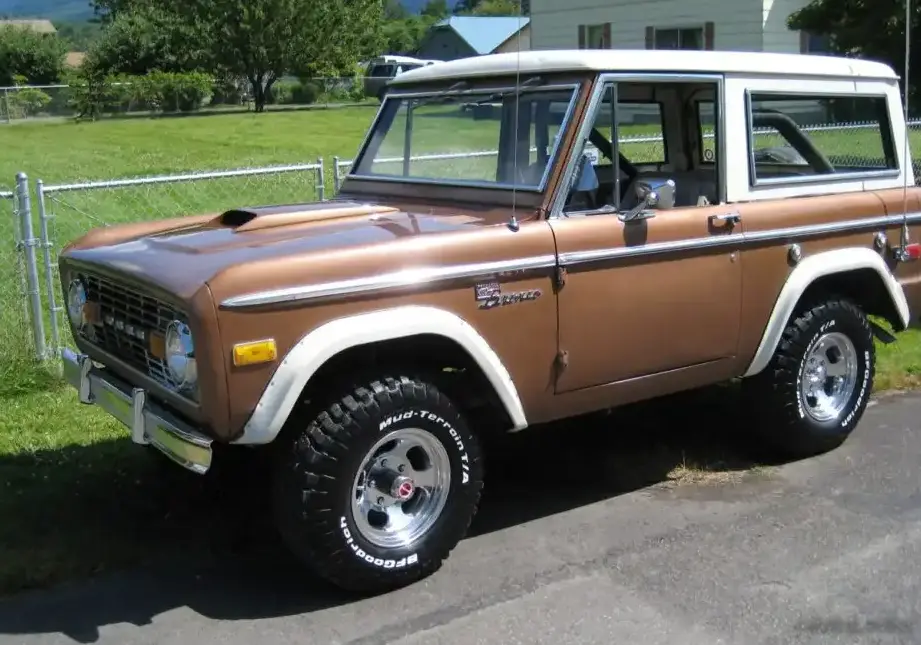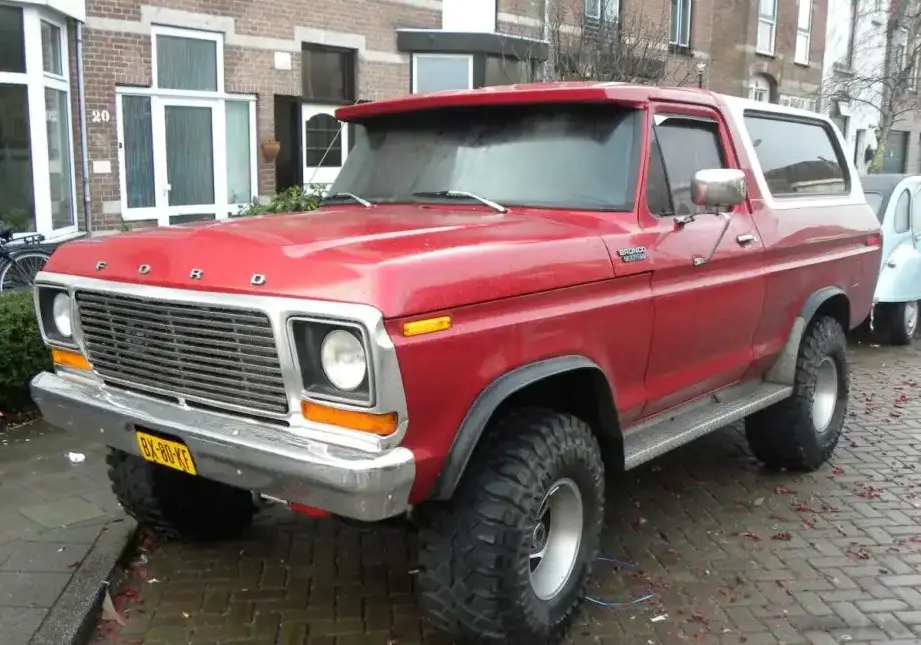
The Ford Bronco II 5.8 V8, produced for a limited run between 1978 and 1979, represents a unique and powerful offering within the first generation Bronco II lineup. Positioned as the top-tier performance variant, it combined the compact size of the Bronco II with the substantial power of Ford’s 351M V8 engine. This model aimed to provide a blend of off-road capability and on-road usability, appealing to drivers seeking a versatile and robust SUV. It was built on the Ford Bronco II platform, a shorter wheelbase version of the full-size Bronco, designed to compete with emerging compact SUVs like the Chevrolet Blazer and Jeep Cherokee.
Technical Specifications
| Brand | Ford |
| Model | Bronco II |
| Type (Engine) | 5.8 V8 (160 Hp) AWD Automatic |
| Start of production | 1978 |
| End of production | 1979 |
| Powertrain Architecture | Internal Combustion engine |
| Body type | SUV |
| Seats | 5 |
| Doors | 3 |
| Fuel Type | Petrol (Gasoline) |
| Weight-to-power ratio | 13.2 kg/Hp, 75.7 Hp/tonne |
| Weight-to-torque ratio | 6 kg/Nm, 167.8 Nm/tonne |
| Power | 160 Hp @ 3800 rpm |
| Power per litre | 27.7 Hp/l |
| Torque | 355 Nm @ 2200 rpm (261.83 lb.-ft. @ 2200 rpm) |
| Engine layout | Front, Longitudinal |
| Engine Model/Code | 351M |
| Engine displacement | 5766 cm3 (351.86 cu. in.) |
| Number of cylinders | 8 |
| Engine configuration | V-engine |
| Cylinder Bore | 101.6 mm (4 in.) |
| Piston Stroke | 88.9 mm (3.5 in.) |
| Compression ratio | 8:1 |
| Number of valves per cylinder | 2 |
| Fuel injection system | Carburettor |
| Engine aspiration | Naturally aspirated engine |
| Valvetrain | OHV |
| Kerb Weight | 2115 kg (4662.78 lbs.) |
| Max. weight | 2720 kg (5996.57 lbs.) |
| Max load | 605 kg (1333.8 lbs.) |
| Length | 4580 mm (180.31 in.) |
| Width | 2014 mm (79.29 in.) |
| Height | 1918 mm (75.51 in.) |
| Wheelbase | 2642 mm (104.02 in.) |
| Front track | 1630 mm (64.17 in.) |
| Rear (Back) track | 1640 mm (64.57 in.) |
| Ride height (ground clearance) | 198 mm (7.8 in.) |
| Drag coefficient (Cd) | 0.65 |
| Minimum turning circle (turning diameter) | 10.8 m (35.43 ft.) |
| Drive wheel | All wheel drive (4×4) |
| Number of gears and type of gearbox | 3 gears, automatic transmission |
| Front brakes | Disc |
| Rear brakes | Drum |
| Tires size | 235/75 R15 |
| Wheel rims size | 15 |
Powertrain & Engine Architecture
The heart of the Bronco II 5.8 V8 is the 351M (5.8-liter) Ford Windsor V8 engine. This engine, introduced in 1970, was known for its robust construction and ample low-end torque. The 351M featured a 90-degree V8 configuration with overhead valve (OHV) valvetrain and two valves per cylinder. Fuel delivery was managed by a two-barrel carburetor, a common setup for the era. While not the most technologically advanced fuel system, it was reliable and relatively easy to maintain. The engine produced 160 horsepower at 3800 rpm and 355 Nm (261.83 lb-ft) of torque at 2200 rpm. This torque output was particularly beneficial for off-road driving and towing. The engine was mounted longitudinally in the chassis. The automatic transmission was a three-speed unit, providing smooth but not particularly quick shifts. It was chosen to complement the engine’s torque curve, prioritizing usability over outright performance.
Driving Characteristics
The Bronco II 5.8 V8 offered a distinct driving experience compared to the smaller-engined versions. The V8 provided significantly more acceleration and effortless cruising speed. However, the combination of the engine’s weight and the three-speed automatic transmission meant that it wasn’t as nimble or fuel-efficient as the inline-six or smaller V6 options. The automatic transmission’s gear ratios were geared towards maximizing torque for off-road situations and towing, rather than achieving optimal fuel economy or rapid acceleration. The 4×4 system, while capable, was a part-time system requiring manual engagement of the front axle. This setup provided good off-road traction but wasn’t designed for continuous all-wheel-drive operation.
Equipment & Trim Levels
The 5.8 V8 Bronco II was generally offered with a higher level of standard equipment than the base models. This typically included features like upgraded interior trim, a more comfortable seating configuration, and potentially heavier-duty suspension components. While specific trim levels varied, the V8 model often included features like a woodgrain interior accents, upgraded carpeting, and a more comprehensive gauge package. Optional extras could include power steering, air conditioning, and a rear window defroster. The interior was fairly basic by modern standards, but functional and durable.
Chassis & Braking
The Bronco II chassis was a body-on-frame construction, providing a robust and durable platform for off-road use. The front suspension utilized independent coil springs, while the rear suspension employed leaf springs. The 5.8 V8 models often featured heavier-duty springs and shocks to handle the increased weight of the engine. Braking was accomplished via disc brakes on the front wheels and drum brakes on the rear. While adequate for the time, the braking system lacked the sophistication of modern systems. The relatively short wheelbase of the Bronco II contributed to a somewhat choppy ride, particularly on rough roads.
Market Reception & Comparison
The Bronco II 5.8 V8 was generally well-received by enthusiasts who appreciated its combination of power and off-road capability. However, its relatively short production run and higher price point limited its overall sales volume. Critics noted the V8’s fuel consumption was significantly higher than the smaller-engined models. Compared to the inline-six and V6 versions, the 5.8 V8 offered a substantial performance advantage but at the cost of fuel economy and refinement. The V8 was also more complex and potentially more expensive to maintain than the simpler engines.
Legacy
The Ford Bronco II 5.8 V8 has become a sought-after vehicle among collectors and enthusiasts. Its rarity and unique powertrain configuration make it a desirable classic SUV. While the 351M engine is known for its durability, regular maintenance is crucial to prevent issues such as carburetor problems and oil leaks. Parts availability is generally good, but some specific components may be difficult to find. Today, these Bronco IIs represent a piece of automotive history, offering a glimpse into a time when SUVs were built for ruggedness and capability rather than luxury and convenience. The 5.8 V8 variant, in particular, stands out as a powerful and distinctive example of the first-generation Bronco II.