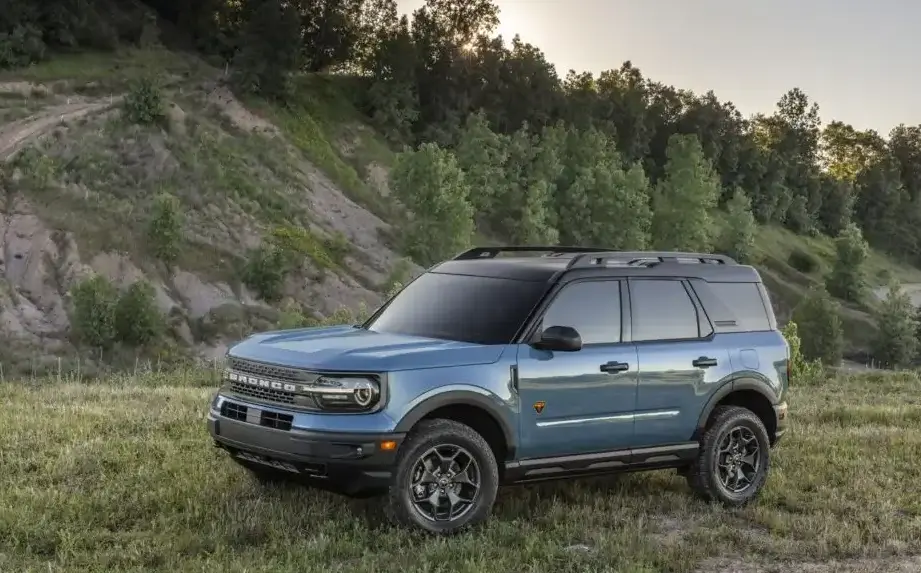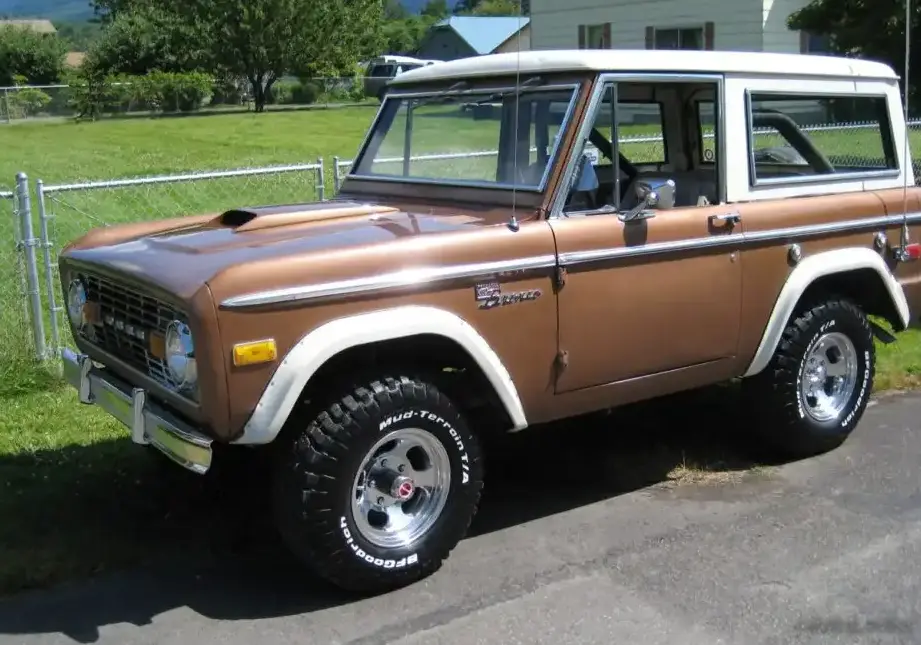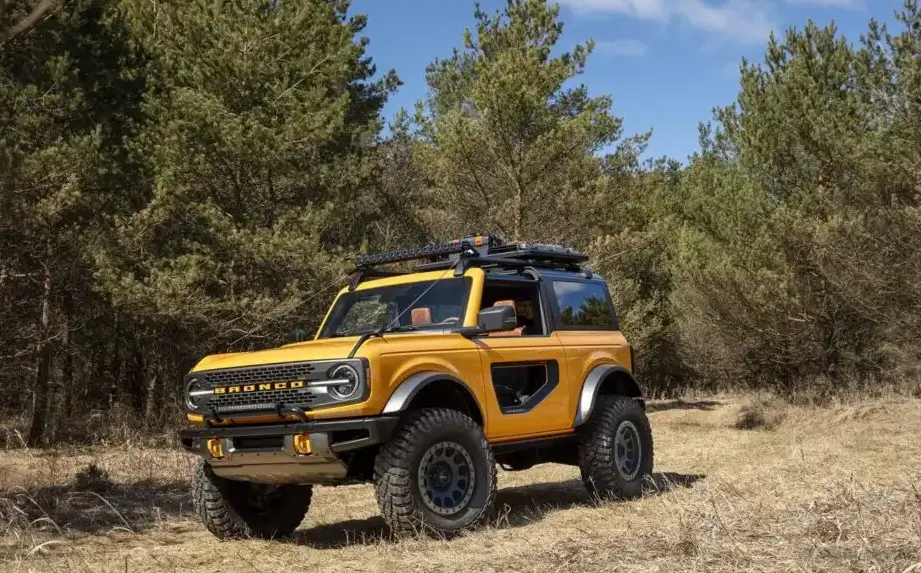
The Ford Bronco VI Two-Door 2.7 EcoBoost V6 4×4 Automatic, introduced for the 2021 model year, represents a significant revival of the iconic Bronco nameplate. This variant is positioned as a high-performance offering within the sixth generation Bronco lineup, designed to appeal to enthusiasts seeking substantial power and off-road capability in a relatively compact package. The Bronco VI platform (often referred to as the J6 platform) marked Ford’s return to the dedicated off-road SUV segment, competing directly with the Jeep Wrangler. This particular configuration, combining the 2.7-liter EcoBoost V6 engine with a ten-speed automatic transmission and a four-wheel-drive system, quickly became a popular choice for buyers prioritizing both on-road refinement and rugged trail performance.
Technical Specifications
| Brand | Ford |
| Model | Bronco |
| Generation | Bronco VI Two-door |
| Type (Engine) | 2.7 EcoBoost V6 (310 Hp) 4×4 Automatic |
| Start of production | 2020 year |
| Powertrain Architecture | Internal Combustion engine |
| Body type | Off-road vehicle, Cabriolet, SUV |
| Seats | 4 |
| Doors | 2 |
| Fuel consumption (economy) – urban | 13.1 l/100 km (18 US mpg, 21.6 UK mpg, 7.6 km/l) |
| Fuel consumption (economy) – extra urban | 11.8 l/100 km (19.9 US mpg, 23.9 UK mpg, 8.5 km/l) |
| Fuel consumption (economy) – combined | 12.4 l/100 km (19 US mpg, 22.8 UK mpg, 8.1 km/l) |
| Fuel Type | Petrol (Gasoline) |
| Power | 310 Hp |
| Torque | 542 Nm (399.76 lb.-ft.) |
| Engine layout | Front, Longitudinal |
| Number of cylinders | 6 |
| Engine configuration | V-engine |
| Fuel injection system | Direct injection and Multi-port manifold injection |
| Engine aspiration | Twin-Turbo, Intercooler |
| Valvetrain | DOHC, Ti-VCT |
| Engine oil capacity | 6.6 l (6.97 US qt | 5.81 UK qt) |
| Coolant | 11.7 l (12.36 US qt | 10.29 UK qt) |
| Max. roof load | 204 kg (449.74 lbs.) |
| Permitted trailer load with brakes (12%) | 1588 kg (3500.94 lbs.) |
| Length | 4412-4440 mm (173.7 – 174.8 in.) |
| Width with mirrors folded | 1928-2014 mm (75.91 – 79.29 in.) |
| Height | 1826-1966 mm (71.89 – 77.4 in.) |
| Wheelbase | 2550 mm (100.39 in.) |
| Front track | 1651-1699 mm (65 – 66.89 in.) |
| Rear (Back) track | 1651-1699 mm (65 – 66.89 in.) |
| Ride height (ground clearance) | 213-295 mm (8.39 – 11.61 in.) |
| Approach angle | 35.5-43.2° |
| Departure angle | 29.8-37.2° |
| Ramp-over (brakeover) angle | 21.1-29.0° |
| Wading depth | 851 mm (33.5 in.) |
| Drivetrain Architecture | The Internal combustion engine (ICE) drives the rear wheels permanently, and the front wheels are driven through an electrically or mechanically operated clutch if necessary. |
| Drive wheel | All wheel drive (4×4) |
| Number of gears and type of gearbox | 10 gears, automatic transmission |
| Front suspension | Double wishbone |
| Rear suspension | Dependent spring suspension with transverse stabilizer |
| Assisting systems | ABS (Anti-lock braking system) |
| Steering type | Steering rack and pinion |
| Power steering | Electric Steering |
| Tires size | 255/70 R16; 255/75 R17; 265/70 R17; 285/70 R17; 315/70 R17; 255/70 R18 |
| Wheel rims size | 7J x 16; 7.5J x 17; 8J x 17; 8.5J x 17; 7.5J x 18 |
Powertrain & Engine Architecture
At the heart of this Bronco variant lies the 2.7-liter EcoBoost V6 engine, internally designated as the “Jaguar” engine by Ford. This engine utilizes a compact graphite iron (CGI) block for increased strength and reduced weight. It features twin turbochargers, direct fuel injection, and Ford’s Ti-VCT (Twin Independent Variable Camshaft Timing) technology. The Ti-VCT system optimizes valve timing for improved performance and fuel efficiency across the engine’s operating range. The 2.7L EcoBoost produces 310 horsepower and 400 lb-ft of torque, providing ample power for both on-road driving and challenging off-road conditions. Paired with this engine is a sophisticated 10-speed automatic transmission, co-developed with General Motors. This transmission offers a wide gear ratio spread, contributing to both acceleration and fuel economy. The transmission is programmed with off-road specific shift points and features a manual shift mode for driver control.
Driving Characteristics
The 2.7 EcoBoost engine delivers a noticeable step up in performance compared to the base 2.3-liter EcoBoost four-cylinder engine. Acceleration is brisk, and the engine provides strong pulling power at all speeds. The ten-speed automatic transmission shifts smoothly and responsively, and the wide gear ratios help to keep the engine in its optimal power band. While the 2.7L isn’t as fuel-efficient as the four-cylinder, the added performance is often considered a worthwhile trade-off by enthusiasts. The four-wheel-drive system, featuring a two-speed transfer case, provides excellent traction in a variety of off-road conditions. The Bronco’s independent front suspension and solid rear axle contribute to a comfortable ride on paved roads, while also providing the articulation needed for serious off-roading.
Equipment & Trim Levels
The 2.7 EcoBoost engine was typically offered on higher trim levels of the Bronco, such as the Big Bend, Black Diamond, and Wildtrak. Standard features included automatic climate control, an 8-inch touchscreen infotainment system with Apple CarPlay and Android Auto compatibility, and a suite of advanced driver-assistance systems (ADAS) such as forward collision warning and automatic emergency braking. Higher trims added features like leather upholstery, a premium sound system, and a larger 12-inch touchscreen. Optional extras included a hardtop roof, a winch, and various off-road packages with features like rock rails and upgraded suspension components.
Chassis & Braking
The Bronco VI utilizes a fully boxed frame construction, providing a solid foundation for both on-road and off-road driving. The front suspension features independent double-wishbone construction, while the rear suspension employs a solid axle with coil springs. The braking system consists of ventilated disc brakes at all four corners, providing ample stopping power. ABS (Anti-lock Braking System) is standard. The Bronco’s high ground clearance and robust suspension allow it to navigate challenging terrain with ease. Stabilizer bars are fitted to both the front and rear axles to reduce body roll during cornering.
Market Reception & Comparison
The Bronco VI, and particularly the 2.7 EcoBoost variant, received overwhelmingly positive reviews from automotive critics. The engine was praised for its power and refinement, and the ten-speed automatic transmission was lauded for its smooth operation. Compared to the base 2.3-liter EcoBoost engine, the 2.7L offered a significant performance upgrade, making it a popular choice for buyers who planned to do a lot of off-roading or towing. Fuel economy was generally considered acceptable for a vehicle of this type, although it was lower than that of the four-cylinder engine. The Bronco’s primary competitor, the Jeep Wrangler, offered a similar level of off-road capability, but the Bronco was often praised for its more comfortable ride and modern interior.
Legacy
The 2.7 EcoBoost V6 engine has proven to be a reliable and durable powertrain in the Bronco VI. While some early production models experienced minor software glitches, these were quickly addressed by Ford through software updates. The engine’s robust construction and advanced technology contribute to its long-term reliability. On the used car market, Broncos equipped with the 2.7 EcoBoost engine generally command a higher price than those with the 2.3-liter engine, reflecting the engine’s superior performance and desirability. The Bronco VI 2.7 EcoBoost has quickly established itself as a modern classic, appealing to a new generation of off-road enthusiasts while honoring the legacy of the original Bronco.