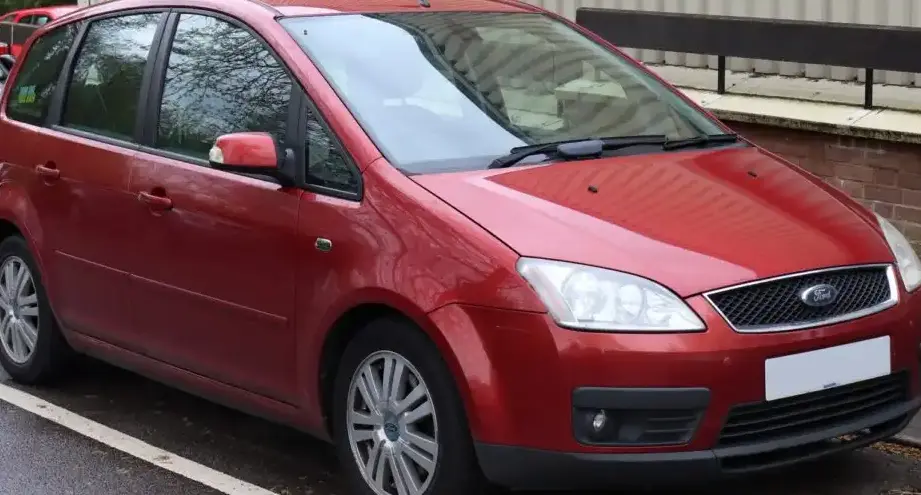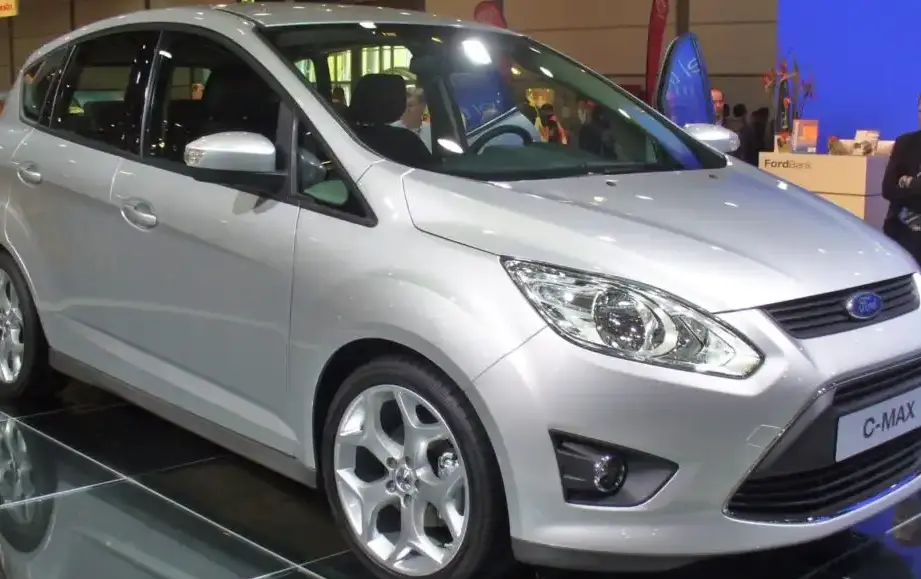
The Ford C-MAX II 2.0 Duratorq TDCi (140 hp) with a DPF and automatic transmission was a popular variant of Ford’s compact multi-purpose vehicle (MPV) sold primarily in Europe from 2010 to 2015. Positioned as a mid-range offering within the C-MAX II lineup, it aimed to balance fuel efficiency, practicality, and a more relaxed driving experience compared to lower-powered or manual transmission models. This version played a significant role in Ford’s strategy to offer a diverse range of C-MAX options to cater to varying customer needs, particularly those prioritizing comfort and ease of use.
Technical Specifications
| Brand | Ford |
| Model | C-MAX |
| Generation | C-MAX II |
| Type (Engine) | 2.0 Duratorq TDCi (140 Hp) DPF Automatic |
| Start of production | 2010 |
| End of production | 2015 |
| Powertrain Architecture | Internal Combustion engine |
| Body type | MPV |
| Seats | 5 |
| Doors | 5 |
| Fuel consumption (urban) | 6.9 l/100 km (34.1 US mpg, 40.9 UK mpg, 14.5 km/l) |
| Fuel consumption (extra urban) | 4.7 l/100 km (50 US mpg, 60.1 UK mpg, 21.3 km/l) |
| Fuel consumption (combined) | 5.5 l/100 km (42.8 US mpg, 51.4 UK mpg, 18.2 km/l) |
| CO2 emissions | 144 g/km |
| Fuel Type | Diesel |
| Acceleration 0 – 100 km/h | 10.1 sec |
| Acceleration 0 – 62 mph | 10.1 sec |
| Acceleration 0 – 60 mph | 9.6 sec |
| Maximum speed | 200 km/h (124.27 mph) |
| Emission standard | Euro 5 |
| Weight-to-power ratio | 10.5 kg/Hp, 94.9 Hp/tonne |
| Weight-to-torque ratio | 4.6 kg/Nm, 216.9 Nm/tonne |
| Power | 140 Hp @ 3750 rpm |
| Power per litre | 70.1 Hp/l |
| Torque | 320 Nm @ 1750-2750 rpm (236.02 lb.-ft. @ 1750-2750 rpm) |
| Engine layout | Front, Transverse |
| Engine Model/Code | UFDB |
| Engine displacement | 1997 cm3 (121.86 cu. in.) |
| Number of cylinders | 4 |
| Engine configuration | Inline |
| Cylinder Bore | 85 mm (3.35 in.) |
| Piston Stroke | 88 mm (3.46 in.) |
| Compression ratio | 16:1 |
| Number of valves per cylinder | 4 |
| Fuel injection system | Diesel Commonrail |
| Engine aspiration | Turbocharger, Intercooler |
| Valvetrain | DOHC |
| Engine oil capacity | 5.7 l (6.02 US qt | 5.02 UK qt) |
| Coolant | 8.5 l (8.98 US qt | 7.48 UK qt) |
| Kerb Weight | 1475 kg (3251.82 lbs.) |
| Max. weight | 2050 kg (4519.48 lbs.) |
| Max load | 575 kg (1267.66 lbs.) |
| Trunk (boot) space – minimum | 432 l (15.26 cu. ft.) |
| Trunk (boot) space – maximum | 1723 l (60.85 cu. ft.) |
| Fuel tank capacity | 60 l (15.85 US gal | 13.2 UK gal) |
| Max. roof load | 75 kg (165.35 lbs.) |
| Permitted trailer load with brakes (12%) | 1500 kg (3306.93 lbs.) |
| Permitted trailer load without brakes | 750 kg (1653.47 lbs.) |
| Permitted towbar download | 75 kg (165.35 lbs.) |
| Length | 4380 mm (172.44 in.) |
| Width | 1828 mm (71.97 in.) |
| Width with mirrors folded | 1858 mm (73.15 in.) |
| Width including mirrors | 2067 mm (81.38 in.) |
| Height | 1626 mm (64.02 in.) |
| Wheelbase | 2648 mm (104.25 in.) |
| Front track | 1544-1559 mm (60.79 – 61.38 in.) |
| Rear (Back) track | 1554-1569 mm (61.18 – 61.77 in.) |
| Minimum turning circle | 10.7 m (35.1 ft.) |
| Drivetrain Architecture | The Internal combustion engine (ICE) drives the front wheels of the vehicle. |
| Drive wheel | Front wheel drive |
| Number of gears and type of gearbox | 6 gears, automatic transmission |
| Front suspension | Independent, type McPherson with coil spring and anti-roll bar |
| Rear suspension | Independent multi-link spring suspension with stabilizer |
| Front brakes | Ventilated discs |
| Rear brakes | Disc |
| Assisting systems | ABS (Anti-lock braking system) |
| Steering type | Steering rack and pinion |
| Power steering | Electric Steering |
| Tires size | 205/55 R16; 215/55 R16 |
| Wheel rims size | 6.5J x 16; 7.0J x 16 |
INTRODUCTION
The Ford C-MAX II, launched in 2010, represented Ford’s second generation of the compact MPV. Built on the global C-platform (also known as the 1HX0/A3 platform, shared with the Ford Focus), the C-MAX II aimed to offer a more refined and versatile package than its predecessor. The 2.0 Duratorq TDCi 140 hp automatic variant was introduced as a key model within the range, targeting buyers who desired a balance of performance, fuel economy, and the convenience of an automatic gearbox. Production of this specific configuration continued until 2015, when the C-MAX range underwent further revisions.
Powertrain & Engine Architecture
At the heart of the C-MAX II 2.0 Duratorq TDCi was the UFDB engine, a 1997cc four-cylinder diesel engine. This engine was part of Ford’s Duratorq family, known for its robust construction and relatively good fuel efficiency. The UFDB featured a common-rail direct injection system, delivering fuel at high pressure for optimized combustion. A turbocharger with an intercooler was employed to boost power and torque. The engine utilized a double overhead camshaft (DOHC) valvetrain with four valves per cylinder, enhancing breathing and contributing to its power output. The automatic transmission was a six-speed torque converter unit, chosen for its smooth operation and suitability for everyday driving. This transmission was designed to work seamlessly with the engine’s torque curve, providing comfortable acceleration and relaxed cruising.
Driving Characteristics
The 140 hp 2.0 Duratorq TDCi automatic C-MAX offered a noticeably more relaxed driving experience compared to the lower-powered 1.6-liter diesel variants. While not a performance-oriented vehicle, the engine provided sufficient power for everyday driving, including highway overtaking and carrying a full load of passengers. The automatic transmission, while smooth, did result in a slight performance deficit compared to the six-speed manual version, as some power was lost through the torque converter. Gear ratios were tuned for fuel efficiency and comfort, prioritizing smooth transitions over aggressive acceleration. The 0-60 mph time of around 9.6 seconds and a top speed of 124 mph were respectable for the class, but not particularly exciting. The engine’s peak torque of 320 Nm (236 lb-ft) available from 1750-2750 rpm provided good in-gear acceleration, making it easy to maintain speed on inclines or when fully loaded.
Equipment & Trim Levels
The 2.0 Duratorq TDCi automatic typically came equipped as a mid-range trim level, often designated as ‘Titanium’ or similar. Standard features generally included air conditioning, alloy wheels, a CD/radio system with auxiliary input, electric front and rear windows, and remote central locking. Higher trim levels offered options such as a panoramic sunroof, leather upholstery, heated front seats, and a more advanced infotainment system with navigation. Safety features included ABS, electronic stability control (ESP), and multiple airbags. Interior upholstery was typically cloth, with higher trims offering partial leather options. The dashboard layout was functional and user-friendly, with a clear instrument cluster and logically arranged controls.
Chassis & Braking
The C-MAX II utilized an independent front suspension with McPherson struts and a coil spring/anti-roll bar setup. The rear suspension employed an independent multi-link system, also with a stabilizer bar, designed to provide a comfortable ride and good handling characteristics. Braking was handled by ventilated discs on the front wheels and solid discs on the rear. ABS (Anti-lock Braking System) was standard, enhancing braking performance and stability, particularly on slippery surfaces. The steering was electrically assisted, providing a light and precise feel. The suspension tuning was geared towards comfort, prioritizing ride quality over sporty handling, although the C-MAX remained reasonably stable and predictable in corners.
Market Reception & Comparison
The Ford C-MAX II 2.0 Duratorq TDCi automatic received generally positive reviews from automotive critics. It was praised for its comfortable ride, spacious interior, and fuel efficiency. However, some reviewers noted that the automatic transmission could feel slightly sluggish at times, and the engine, while adequate, wasn’t particularly exciting. Compared to the 1.6-liter diesel versions, the 2.0-liter offered a noticeable improvement in performance, making it a better choice for those who frequently carried passengers or drove on highways. Against competitors like the Volkswagen Touran and Renault Scenic, the C-MAX II was considered a strong contender, offering a good balance of practicality, comfort, and value. Fuel economy was a key selling point, with combined figures around 5.5 l/100 km (42.8 US mpg) being competitive for the segment.
Legacy
The Ford C-MAX II 2.0 Duratorq TDCi automatic has proven to be a relatively reliable vehicle in the used car market. The Duratorq engine is known for its durability, and the automatic transmission, while not without its potential issues, generally holds up well with regular maintenance. Common issues reported by owners include diesel particulate filter (DPF) problems, particularly on vehicles used primarily for short journeys, and occasional issues with the electronic parking brake. However, overall, the C-MAX II 2.0 TDCi automatic remains a popular choice for buyers seeking a practical, fuel-efficient, and comfortable MPV. Its blend of features and affordability continues to make it a viable option in the used car market today.