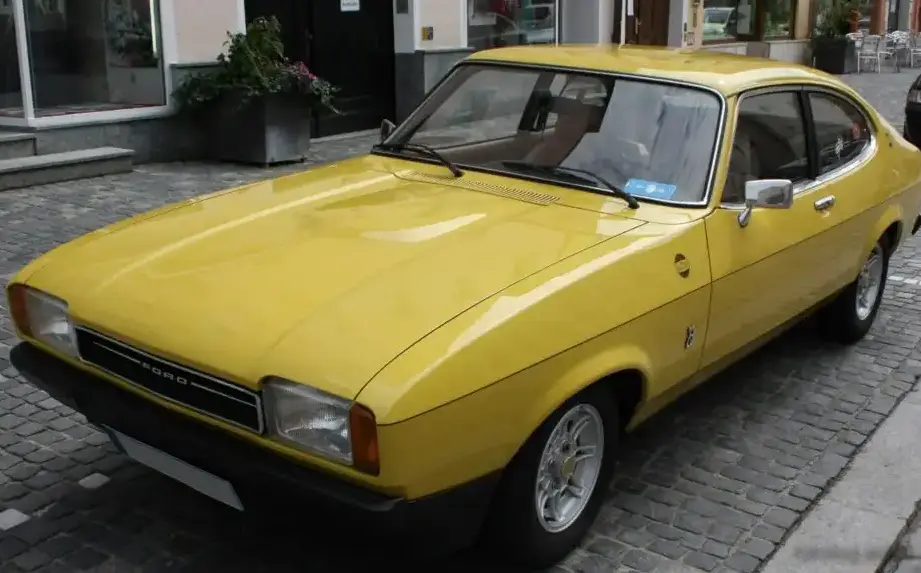
The Ford Capri II 1.3, produced between 1974 and 1977, represented the entry point into the second generation of Ford’s iconic coupe. Part of the GECP series, this variant played a crucial role in making the Capri accessible to a wider audience, particularly in the European market where it competed with vehicles like the Opel Manta and the Vauxhall Firenza. While often overshadowed by its more powerful siblings, the 1.3-liter Capri II offered a blend of style, affordability, and reasonable fuel economy, making it a popular choice for first-time car buyers and those seeking a practical yet sporty vehicle.
Technical Specifications
| Brand | Ford |
| Model | Capri |
| Generation | Capri II (GECP) |
| Type (Engine) | 1.3 (54 Hp) |
| Start of Production | 1974 |
| End of Production | 1977 |
| Powertrain Architecture | Internal Combustion Engine |
| Body Type | Coupe |
| Fuel Type | Petrol (Gasoline) |
| Power | 54 Hp |
| Engine Aspiration | Naturally Aspirated |
Powertrain & Engine Architecture
The heart of the Capri II 1.3 was the Ford Essex engine, specifically the 1300cc variant. This engine, designated as the 1300 pre-crossflow, was a four-cylinder unit utilizing a cast iron block and cylinder head. It featured a single overhead camshaft (SOHC) operating a two-valve per cylinder configuration. Fuel delivery was managed by a single downdraft carburetor, typically a Ford 32 DFEV, providing a relatively simple and reliable fuel system. The engine’s modest 54 horsepower output at 5,000 rpm and 72 lb-ft of torque at 3,000 rpm were a direct result of its small displacement and basic engine management system. The Capri II 1.3 was exclusively offered with a four-speed manual transmission, as an automatic transmission wasn’t available with this engine option. This transmission was a standard, non-synchronized unit, reflecting the era’s engineering practices and contributing to the car’s affordability.
Driving Characteristics
The driving experience in the Capri II 1.3 was characterized by its light weight and nimble handling. While not a performance machine, the 1.3-liter engine provided adequate power for everyday driving, particularly in urban and suburban environments. Acceleration was modest, with a 0-60 mph time estimated around 16-18 seconds. The four-speed manual transmission required deliberate shifting, and the lack of power meant that frequent downshifts were necessary when tackling hills or overtaking. The gear ratios were relatively tall, prioritizing fuel economy over outright performance. Compared to the larger-engined Capri II models (such as the 1.6 or 2.0-liter versions), the 1.3 felt noticeably slower and less refined. However, its lighter weight contributed to better fuel economy and a more forgiving handling balance, making it a more approachable car for novice drivers.
Equipment & Trim Levels
The Capri II 1.3 typically represented the base trim level within the Capri II range. Standard equipment was relatively sparse, focusing on essential features. The interior generally featured vinyl upholstery, a basic instrument cluster with speedometer and fuel gauge, and minimal brightwork. Options were available to upgrade the interior, including cloth upholstery, a radio, and a heated rear window. Exterior features typically included steel wheels with hubcaps, chrome bumpers, and basic lighting. The Capri II 1.3 was often seen as a blank canvas for personalization, with many owners adding aftermarket accessories such as alloy wheels, spoilers, and upgraded audio systems. The overall aesthetic was functional and stylish, embodying the design trends of the 1970s.
Chassis & Braking
The Capri II utilized a rear-wheel-drive layout with a MacPherson strut front suspension and a leaf spring rear suspension. The 1.3-liter model benefited from a relatively lightweight chassis, contributing to its nimble handling. Braking was initially equipped with drum brakes on all four wheels, although later models often featured front disc brakes as standard. The braking system was adequate for the car’s performance capabilities, but lacked the stopping power of more modern vehicles. Steering was a recirculating ball system, providing a relatively direct feel but lacking the precision of rack-and-pinion steering. The suspension setup prioritized ride comfort over outright handling performance, resulting in a slightly softer and more forgiving ride quality.
Market Reception & Comparison
The Capri II 1.3 received mixed reviews from automotive critics. While praised for its affordability and stylish design, it was often criticized for its lack of power and basic interior. Compared to its rivals, such as the Opel Manta and Vauxhall Firenza, the Capri II 1.3 offered a similar level of practicality and affordability. However, the Manta and Firenza often boasted more powerful engine options and a slightly more refined interior. In terms of fuel economy, the Capri II 1.3 performed reasonably well, achieving around 30-35 mpg in typical driving conditions. Reliability was generally good, although the carburetor-based fuel system required periodic maintenance. The Capri II 1.3 appealed to a specific segment of the market – those seeking an affordable and stylish coupe without the expense of the higher-powered models.
Legacy
The Ford Capri II 1.3, while not the most sought-after variant, holds a significant place in automotive history as an accessible and stylish coupe of its era. Today, surviving examples are becoming increasingly collectible, particularly those in original condition. The 1300cc engine, while modest in performance, is known for its durability and relative simplicity, making it a relatively easy engine to maintain. The Capri II 1.3’s legacy lies in its ability to bring the Capri experience to a wider audience, establishing the model as a cultural icon of the 1970s. In the used car market, prices for well-maintained Capri II 1.3 models have been steadily increasing, reflecting the growing appreciation for classic Ford coupes. It remains a popular choice for classic car enthusiasts and those seeking a nostalgic driving experience.