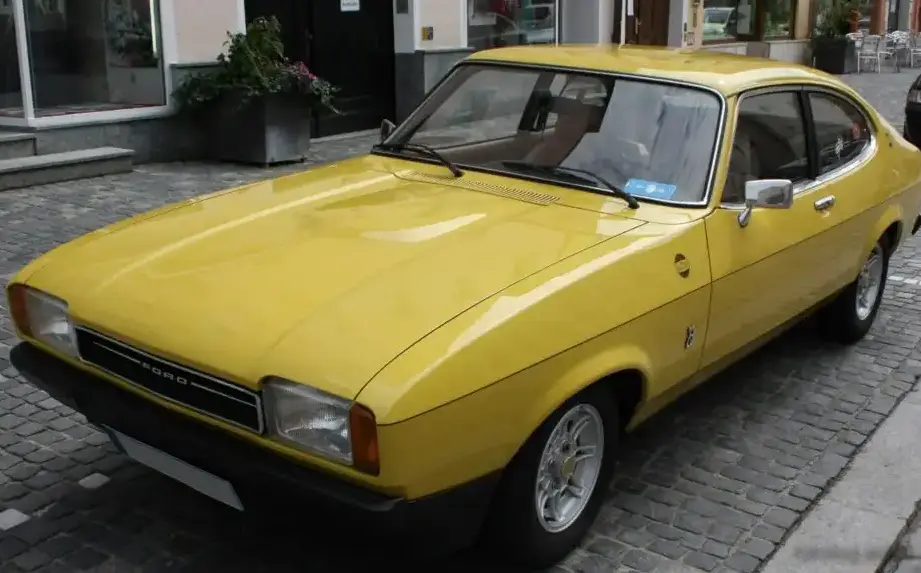
The Ford Capri II 1.6, produced between 1974 and 1977, represented the entry point into the second generation of Ford’s iconic coupe. Positioned as the most affordable Capri II variant, it aimed to deliver stylish motoring to a broader audience. Falling within the GECP chassis code designation, this model played a crucial role in maintaining the Capri’s popularity in the European market, offering a balance between aesthetics, practicality, and running costs. It was a direct response to changing market demands and increasing fuel prices, offering a more economical alternative to the larger-engined Capri models. The Capri II, as a whole, built upon the success of the original Capri, refining the design and improving the overall driving experience.
Technical Specifications
| Brand | Ford |
| Model | Capri |
| Generation | Capri II (GECP) |
| Type (Engine) | 1.6 (68 Hp) |
| Start of Production | 1974 |
| End of Production | 1977 |
| Powertrain Architecture | Internal Combustion Engine |
| Body Type | Coupe |
| Fuel Type | Petrol (Gasoline) |
| Power | 68 Hp |
| Engine Aspiration | Naturally Aspirated |
Powertrain & Engine Architecture
The Capri II 1.6 was powered by the Ford Essex engine, specifically the 1600cc version. This engine, internally designated as the ‘Kent’ series, was a four-cylinder, inline configuration. It featured a single overhead camshaft (SOHC) and a two-barrel carburetor, providing a relatively simple and robust fuel delivery system. The engine’s 68 horsepower output at approximately 5,000 rpm, and 98 lb-ft of torque at 3,000 rpm, was modest by contemporary standards, but sufficient for comfortable cruising and everyday driving. The engine block was cast iron, contributing to its durability, while the cylinder head was made of aluminum alloy. The 1.6L engine was paired exclusively with a four-speed manual transmission in most markets, though a three-speed automatic transmission was offered as an optional extra, albeit less common. The automatic transmission, a Ford-built unit, was geared towards providing smooth, effortless operation, prioritizing comfort over outright performance. The engine’s design prioritized reliability and ease of maintenance, making it a popular choice for drivers seeking a practical and affordable coupe.
Driving Characteristics
The driving experience in the Capri II 1.6 was characterized by its comfortable ride and predictable handling. The 68 horsepower engine provided adequate acceleration for typical road conditions, but it wasn’t designed for spirited performance. Acceleration from 0 to 60 mph took around 14-15 seconds, and the top speed was approximately 90 mph. The four-speed manual transmission offered a reasonable level of control, allowing drivers to make the most of the engine’s power band. The optional automatic transmission, while providing convenience, noticeably dulled acceleration and responsiveness. The Capri II’s suspension, featuring independent front suspension and a live rear axle with leaf springs, provided a good balance between comfort and handling. Steering was relatively light, making it easy to maneuver in urban environments. Compared to the Capri II 2.0L or 3.0L models, the 1.6L felt noticeably less powerful, particularly when fully loaded or tackling steep inclines. However, its lighter weight contributed to slightly better fuel economy and improved handling in slower corners.
Equipment & Trim Levels
The Capri II 1.6 typically came with a fairly basic level of equipment, reflecting its position as the entry-level model. Standard features included cloth upholstery, a basic instrument panel with speedometer, fuel gauge, and temperature gauge, and manually operated windows and door locks. The interior was functional and reasonably well-appointed, though it lacked the luxurious touches found in higher-spec Capri models. Optional extras included a vinyl roof, upgraded interior trim, a radio, and, as mentioned, the three-speed automatic transmission. The exterior styling was consistent across the Capri II range, but the 1.6L models often featured smaller wheels and simpler trim details compared to the more powerful variants. The dashboard layout was straightforward, with all essential controls within easy reach of the driver. The Capri II 1.6 was often seen as a blank canvas for personalization, with many owners adding aftermarket accessories to enhance its appearance and functionality.
Chassis & Braking
The Capri II 1.6 utilized a robust chassis construction, based on a monocoque body shell. The front suspension employed independent wishbones and coil springs, providing a comfortable ride and good handling characteristics. The rear suspension featured a live axle with leaf springs, a common setup for Ford vehicles of the era. Braking was initially provided by front disc brakes and rear drum brakes. Later models saw the introduction of rear disc brakes on some trims, but the 1.6L typically retained the drum brake setup to keep costs down. The braking system was hydraulically operated, providing adequate stopping power for everyday driving. Steering was a recirculating ball system, offering a reasonable level of precision and feedback. The Capri II’s chassis was designed to provide a stable and predictable driving experience, even when fully loaded. Stabilizer bars were fitted to both the front and rear axles to reduce body roll during cornering.
Market Reception & Comparison
The Capri II 1.6 was generally well-received by critics as an affordable and stylish coupe. It was praised for its comfortable ride, predictable handling, and relatively low running costs. However, its modest performance was often cited as a drawback, particularly when compared to the more powerful Capri II variants. Fuel economy was a strong point, averaging around 28-32 mpg, which was competitive for the time. Reliability was generally good, although the engine’s carburetor required periodic adjustment and maintenance. Compared to the Capri II 2.0L, the 1.6L offered a significant price advantage, but at the expense of performance. The 2.0L provided a noticeable increase in power and torque, making it a more enjoyable driving experience. The Capri II 3.0L, with its V6 engine, was in a different league altogether, offering significantly higher performance and a more luxurious driving experience, but at a considerably higher price point. The 1.6L appealed to buyers who prioritized affordability and practicality over outright performance.
Legacy
The Capri II 1.6, while not the most sought-after variant, has developed a loyal following among classic car enthusiasts. Its simplicity and reliability make it a relatively easy car to maintain and restore. The engine, while not particularly powerful, is known for its durability and longevity. Today, the Capri II 1.6 can be found in varying conditions, with well-maintained examples commanding reasonable prices in the used car market. Parts availability is generally good, although some specific trim pieces can be difficult to find. The Capri II 1.6 represents a significant piece of automotive history, embodying the spirit of 1970s coupe design and offering a nostalgic driving experience. It remains a popular choice for those seeking a classic Ford coupe that is both affordable and enjoyable to drive.