Technical Specifications
| Brand | Ford |
| Model | Escape |
| Generation | Escape I |
| Type | 3.0 i V6 24V XLT 4WD (203 Hp) |
| Start of production | 2000 |
| End of production | 2007 |
| Powertrain Architecture | Internal Combustion engine |
| Body type | SUV |
| Seats | 5 |
| Doors | 5 |
| Fuel consumption (urban) | 13.1 l/100 km (18 US mpg, 21.6 UK mpg) |
| Fuel consumption (extra urban) | 10.2 l/100 km (23.1 US mpg, 27.7 UK mpg) |
| Fuel Type | Petrol (Gasoline) |
| Acceleration 0 – 100 km/h | 8.8 sec |
| Acceleration 0 – 62 mph | 8.8 sec |
| Acceleration 0 – 60 mph | 8.4 sec |
| Maximum speed | 175 km/h (108.74 mph) |
| Weight-to-power ratio | 7.9 kg/Hp |
| Weight-to-torque ratio | 5.9 kg/Nm |
| Power | 203 Hp @ 5750 rpm |
| Torque | 271 Nm @ 4500 rpm (199.88 lb.-ft. @ 4500 rpm) |
| Engine layout | Front, Transverse |
| Engine displacement | 2976 cm3 (181.61 cu. in.) |
| Number of cylinders | 6 |
| Engine configuration | V-engine |
| Cylinder Bore | 89 mm (3.5 in.) |
| Piston Stroke | 79.5 mm (3.13 in.) |
| Compression ratio | 10:1 |
| Number of valves per cylinder | 4 |
| Fuel injection system | Multi-port manifold injection |
| Engine aspiration | Naturally aspirated engine |
| Valvetrain | DOHC |
| Engine oil capacity | 5.7 l (6.02 US qt | 5.02 UK qt) |
| Coolant capacity | 10 l (10.57 US qt | 8.8 UK qt) |
| Kerb Weight | 1600 kg (3527.4 lbs.) |
| Max. weight | 2054 kg (4528.29 lbs.) |
| Max load | 454 kg (1000.9 lbs.) |
| Trunk (boot) space – minimum | 934 l (32.98 cu. ft.) |
| Trunk (boot) space – maximum | 1835 l (64.8 cu. ft.) |
| Fuel tank capacity | 62 l (16.38 US gal | 13.64 UK gal) |
| Length | 4394 mm (172.99 in.) |
| Width | 1780 mm (70.08 in.) |
| Height | 1702 mm (67.01 in.) |
| Wheelbase | 2619 mm (103.11 in.) |
| Front track | 1554 mm (61.18 in.) |
| Rear track | 1550 mm (61.02 in.) |
| Drive wheel | All wheel drive (4×4) |
| Number of gears | 4 |
| Gearbox type | Automatic transmission |
| Front suspension | Coil spring |
| Rear suspension | Coil spring |
| Front brakes | Ventilated discs |
| Rear brakes | Drum |
| Assisting systems | ABS (Anti-lock braking system), Hydraulic Power Steering |
| Tires size | 235/70 R16 |
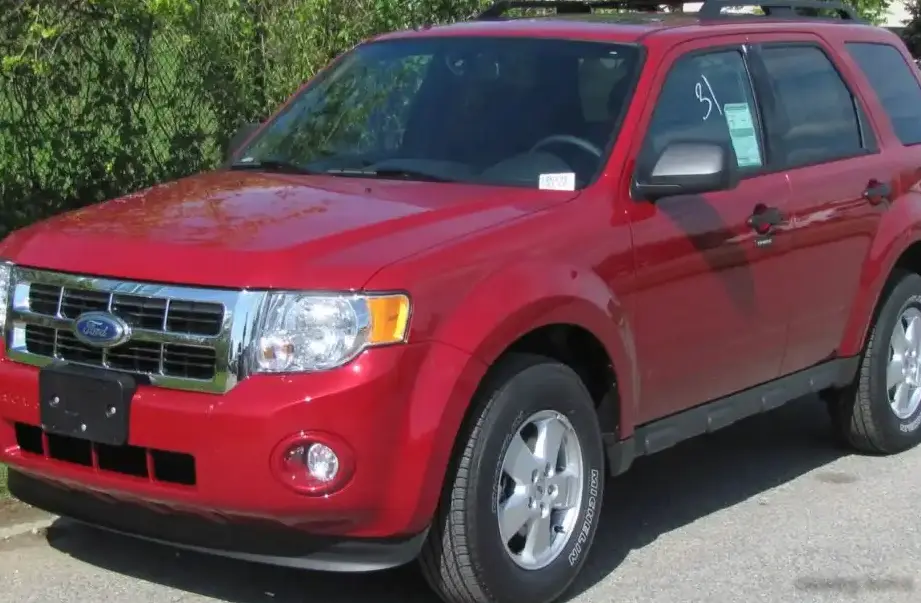
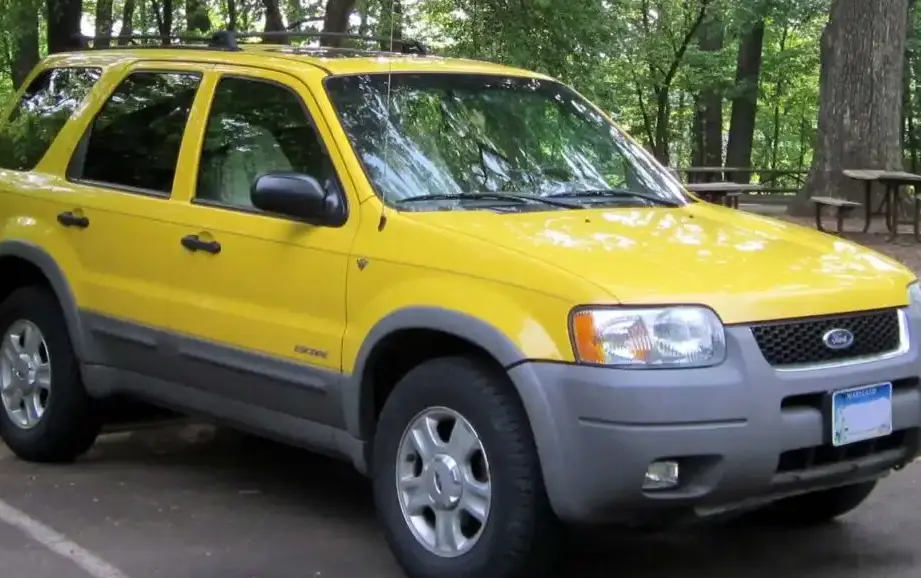
The Ford Escape 3.0L V6 4WD, produced between 2000 and 2007, was a key variant in the first generation of Ford’s popular compact SUV. Built on the 2619mm wheelbase of the U503 platform, it offered a step up in performance and refinement compared to the base 2.0L four-cylinder models. The XLT trim level, as featured in this variant, added a number of convenience and comfort features, making it a well-rounded option for families and individuals alike. This model aimed to provide a comfortable and capable SUV experience, appealing to those who needed the added traction of all-wheel drive without the size and fuel consumption of larger SUVs.
Powertrain & Engine Architecture
At the heart of the Escape 3.0L XLT 4WD lies the Ford Vulcan V6 engine. This 2976cc (181.61 cubic inch) engine, designated as the 3.0L, is a naturally aspirated, 60-degree V6 featuring a cast iron block and aluminum cylinder heads. It utilizes a multi-port fuel injection system and a double overhead camshaft (DOHC) valvetrain with four valves per cylinder. The engine produced 203 horsepower at 5750 rpm and 271 Nm (199.88 lb-ft) of torque at 4500 rpm. The engine’s relatively simple design contributed to its reliability, but also limited its overall efficiency compared to more modern engines. The engine was mated to a four-speed automatic transmission, a common choice for American market SUVs at the time. This transmission was designed for smooth operation and ease of use, prioritizing comfort over outright performance. The 4WD system was an automatic, on-demand system, engaging the rear wheels when slippage was detected.
Driving Characteristics
The 3.0L V6 and four-speed automatic combination in the Escape provided adequate, though not exhilarating, performance. Acceleration from 0-60 mph took approximately 8.4 seconds, making it competitive with other SUVs in its class. The automatic transmission’s gear ratios were tuned for everyday drivability, prioritizing smooth shifts and fuel economy over aggressive acceleration. Compared to the manual transmission equipped Escapes, the automatic version felt slightly less responsive, but offered greater convenience, especially in stop-and-go traffic. The all-wheel-drive system provided enhanced traction in inclement weather conditions, making it a more confident vehicle in snow or on slippery roads. However, the added weight of the 4WD system and automatic transmission did slightly impact fuel economy compared to the front-wheel-drive models.
Equipment & Trim Levels
The XLT trim level of the Ford Escape 3.0L 4WD came standard with a number of features designed to enhance comfort and convenience. These included air conditioning, power windows and locks, a CD player, and cloth upholstery. Optional extras included a sunroof, upgraded audio system, leather upholstery, and alloy wheels. The interior layout was functional and straightforward, with a focus on practicality. The dashboard featured a simple instrument cluster and easy-to-use controls. The rear seats offered ample legroom for passengers, and the split-folding rear seats allowed for increased cargo space when needed.
Chassis & Braking
The Ford Escape utilized a traditional body-on-frame construction, providing a robust and durable platform. The suspension consisted of coil springs at all four corners, offering a comfortable ride quality. The front suspension featured independent control arms, while the rear suspension utilized a multi-link setup. Braking duties were handled by ventilated discs at the front and drum brakes at the rear. Anti-lock braking system (ABS) was standard, enhancing safety and control during emergency braking situations. The steering was hydraulic power-assisted, providing a light and responsive feel. The 235/70 R16 tires offered a good balance of ride comfort and handling.
Market Reception & Comparison
The Ford Escape 3.0L V6 4WD was generally well-received by critics and consumers alike. It was praised for its spacious interior, comfortable ride, and capable all-wheel-drive system. However, some reviewers noted that the engine could feel underpowered when fully loaded or when climbing steep hills. Compared to the base 2.0L four-cylinder models, the 3.0L V6 offered a significant improvement in performance, but at the cost of slightly lower fuel economy. Compared to other SUVs in its class, such as the Honda CR-V and Toyota RAV4, the Escape offered a more affordable price point and a more traditional SUV feel. Reliability was generally good, although some owners reported issues with the automatic transmission over the long term.
Legacy
The first-generation Ford Escape, including the 3.0L V6 4WD variant, proved to be a successful model for Ford, helping to establish the company as a major player in the compact SUV segment. The Vulcan V6 engine, while not particularly advanced, was known for its durability and relatively low maintenance costs. Today, these Escapes can be found on the used car market at affordable prices. While they may not offer the latest technology or fuel efficiency, they remain a viable option for buyers seeking a reliable and capable SUV. The 4WD system continues to be a desirable feature, particularly in regions with harsh winters. However, potential buyers should be aware of the possibility of transmission issues and should have any prospective purchase thoroughly inspected by a qualified mechanic.