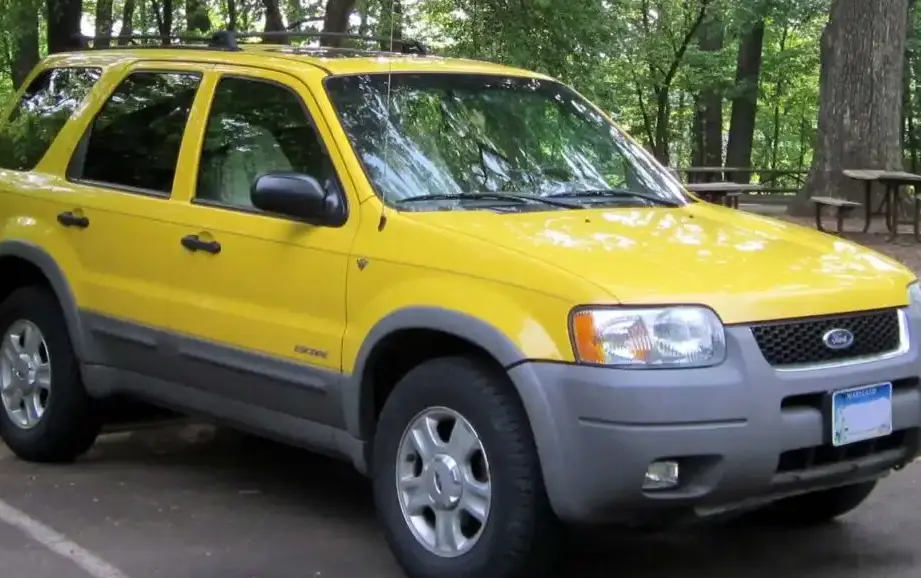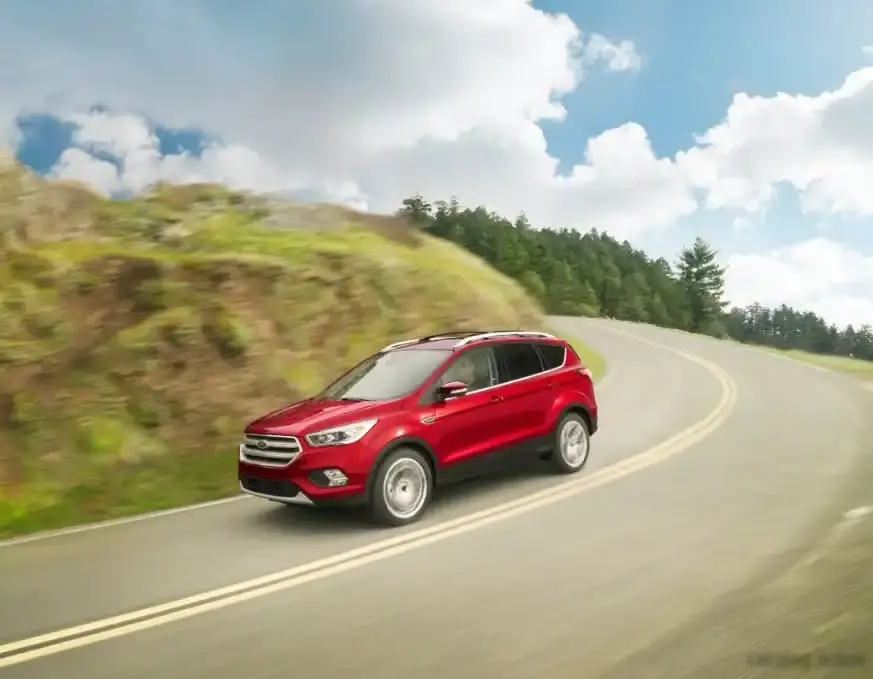
The Ford Escape III, specifically the facelifted version introduced in 2017, represented a significant update to Ford’s popular compact SUV. The 1.5 EcoBoost engine with 179 horsepower and a six-speed automatic transmission, coupled with all-wheel drive (4WD), was a mid-range offering within the Escape lineup for the 2017-2019 model years. This variant aimed to balance fuel efficiency with adequate performance for everyday driving, appealing to a broad segment of the SUV market. It sat between the base 2.5L naturally aspirated engine and the more powerful 2.0L EcoBoost options.
Technical Specifications
| Brand | Ford |
| Model | Escape |
| Generation | Escape III (facelift 2017) |
| Type (Engine) | 1.5 EcoBoost (179 Hp) 4WD Automatic |
| Start of production | 2017 |
| End of production | 2019 |
| Powertrain Architecture | Internal Combustion engine |
| Body type | SUV |
| Seats | 5 |
| Doors | 5 |
| Fuel consumption (urban) | 10.7 l/100 km (22 US mpg, 26.4 UK mpg, 9.3 km/l) |
| Fuel consumption (extra urban) | 8.4 l/100 km (28 US mpg, 33.6 UK mpg, 11.9 km/l) |
| Fuel consumption (combined) | 9.8 l/100 km (24 US mpg, 28.8 UK mpg, 10.2 km/l) |
| Fuel Type | Petrol (Gasoline) |
| Weight-to-power ratio | 9.3 kg/Hp, 107.6 Hp/tonne |
| Weight-to-torque ratio | 6.9 kg/Nm, 144.2 Nm/tonne |
| Power | 179 Hp @ 6000 rpm |
| Power per litre | 119.4 Hp/l |
| Torque | 240 Nm @ 2500 rpm (177.01 lb.-ft. @ 2500 rpm) |
| Engine layout | Front, Transverse |
| Engine displacement | 1499 cm3 (91.47 cu. in.) |
| Number of cylinders | 4 |
| Engine configuration | Inline |
| Number of valves per cylinder | 4 |
| Fuel injection system | Direct injection |
| Engine aspiration | Turbocharger, Intercooler |
| Valvetrain | Ti-VCT |
| Engine oil capacity | 4.75 l (5.02 US qt | 4.18 UK qt) |
| Coolant capacity | 11.8 l (12.47 US qt | 10.38 UK qt) |
| Kerb Weight | 1664 kg (3668.49 lbs.) |
| Trunk (boot) space – minimum | 963 l (34.01 cu. ft.) |
| Trunk (boot) space – maximum | 1926 l (68.02 cu. ft.) |
| Fuel tank capacity | 59 l (15.59 US gal | 12.98 UK gal) |
| Permitted trailer load with brakes (12%) | 907 kg (1999.59 lbs.) |
| Length | 4524 mm (178.11 in.) |
| Width | 1839 mm (72.4 in.) |
| Width with mirrors folded | 1905 mm (75 in.) |
| Width including mirrors | 2078 mm (81.81 in.) |
| Height | 1684 mm (66.3 in.) |
| Wheelbase | 2690 mm (105.91 in.) |
| Front track | 1562 mm (61.5 in.) |
| Rear (Back) track | 1565 mm (61.61 in.) |
| Drive wheel | All wheel drive (4×4) |
| Number of gears and type of gearbox | 6 gears, automatic transmission SelectShift |
| Front suspension | Independent, type McPherson with coil spring and anti-roll bar |
| Rear suspension | Double wishbone |
| Front brakes | Ventilated discs |
| Rear brakes | Disc |
| Assisting systems | ABS (Anti-lock braking system) |
| Steering type | Steering rack and pinion |
| Power steering | Electric Steering |
| Tires size | 235/55 R17 |
| Wheel rims size | 17 |
INTRODUCTION
The 2017-2019 Ford Escape III facelift brought a refreshed look and updated technology to Ford’s popular compact SUV. The 1.5L EcoBoost engine, introduced with this facelift, was designed to offer a balance between fuel economy and performance. This particular configuration – the 1.5 EcoBoost paired with a six-speed automatic transmission and Ford’s intelligent 4WD system – was positioned as a versatile option for buyers seeking all-weather capability without sacrificing efficiency. It was a key component of Ford’s strategy to offer a diverse range of Escape models to cater to varying customer needs.
Powertrain & Engine Architecture
The heart of this Escape variant is the 1.5-liter EcoBoost inline-four cylinder engine. This engine, designated with various codes depending on the specific calibration, utilizes direct fuel injection and a single turbocharger with an intercooler to boost power and efficiency. The Ti-VCT (Twin Independent Variable Camshaft Timing) system optimizes valve timing for improved performance across the rev range. The engine produces 179 horsepower at 6000 rpm and 240 Nm (177 lb-ft) of torque at 2500 rpm. The six-speed “SelectShift” automatic transmission is designed for smooth and responsive shifting. While not offering the sportiness of a dual-clutch transmission, it provides adequate performance for daily driving and is known for its reliability. The 4WD system is an intelligent on-demand system, automatically engaging all four wheels when traction is needed, enhancing stability in slippery conditions.
Driving Characteristics
The 1.5 EcoBoost automatic Escape delivers a comfortable and predictable driving experience. Acceleration is adequate for merging onto highways and passing slower traffic, but it doesn’t offer the briskness of the 2.0L EcoBoost models. The six-speed automatic transmission is generally smooth, although some drivers may notice occasional hunting for the right gear, particularly during uphill climbs. The 4WD system provides enhanced traction in inclement weather, making it a suitable choice for regions with snow or rain. Compared to the manual transmission versions of the 1.5 EcoBoost, the automatic sacrifices some responsiveness, but gains in convenience. The gear ratios are tuned for fuel efficiency, prioritizing comfortable cruising over outright performance.
Equipment & Trim Levels
The 1.5 EcoBoost 4WD Automatic Escape typically came standard with features such as Ford’s SYNC infotainment system with a touchscreen display, Bluetooth connectivity, a rearview camera, and basic safety features like ABS and stability control. Higher trim levels, such as the SEL and Titanium, added features like leather upholstery, a power liftgate, a panoramic sunroof, and advanced driver-assistance systems like blind-spot monitoring and lane-keeping assist. Interior upholstery was typically cloth on the base models, with leather options available on higher trims. Dashboard configurations were relatively consistent across the lineup, with a focus on user-friendly controls and a modern aesthetic.
Chassis & Braking
The Escape III utilizes a front McPherson strut suspension and a rear independent double wishbone suspension. This setup provides a comfortable ride quality, absorbing bumps and irregularities in the road surface effectively. The 4WD models generally featured slightly stiffer spring rates to accommodate the added weight of the all-wheel-drive components. Braking duties are handled by ventilated discs up front and solid discs in the rear. ABS (Anti-lock Braking System) is standard, providing enhanced stopping power and control during emergency braking situations. The steering is electric power-assisted, offering a light and responsive feel.
Market Reception & Comparison
The 1.5 EcoBoost 4WD Automatic Escape was generally well-received by critics as a practical and fuel-efficient SUV. It offered a good balance of features and performance for the price. However, some reviewers noted that the engine could feel strained when fully loaded or climbing steep hills. Compared to the 2.5L naturally aspirated engine, the 1.5 EcoBoost offered significantly more power and better fuel economy. Compared to the 2.0L EcoBoost, it provided a more affordable entry point into the Escape lineup, albeit with less performance. Fuel economy figures were competitive within the compact SUV segment, averaging around 24 mpg combined.
Legacy
The 1.5 EcoBoost engine, while not without its quirks, has proven to be a relatively reliable powertrain when properly maintained. Common issues reported by owners include occasional oil consumption and potential problems with the turbocharger. However, these issues are not widespread and can often be addressed with routine maintenance and preventative care. On the used car market, the 2017-2019 Escape 1.5 EcoBoost 4WD Automatic represents a good value proposition, offering a comfortable and capable SUV at an affordable price point. Its blend of fuel efficiency, all-weather capability, and available features continues to make it a popular choice among used car buyers.