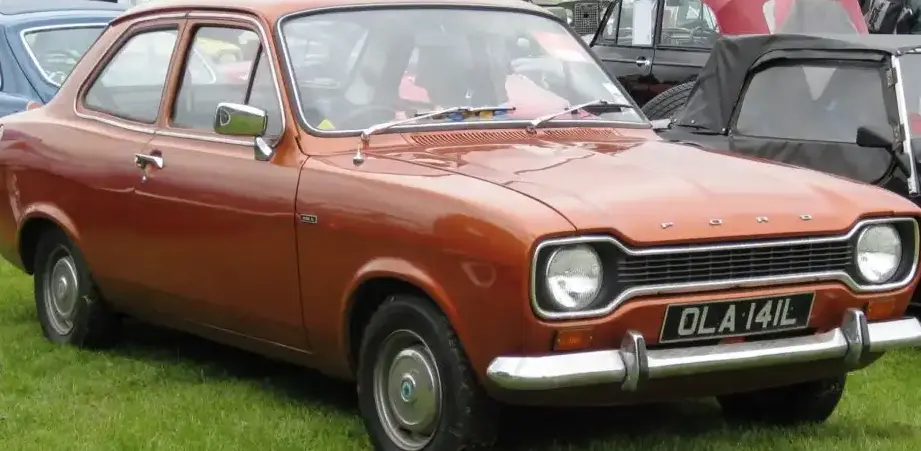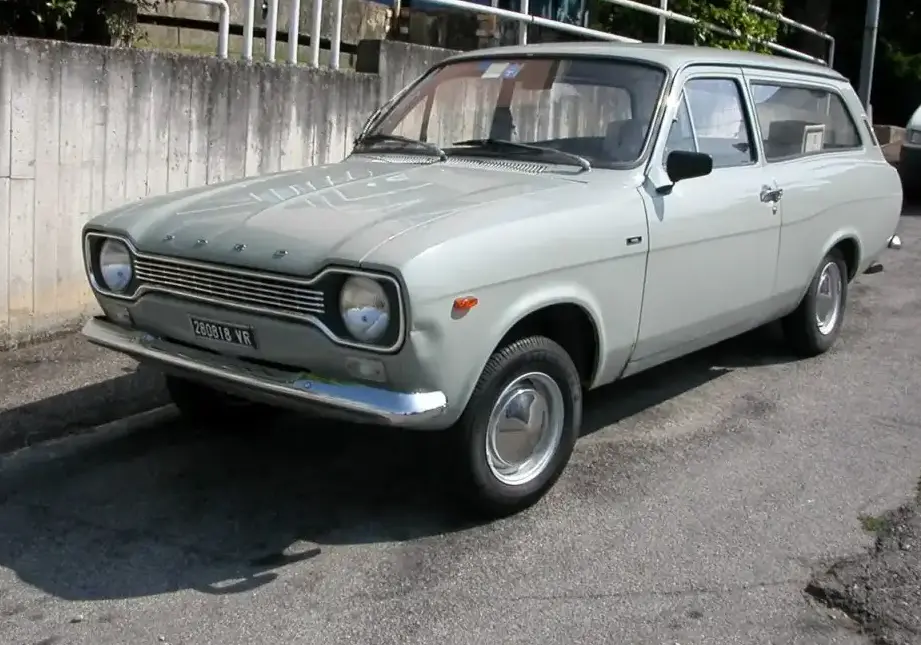
The Ford Escort II GT 1.8i Automatic, produced between 1991 and 1996, represented a performance-oriented variant within the North American Escort lineup. Positioned as a step up from the base models, it offered a larger engine and automatic transmission, appealing to buyers seeking a blend of practicality and spirited driving. This generation of Escort, built on the shared Mazda/Ford platform, aimed to provide a competitive offering in the compact car segment, particularly against Japanese imports. The GT trim, with its 1.8-liter engine, was intended to deliver a more engaging driving experience than the standard 1.9-liter offerings.
Technical Specifications
| Brand | Ford |
| Model | Escort |
| Generation | Escort II (USA) |
| Type | GT 1.8i Automatic |
| Start of production | 1991 |
| End of production | 1996 |
| Powertrain Architecture | Internal Combustion engine |
| Body type | Hatchback |
| Seats | 5 |
| Doors | 3 |
| Fuel Type | Petrol (Gasoline) |
| Maximum speed | 201 km/h (124.9 mph) |
| Weight-to-power ratio | 8.6 kg/Hp, 115.7 Hp/tonne |
| Weight-to-torque ratio | 7 kg/Nm, 142 Nm/tonne |
| Power | 128 Hp @ 6500 rpm |
| Power per litre | 69.6 Hp/l |
| Torque | 157 Nm @ 4500 rpm (115.8 lb.-ft. @ 4500 rpm) |
| Engine layout | Front, Transverse |
| Engine displacement | 1840 cm3 (112.28 cu. in.) |
| Number of cylinders | 4 |
| Engine configuration | Inline |
| Cylinder Bore | 83 mm (3.27 in.) |
| Piston Stroke | 85 mm (3.35 in.) |
| Compression ratio | 9:1 |
| Number of valves per cylinder | 4 |
| Fuel injection system | Multi-port manifold injection |
| Engine aspiration | Naturally aspirated engine |
| Valvetrain | DOHC |
| Engine oil capacity | 3.8 l (4.02 US qt | 3.34 UK qt) |
| Coolant | 6 l (6.34 US qt | 5.28 UK qt) |
| Kerb Weight | 1106 kg (2438.31 lbs) |
| Fuel tank capacity | 50 l (13.21 US gal | 11 UK gal) |
| Length | 4318 mm (170 in) |
| Width | 1694 mm (66.69 in) |
| Height | 1333 mm (52.48 in) |
| Wheelbase | 2500 mm (98.43 in) |
| Front track | 1435 mm (56.5 in) |
| Rear track | 1435 mm (56.5 in) |
| Drivetrain Architecture | The Internal combustion engine (ICE) drives the front wheels of the vehicle. |
| Drive wheel | Front wheel drive |
| Number of gears and type of gearbox | 4 gears, automatic transmission |
| Front suspension | Spring Strut |
| Rear suspension | Spring Strut |
| Front brakes | Ventilated discs |
| Rear brakes | Disc |
| Steering type | Steering rack and pinion |
| Power steering | Hydraulic Steering |
| Tires size | 185/60 R15 |
| Wheel rims size | 15 |
Powertrain & Engine Architecture
The heart of the Escort II GT 1.8i Automatic was the Ford Zetec 1.8-liter inline-four cylinder engine. This engine, internally designated as the F8DE, featured a dual overhead camshaft (DOHC) valvetrain and multi-port fuel injection. The 9:1 compression ratio was a compromise between performance and the fuel quality typically available in the US market. The Zetec engine was known for its relatively smooth operation and willingness to rev, a departure from some earlier Ford four-cylinder designs. Paired with this engine was a Ford-sourced 4-speed automatic transmission. This transmission, while providing convenience, wasn’t known for its particularly sporty shift characteristics. It was geared more towards comfortable cruising than aggressive acceleration. The automatic transmission was a key differentiator for this trim, as most Escort GT models were equipped with a 5-speed manual.
Driving Characteristics
The 128 horsepower and 115.8 lb-ft of torque delivered by the 1.8-liter engine provided adequate, though not overwhelming, performance. Acceleration from 0 to 60 mph was estimated to be around 9-10 seconds. The automatic transmission, while smooth, did detract from the overall driving experience compared to the manual transmission. Gear ratios were optimized for fuel economy and everyday drivability, rather than outright performance. The car felt reasonably nimble in city driving, but lacked the punch of the higher-output European Escort RS2000 models. The automatic transmission did make the car more accessible to a wider range of drivers, particularly those unfamiliar or uncomfortable with manual gearboxes.
Equipment & Trim Levels
The GT trim level included several features beyond the base Escort models. Standard equipment typically included power steering, upgraded interior trim, a better sound system, and alloy wheels. The interior featured cloth upholstery, and a relatively simple dashboard layout. Optional extras included air conditioning, a sunroof, and upgraded audio systems. The GT trim aimed to provide a more refined and comfortable interior experience compared to the more basic Escort models. The exterior was often distinguished by a small rear spoiler and unique badging.
Chassis & Braking
The Escort II utilized a relatively simple suspension setup, consisting of MacPherson strut front suspension and a twist-beam rear axle. The front suspension incorporated a stabilizer bar to reduce body roll. Braking duties were handled by ventilated discs at the front and solid discs at the rear. The braking system was adequate for the car’s weight and performance, but lacked the stopping power of more modern vehicles. The suspension tuning was geared towards providing a comfortable ride, rather than sharp handling. The relatively light curb weight of around 2438 lbs helped to offset the limitations of the suspension and braking systems.
Market Reception & Comparison
The Escort II GT 1.8i Automatic received mixed reviews. Critics generally praised the engine’s smoothness and willingness to rev, but noted that the automatic transmission detracted from the driving experience. Compared to the 5-speed manual GT models, the automatic version felt noticeably slower and less engaging. Fuel economy was reasonable for the time, averaging around 25-30 mpg in mixed driving. Reliability was generally good, although some owners reported issues with the automatic transmission over the long term. The 1.9-liter base engine Escorts offered better fuel economy, while the European-market Escort RS2000 provided significantly more performance, but were not officially sold in the US.
Legacy
The Ford Escort II GT 1.8i Automatic, while not a particularly rare or highly sought-after vehicle today, holds a nostalgic appeal for many enthusiasts. The Zetec engine is generally considered to be a durable and reliable unit, and parts availability remains relatively good. The automatic transmission, however, can be a potential weak point. Well-maintained examples can still provide reliable and affordable transportation. The Escort II GT represents a transitional period in Ford’s compact car history, bridging the gap between older, more basic designs and the more sophisticated models that followed. In the used car market, these Escorts are often found as affordable project cars or daily drivers for those seeking a classic Ford experience.