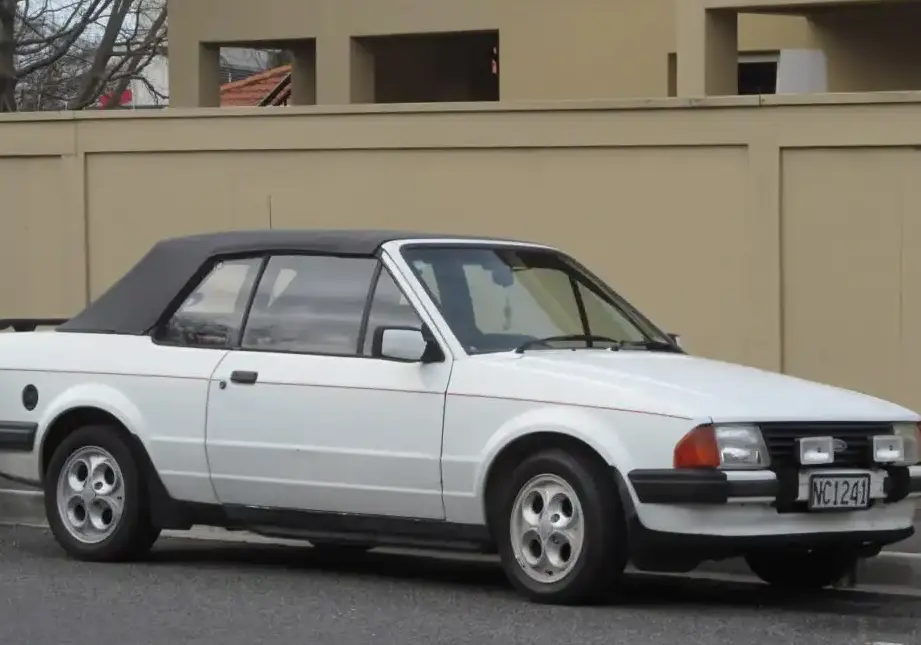
The Ford Escort III Cabriolet, produced between 1983 and 1985, represented Ford of Europe’s entry into the increasingly popular convertible market. Based on the Mk III Escort platform (internally designated ALD), the Cabriolet offered open-air motoring with the practicality and affordability that characterized the Escort range. The 1.6i variant, producing 105 horsepower, occupied a mid-range position within the Cabriolet lineup, offering a balance between performance and economy. It was positioned above the base 1.3L models and below the more powerful 1.6 Ghia trim. This generation of Escort was significant for its modern styling compared to its predecessors and its adoption of features previously reserved for more expensive vehicles.
Technical Specifications
| Brand | Ford |
| Model | Escort |
| Generation | Escort III Cabrio (ALD) |
| Type (Engine) | 1.6 i (105 Hp) |
| Start of production | 1983 |
| End of production | 1985 |
| Powertrain Architecture | Internal Combustion Engine |
| Body type | Cabriolet |
| Fuel Type | Petrol (Gasoline) |
| Power | 105 Hp |
| Engine Aspiration | Naturally Aspirated |
Powertrain & Engine Architecture
The 1.6-liter inline-four engine powering the Escort III Cabriolet 1.6i was a naturally aspirated unit, designated as the Valencia engine family. While variations existed, the version used in the 1983-1985 Cabriolet typically featured a single overhead camshaft (SOHC) design, operating two valves per cylinder. Fuel delivery was managed by Bosch K-Jetronic mechanical fuel injection, a system known for its reliability and relatively precise metering, though less sophisticated than later electronic fuel injection systems. The engine produced 105 horsepower at approximately 6000 rpm and 98 lb-ft of torque at 4000 rpm.
The transmission offered with the 1.6i was typically a four-speed manual gearbox, although a three-speed automatic transmission was also available, albeit less common. The automatic transmission, a Ford-sourced unit, was geared towards comfortable cruising rather than sporty performance. It featured a torque converter and a relatively simple design, prioritizing durability over outright efficiency. The engine block was constructed from cast iron, while the cylinder head was made of aluminum alloy, contributing to a reasonable weight for the time. The engine’s design emphasized reliability and ease of maintenance, reflecting Ford’s focus on producing a practical and affordable vehicle.
Driving Characteristics
The Escort III Cabriolet 1.6i offered a comfortable, if not particularly exhilarating, driving experience. The 105 horsepower engine provided adequate power for everyday driving, allowing for reasonably brisk acceleration. However, the Cabriolet’s added weight compared to the standard Escort saloon (sedan) – due to the reinforced chassis required for a convertible – noticeably impacted performance. The four-speed manual transmission allowed drivers to make the most of the engine’s powerband, while the optional automatic transmission prioritized ease of use.
The automatic transmission, while convenient, resulted in slower acceleration and a less engaging driving experience. Gear ratios were optimized for fuel economy and smooth cruising, rather than rapid gear changes. Steering was light and precise, making the car easy to maneuver in urban environments. The suspension, while comfortable, was not particularly sporty, resulting in some body roll during cornering. Overall, the 1.6i Cabriolet was best suited for relaxed open-top motoring rather than spirited driving.
Equipment & Trim Levels
The 1.6i Cabriolet came reasonably well-equipped for its time, though it wasn’t as luxurious as the top-of-the-line Ghia model. Standard features typically included cloth upholstery, a basic stereo system, and a heated rear window. The dashboard layout was functional and straightforward, with clearly labeled controls.
Optional extras included upgraded stereo systems, alloy wheels, and a more refined interior trim. The Ghia trim level, positioned above the 1.6i, added features such as leather upholstery, electric windows, and central locking. The 1.6i offered a good balance between affordability and comfort, making it a popular choice for buyers who wanted a stylish and practical convertible without breaking the bank.
Chassis & Braking
The Escort III Cabriolet featured a reinforced chassis compared to the standard saloon, necessary to maintain structural rigidity after the roof was removed. The front suspension utilized MacPherson struts, while the rear suspension employed a twist-beam axle. This setup provided a comfortable ride, but wasn’t particularly sophisticated.
Braking was typically accomplished with disc brakes on the front wheels and drum brakes on the rear. The braking system was adequate for normal driving conditions, but lacked the stopping power of more modern vehicles. Stabilizer bars were fitted to both the front and rear axles to reduce body roll during cornering. The overall chassis design prioritized affordability and practicality over outright performance.
Market Reception & Comparison
The Escort III Cabriolet was generally well-received by critics and buyers alike. It offered a stylish and affordable alternative to more expensive convertibles from manufacturers like BMW and Mercedes-Benz. The 1.6i variant was praised for its balance between performance and economy. However, some critics noted that the car’s added weight compared to the standard Escort negatively impacted handling.
Compared to the base 1.3L models, the 1.6i offered a noticeable improvement in performance. Compared to the 1.6 Ghia, the 1.6i was more affordable but lacked some of the luxury features. Fuel economy for the 1.6i was reasonable for the time, averaging around 28-32 mpg. Reliability was generally good, although the K-Jetronic fuel injection system could require occasional maintenance.
Legacy
The Ford Escort III Cabriolet, particularly the 1.6i variant, has become a popular classic car among enthusiasts. The Valencia engine, while not particularly powerful by modern standards, is known for its durability and relative simplicity. Parts availability remains reasonably good, making it relatively easy to maintain and repair.
Today, well-maintained examples of the Escort III Cabriolet 1.6i command a modest but growing price on the used car market. The car represents a significant piece of automotive history, marking Ford’s entry into the convertible market and offering a nostalgic glimpse into the 1980s. Its enduring appeal lies in its combination of style, affordability, and practicality, making it a cherished classic for many car enthusiasts.