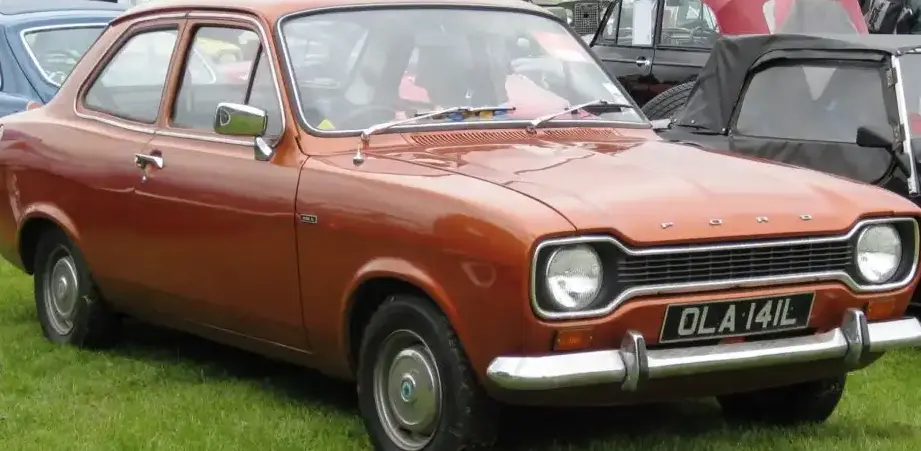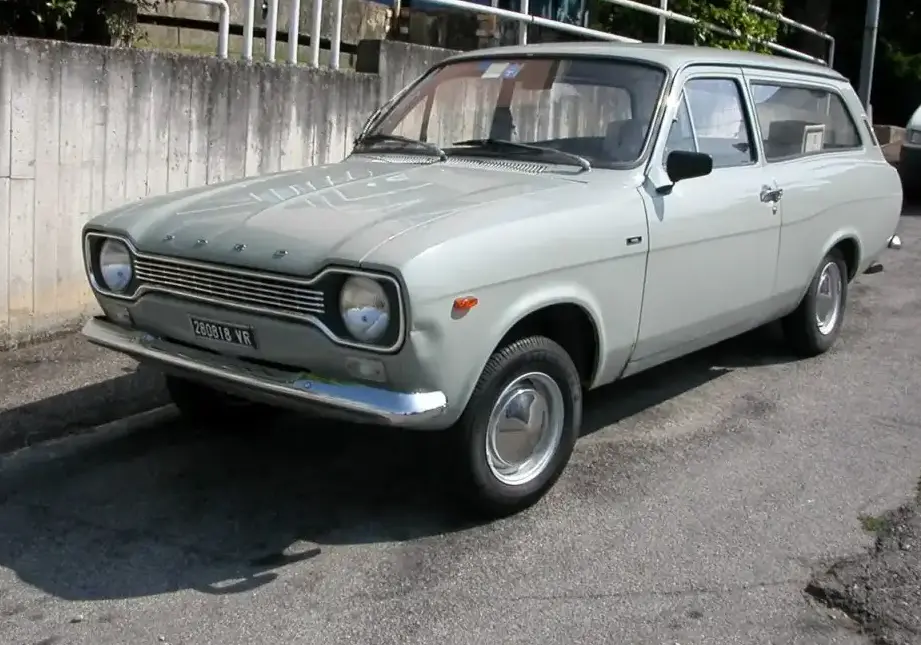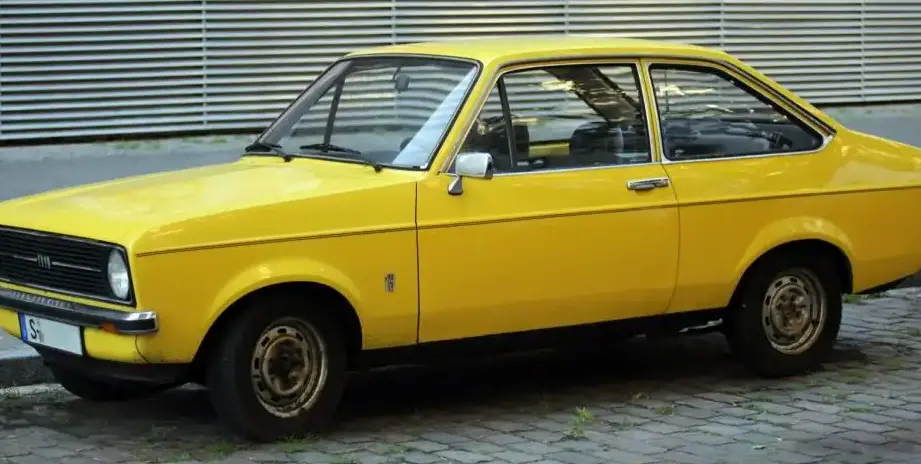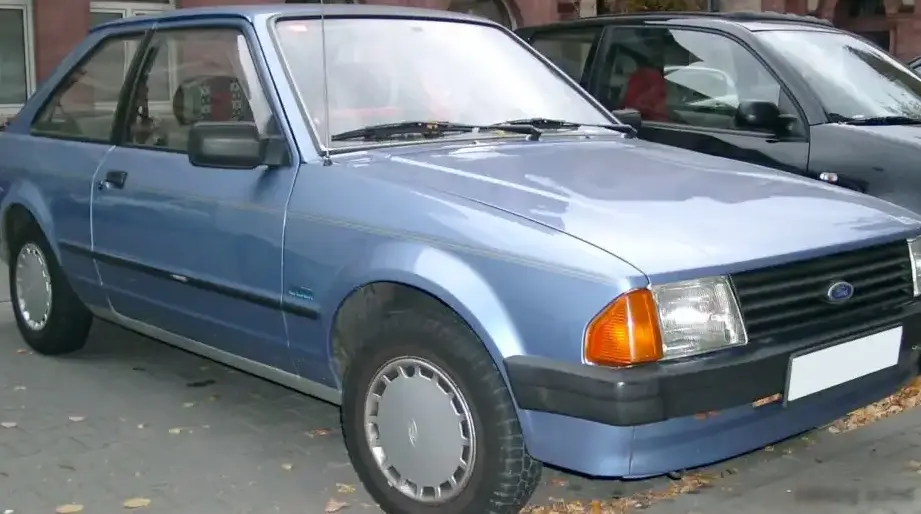
The Ford Escort III, produced between 1980 and 1985, represented a significant evolution of Ford of Europe’s popular compact car. Within the Escort III range (chassis codes GAA, AWA, ABFT, and AVA), the 1.3-liter, 69 horsepower variant occupied a crucial position as the entry-level model. This version was primarily aimed at buyers seeking affordable, economical transportation, and it played a substantial role in maintaining the Escort’s market share in a competitive European landscape. While not known for blistering performance, the 1.3 Escort offered a practical and reliable solution for everyday driving needs. It was a common sight on European roads during its production run and remains a relatively popular classic car today.
Technical Specifications
| Brand | Ford |
| Model | Escort |
| Generation | Escort III (GAA, AWA, ABFT, AVA) |
| Type (Engine) | 1.3 (69 Hp) |
| Start of Production | 1980 |
| End of Production | 1985 |
| Powertrain Architecture | Internal Combustion Engine |
| Body Type | Hatchback |
| Fuel Type | Petrol (Gasoline) |
| Power | 69 Hp |
| Engine Aspiration | Naturally Aspirated |
| Engine Displacement | 1.3 Liters |
| Cylinders | 4 |
| Valves per Cylinder | 2 |
| Transmission | 4-Speed Manual (most common), 3-Speed Automatic (optional) |
| Drive Type | Front-Wheel Drive |
| Weight (approx.) | 850-900 kg (1870-1980 lbs) |
Powertrain & Engine Architecture
The heart of the Escort III 1.3 was the Ford CVH (Compound Valve angle Hemispherical) engine. This engine, first introduced in the late 1970s, was designed to be a versatile and efficient unit. The 1.3-liter version, typically designated with engine code HSS, produced 69 horsepower at 6000 rpm and approximately 88 lb-ft of torque at 3000 rpm. It featured a cast iron block and an aluminum cylinder head, with a two-valve-per-cylinder configuration. Fuel delivery was managed by a Weber carburetor, a common setup for the time, prioritizing simplicity and cost-effectiveness over the more advanced fuel injection systems found in higher-spec Escort models. The CVH engine was known for its relatively robust construction, but also for its potential for oil consumption as it aged.
While a four-speed manual transmission was the most common pairing for the 1.3-liter engine, a three-speed automatic transmission was offered as an optional extra. This automatic, while providing convenience, noticeably impacted performance and fuel economy. The automatic transmission was a Borg-Warner unit, known for its durability but also for its relatively slow shift times compared to contemporary automatics.
Driving Characteristics
The Escort III 1.3 was not a performance car. Acceleration was modest, with a 0-60 mph time estimated around 14-16 seconds, depending on the transmission and vehicle load. The 1.3-liter engine felt strained at higher speeds, and highway cruising required frequent downshifts. However, within its intended operating range – primarily urban and suburban driving – the Escort 1.3 proved to be perfectly adequate. The manual transmission offered a more engaging driving experience and allowed the engine to operate within its optimal power band. The automatic, while smoother, resulted in a sluggish feel and reduced responsiveness. The front-wheel-drive layout provided predictable handling, although the Escort III’s suspension was relatively basic, resulting in a somewhat bumpy ride on uneven surfaces.
Equipment & Trim Levels
The 1.3-liter Escort typically represented the base trim level. Standard equipment was fairly minimal, reflecting its position as an affordable option. Features generally included cloth upholstery, a basic instrument cluster, and manually operated windows and door locks. Heating and ventilation were standard, but air conditioning was rarely fitted to this base model. Optional extras included a radio, upgraded interior trim, and, as mentioned, the three-speed automatic transmission. The exterior trim was also basic, with steel wheels and black plastic bumpers being common features. Higher trim levels, such as the Ghia, offered more luxurious appointments, including upgraded upholstery, alloy wheels, and additional features like central locking and electric windows.
Chassis & Braking
The Escort III utilized a MacPherson strut front suspension and a leaf spring rear suspension. This setup was a cost-effective solution, providing reasonable handling characteristics for everyday driving. The front suspension featured an anti-roll bar to reduce body roll during cornering. Braking was typically accomplished with disc brakes on the front wheels and drum brakes on the rear. The braking system was adequate for the vehicle’s weight and performance, but lacked the stopping power of more modern systems. Steering was rack and pinion, providing reasonably precise control.
Market Reception & Comparison
The Escort III 1.3 was well-received as a practical and economical family car. Critics praised its affordability and reliability, but noted its lack of performance. Compared to the higher-spec Escort models, such as the 1.6-liter and the XR3, the 1.3 offered significantly less power and refinement. However, it also came with a lower price tag and better fuel economy. The 1.6-liter engine provided a noticeable performance boost, while the XR3 offered sporty styling and handling. The diesel-powered Escort models, while slower, offered even better fuel economy. The 1.3-liter version appealed to buyers who prioritized affordability and practicality over performance and luxury.
Legacy
The Ford Escort III 1.3 remains a popular choice among classic car enthusiasts, particularly those seeking an affordable and easy-to-maintain vehicle. The CVH engine, while prone to oil consumption, is relatively simple to work on, and spare parts are readily available. The 1.3-liter engine’s simplicity also contributes to its reliability, provided it is properly maintained. Today, these Escorts are often used for historic rallying and classic car events. While not a particularly valuable collector’s item, a well-maintained Escort III 1.3 represents a piece of automotive history and a reminder of a simpler era of motoring. The automatic transmission versions are less sought after due to their reduced performance and slightly lower fuel efficiency.