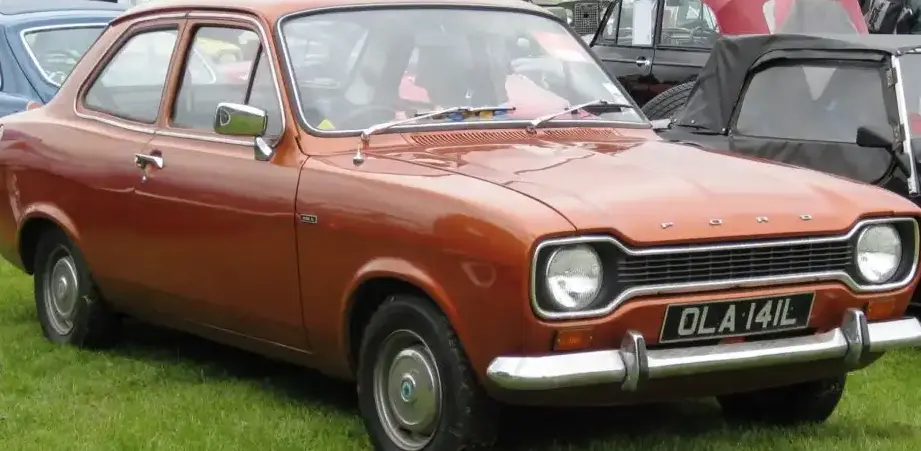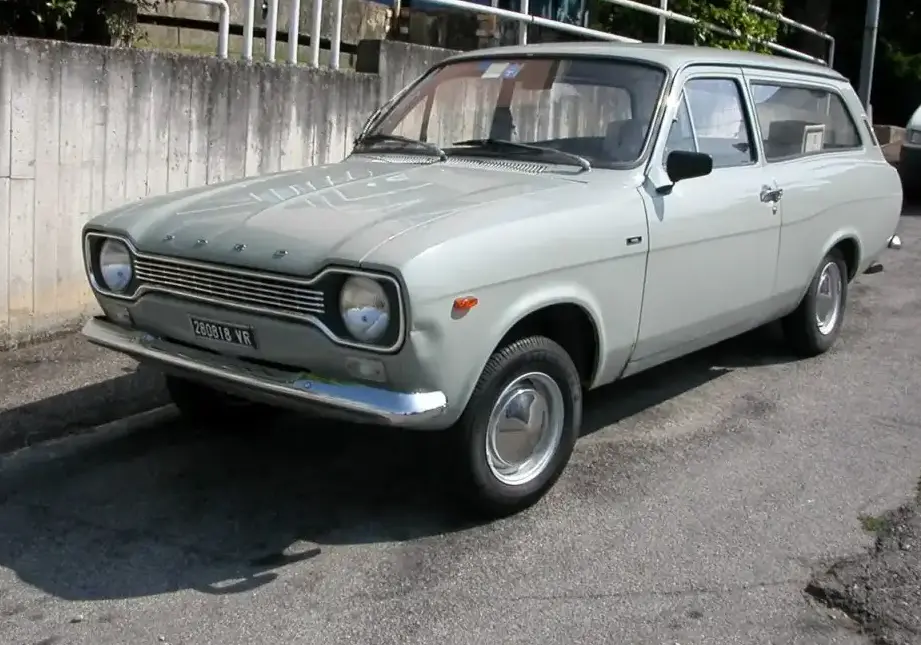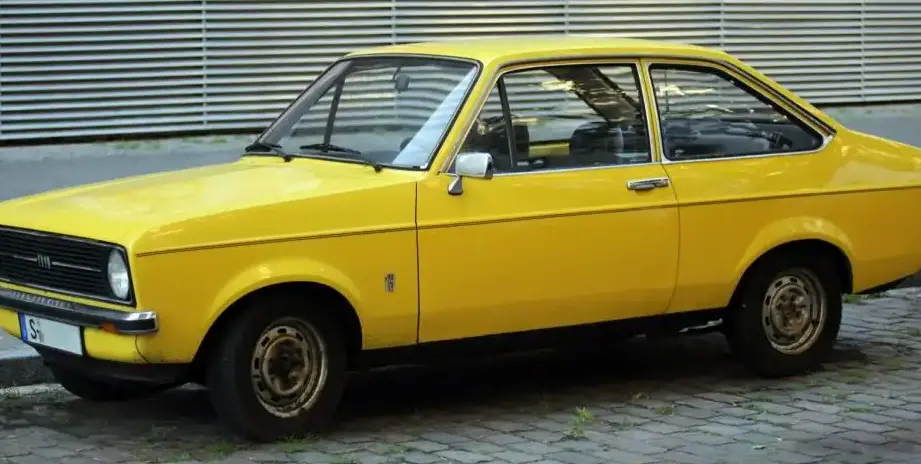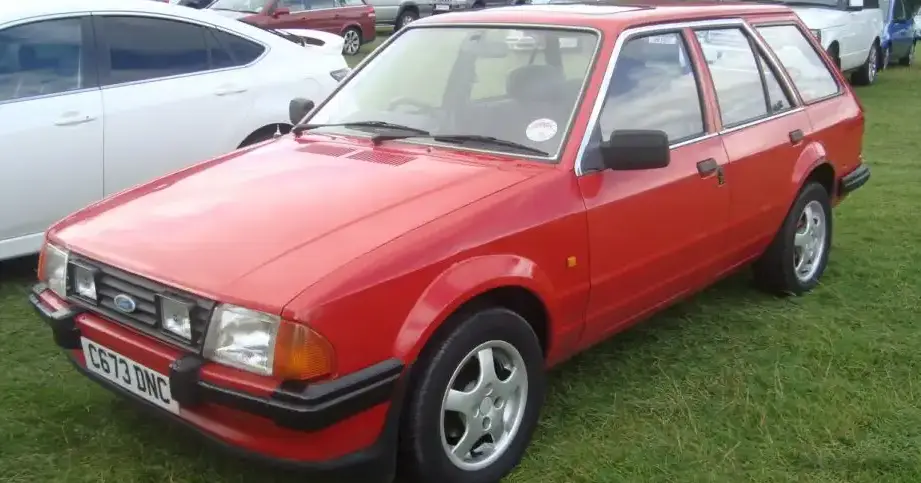
The Ford Escort III Turnier 1.1, produced between 1980 and 1983, represents the entry-level variant of the AWA generation Escort estate (station wagon) range. Positioned as an affordable and practical family vehicle, it served as a crucial part of Ford of Europe’s lineup during a period of increasing fuel costs and a demand for economical transportation. The Turnier body style, introduced with the Escort III, offered increased cargo capacity compared to the saloon and hatchback models, making it popular with families and those requiring a versatile vehicle. This 1.1-liter version was specifically aimed at buyers prioritizing fuel efficiency and low running costs over outright performance.
Technical Specifications
| Brand | Ford |
| Model | Escort |
| Generation | Escort III Turnier (AWA) |
| Type (Engine) | 1.1 (54 Hp) |
| Start of production | 1980 |
| End of production | 1983 |
| Powertrain Architecture | Internal Combustion Engine |
| Body type | Station wagon (estate) |
| Fuel Type | Petrol (Gasoline) |
| Power | 54 Hp |
| Engine aspiration | Naturally aspirated engine |
Powertrain & Engine Architecture
The heart of the Escort III Turnier 1.1 is the Ford 1.1-liter inline-four cylinder engine, internally designated as the 1100cc unit. This engine, while simple in design, was a workhorse known for its reliability. It featured a single overhead camshaft (SOHC) operating two valves per cylinder. Fuel delivery was managed by a single downdraft carburetor, a common setup for vehicles of this era aiming for cost-effectiveness. The engine’s modest output of 54 horsepower at approximately 6000 rpm and 68 lb-ft of torque at 3600 rpm was achieved through a relatively low compression ratio, contributing to its ability to run on lower octane fuel.
The 1.1-liter engine was typically paired with a four-speed manual transmission, however, a three-speed automatic transmission was also offered, albeit less commonly. The automatic transmission, while providing convenience, further reduced acceleration performance. The drivetrain configuration was front-wheel drive, standard for the Escort III range. The engine’s simplicity meant relatively straightforward maintenance, making it appealing to owners seeking a low-cost vehicle to operate.
Driving Characteristics
The Escort III Turnier 1.1, particularly in automatic guise, was not designed for spirited driving. Acceleration was leisurely, with a 0-60 mph time estimated to be around 16-18 seconds. The focus was firmly on providing adequate transportation for everyday needs. The automatic transmission, while smooth in operation, had relatively widely spaced gear ratios, which contributed to a noticeable lack of responsiveness when overtaking or climbing hills. The manual transmission version offered a slightly more engaging driving experience, allowing the driver to better utilize the engine’s limited power band.
Handling was typical of front-wheel-drive cars of the period – safe and predictable, but not particularly sporty. The suspension, consisting of MacPherson struts at the front and a twist-beam rear axle, provided a comfortable ride, prioritizing passenger comfort over sharp handling. Steering was unassisted, requiring a reasonable amount of effort, especially at low speeds.
Equipment & Trim Levels
The Escort III Turnier 1.1 occupied the base trim level within the Turnier range. As such, it featured a relatively sparse equipment list. Standard features typically included cloth upholstery, basic instrumentation (speedometer, fuel gauge, and temperature gauge), and a two-spoke steering wheel. The interior was functional and durable, designed to withstand the rigors of family use.
Optional extras, available at an additional cost, included a radio, heated rear window, and upgraded interior trim. The exterior trim was also basic, with black plastic bumpers and relatively simple steel wheels with hubcaps. Higher trim levels, such as the Ghia, offered more luxurious appointments, including upgraded upholstery, woodgrain interior trim, and alloy wheels.
Chassis & Braking
The Escort III Turnier’s chassis was a monocoque construction, providing a good balance of strength and weight. The front suspension utilized MacPherson struts with coil springs and an anti-roll bar, while the rear suspension employed a twist-beam axle with trailing arms and leaf springs. This setup provided a comfortable ride, although it wasn’t particularly sophisticated.
Braking was initially provided by front disc brakes and rear drum brakes. Later models saw the introduction of rear disc brakes on some variants, but the 1.1-liter model typically retained the drum brake setup. The braking system was adequate for the vehicle’s performance, but lacked the stopping power of more powerful Escort models. Steering was a rack-and-pinion system, providing reasonable precision, but without power assistance.
Market Reception & Comparison
The Escort III Turnier 1.1 was generally well-received as an affordable and practical family vehicle. Critics acknowledged its fuel efficiency and low running costs, but also noted its lack of performance. Compared to other engines in the Escort III range, such as the 1.3-liter and 1.6-liter units, the 1.1-liter engine offered significantly less power and acceleration. However, it also delivered superior fuel economy, making it an attractive option for budget-conscious buyers.
Compared to competitors like the Vauxhall Astra Estate and the Volkswagen Golf Estate, the Escort III Turnier 1.1 offered a competitive price point and a spacious interior. However, some competitors offered more refined interiors and more advanced features. The 1.1-liter engine’s reliability was a key selling point, contributing to its popularity in the used car market.
Legacy
The Ford Escort III Turnier 1.1, while not a performance icon, holds a significant place in automotive history as a representative of the affordable family cars of the early 1980s. The 1.1-liter engine proved to be remarkably durable, and many examples are still on the road today, testament to its robust design. In the used car market, these models are often sought after by enthusiasts looking for a classic Ford that is relatively easy and inexpensive to maintain.
The Turnier body style itself became synonymous with practicality and versatility, influencing the design of subsequent Ford estate models. While the 1.1-liter engine is now considered underpowered by modern standards, it remains a charming reminder of a time when fuel efficiency and affordability were paramount concerns for many car buyers. The Escort III Turnier 1.1 represents a simple, honest, and reliable vehicle that served its purpose well during its production run.