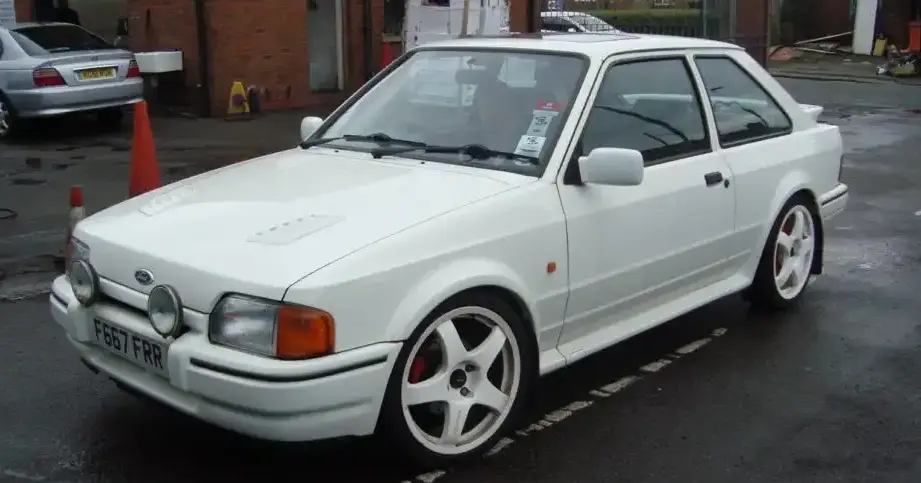
The Ford Escort IV, produced between 1986 and 1989, represented a significant evolution of Ford of Europe’s popular compact car. Within the Escort IV range (chassis codes GAF, AWF, and ABFT), the 1.6 D variant, powered by the LTC diesel engine and producing 55 horsepower, occupied a specific niche. This model was primarily aimed at buyers prioritizing fuel economy and durability over outright performance, particularly in markets where diesel fuel was more affordable and readily available. It served as the entry-level diesel option, positioned below the more powerful 1.8 D models. The Escort IV itself was a crucial model for Ford, building upon the success of its predecessors and offering a modern, practical, and relatively affordable vehicle for a broad range of customers.
Technical Specifications
| Brand | Ford |
| Model | Escort |
| Generation | Escort IV (GAF, AWF, ABFT) |
| Type (Engine) | 1.6 D (55 Hp) |
| Start of Production | 1986 |
| End of Production | 1989 |
| Powertrain Architecture | Internal Combustion Engine |
| Body Type | Hatchback |
| Fuel Type | Diesel |
| Power | 55 Hp |
| Engine Model/Code | LTC |
| Engine Aspiration | Naturally Aspirated |
| Engine Oil Capacity | 5 l (5.28 US qt | 4.4 UK qt) |
| Coolant Capacity | 9.3 l (9.83 US qt | 8.18 UK qt) |
Powertrain & Engine Architecture
The heart of the Escort IV 1.6 D was the Ford LTC (Lean Burn Chamber) diesel engine. This 1.6-liter, naturally aspirated engine was a four-cylinder unit utilizing indirect injection. Indirect injection, common for diesels of this era, involved injecting fuel into a pre-chamber where partial combustion occurred, then transferring the ignited mixture to the main combustion chamber. This design contributed to quieter operation and reduced emissions compared to direct injection systems, though at the cost of some efficiency. The LTC engine featured a robust cast iron block and a relatively simple mechanical fuel injection pump. It wasn’t known for high performance, but for its reliability and longevity. The engine’s valvetrain employed a single overhead camshaft (SOHC) operating two valves per cylinder. The 55 horsepower output was achieved at a relatively low engine speed, prioritizing torque for everyday driving. The engine was typically paired with a four or five-speed manual transmission, though a three-speed automatic transmission was also available, albeit less common. The automatic transmission, while offering convenience, further reduced the vehicle’s already modest acceleration.
Driving Characteristics
The Escort IV 1.6 D, particularly in automatic transmission guise, was not a performance-oriented vehicle. Acceleration was leisurely, and overtaking required careful planning. The engine produced a respectable amount of torque for its displacement, making it reasonably capable in urban environments and on gentle inclines. However, on highways or when fully loaded, the engine could feel strained. The automatic transmission, while smooth in operation, had relatively widely spaced gear ratios, which further impacted acceleration. Compared to the manual transmission versions, the automatic models experienced a noticeable reduction in fuel economy. The manual transmission allowed drivers to better utilize the engine’s torque band, resulting in slightly improved performance and efficiency. Compared to the 1.8 D models, the 1.6 D offered less power and torque, resulting in slower acceleration and a reduced top speed. However, the 1.6 D was generally considered to be slightly more refined and quieter in operation.
Equipment & Trim Levels
The 1.6 D Escort IV typically represented the base trim level within the diesel range. Standard equipment generally included cloth upholstery, a basic instrument cluster, and manual windows and door locks. Central locking and electric windows were usually optional extras. The interior was functional and durable, prioritizing practicality over luxury. Dashboard design was relatively simple, with clearly labeled controls. Optional extras included a radio, heated rear window, and upgraded seat fabrics. The exterior trim was also fairly basic, with black plastic bumpers and steel wheels being common features. Higher trim levels, such as the Ghia, offered more luxurious appointments, including upgraded upholstery, wood trim, and additional features like alloy wheels and a sunroof. However, these were rarely paired with the 1.6 D engine.
Chassis & Braking
The Escort IV utilized a relatively conventional chassis design, featuring independent front suspension with MacPherson struts and a live axle rear suspension. The suspension setup was tuned for comfort and ride quality, rather than sporty handling. The 1.6 D models, being the entry-level diesel variant, typically featured smaller diameter steel wheels and narrower tires compared to the higher-spec models. Braking systems varied depending on the specific market and trim level. Front disc brakes were standard, while rear brakes were typically drum brakes on the 1.6 D. Higher-spec models often featured rear disc brakes. Anti-lock braking systems (ABS) were not widely available on the Escort IV, even as an option. Stabilizer bars were fitted to the front suspension to reduce body roll, but their thickness varied depending on the trim level.
Market Reception & Comparison
The Escort IV 1.6 D was generally well-received by buyers seeking an economical and reliable family car. Critics praised its fuel efficiency and durability, but noted its lack of performance. Compared to the 1.8 D models, the 1.6 D offered a lower purchase price but at the expense of power and refinement. The 1.6 D also faced competition from other diesel-powered compact cars, such as the Volkswagen Golf Diesel and the Opel/Vauxhall Astra Diesel. In terms of fuel economy, the 1.6 D Escort IV typically achieved around 45-50 mpg, depending on driving conditions. Reliability was generally good, with the LTC diesel engine proving to be a robust and long-lasting unit. However, maintenance costs could be higher than those of gasoline-powered engines due to the complexity of the fuel injection system.
Legacy
The Ford Escort IV 1.6 D, while not a particularly exciting vehicle, played an important role in providing affordable and economical transportation to a wide range of customers. The LTC diesel engine, despite its limitations, proved to be a reliable and durable powerplant. Today, these Escorts are relatively rare, and well-maintained examples are sought after by classic car enthusiasts. The 1.6 D powertrain, while not known for its performance, is generally considered to be relatively straightforward to maintain, making it a viable option for those looking for a classic diesel car. Parts availability can be a challenge, but many components are still available through specialist suppliers. The Escort IV 1.6 D remains a testament to Ford’s commitment to providing practical and affordable vehicles for the masses.