Technical Specifications
| Brand | Ford |
| Model | Escort |
| Generation | Escort IV Turnier (AWF, AVF) |
| Type (Engine) | 1.4 (75 Hp) |
| Start of Production | 1986 |
| End of Production | 1990 |
| Powertrain Architecture | Internal Combustion Engine |
| Body Type | Station Wagon (Estate) |
| Fuel Type | Petrol (Gasoline) |
| Power | 75 Hp |
| Engine Model/Code | FUA |
| Engine Aspiration | Naturally Aspirated |
| Engine Oil Capacity | 3.5 l (3.7 US qt | 3.08 UK qt) |
| Coolant Capacity | 7.6 l (8.03 US qt | 6.69 UK qt) |
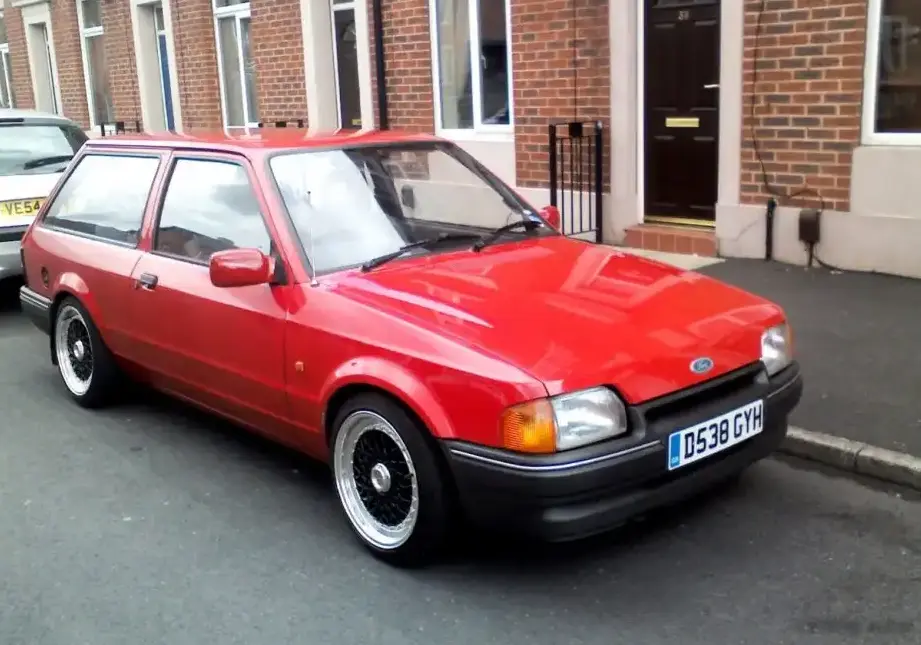
The Ford Escort IV Turnier 1.4, produced between 1986 and 1990, represented a practical and economical offering within the fourth generation of the popular Escort range. The “Turnier” designation signified the estate, or station wagon, body style, appealing to families and those requiring increased cargo capacity. This particular variant, powered by the 1.4-liter FUA engine producing 75 horsepower, served as an entry-level option, prioritizing affordability and fuel efficiency over outright performance. It occupied a crucial position in the lineup, providing a more accessible price point compared to the higher-specification models with larger engines. The Escort IV, built on the AWF/AVF platform, was a significant model for Ford in Europe, offering a versatile and reliable vehicle for a broad range of buyers.
Powertrain & Engine Architecture
The heart of the Escort IV Turnier 1.4 was the Ford FUA engine, a 1392cc inline-four cylinder unit. This engine was a relatively simple design, utilizing a single overhead camshaft (SOHC) valvetrain with two valves per cylinder. Fuel delivery was managed by a Weber 32/36 DGV carburetor, a common feature for vehicles of this era, prioritizing simplicity and cost-effectiveness over the more advanced fuel injection systems found in higher-end models. The FUA engine was known for its durability and ease of maintenance, although its power output was modest. The engine’s design emphasized torque at lower RPMs, making it suitable for everyday driving and hauling loads. The compression ratio was typically around 9.0:1. The transmission paired with this engine was typically a four-speed automatic, the Ford C3 automatic, offering convenience but at the expense of some fuel economy and performance compared to the available five-speed manual gearbox. The C3 was a relatively simple three-speed automatic, known for its robustness but lacking the refinement of more modern transmissions.
Driving Characteristics
The 1.4-liter engine and automatic transmission combination in the Escort IV Turnier resulted in a driving experience focused on practicality rather than excitement. Acceleration was leisurely, with a 0-60 mph time estimated to be around 14-16 seconds. The automatic transmission, while providing ease of use, had relatively widely spaced gear ratios, which could lead to the engine feeling strained during overtaking maneuvers or when climbing hills. The automatic transmission wasn’t particularly sophisticated by modern standards, lacking features like overdrive or selectable driving modes. However, it provided smooth shifts under normal driving conditions. The suspension, tuned for comfort, offered a reasonably compliant ride, absorbing bumps and imperfections in the road surface effectively. Steering was light and easy, making the Escort Turnier easy to maneuver in urban environments. The overall driving experience was best described as relaxed and unhurried, prioritizing comfort and ease of use over sporty performance.
Equipment & Trim Levels
The Escort IV Turnier 1.4 typically represented the base trim level, often simply referred to as the “L” trim. Standard equipment generally included cloth upholstery, a basic instrument cluster, and manual windows and door locks. Features like central locking, electric windows, and a sunroof were typically optional extras, often bundled into higher trim packages like the “GL” or “Ghia”. Interior plastics were durable but utilitarian, reflecting the car’s focus on affordability. The Turnier’s estate body style provided a generous cargo area, offering approximately 18.5 cubic feet of space with the rear seats up, and expanding to around 55 cubic feet with the seats folded down, making it a practical choice for families or those needing to transport larger items. Exterior features were similarly basic, with steel wheels, black plastic trim, and relatively simple lighting units. A radio was often an optional extra.
Chassis & Braking
The Escort IV Turnier utilized a MacPherson strut front suspension and a semi-independent twist beam rear suspension. This setup provided a good balance between ride comfort and handling. The front brakes were typically disc brakes, while the rear brakes were drum brakes, a cost-saving measure common in entry-level models. Steering was rack and pinion, providing precise and responsive control. The chassis was relatively lightweight, contributing to the car’s fuel efficiency. Stabilizer bars were often omitted on the base models, further emphasizing comfort over sporty handling. Tire sizes were typically 175/70 R14, providing adequate grip for everyday driving conditions. The suspension was designed to prioritize ride comfort over aggressive cornering, making it well-suited for typical road conditions.
Market Reception & Comparison
The Escort IV Turnier 1.4 was generally well-received as a practical and affordable family car, particularly in the European market. Critics praised its spacious interior, generous cargo capacity, and fuel efficiency. However, the 1.4-liter engine was often criticized for its lack of power, particularly when paired with the automatic transmission. Compared to the 1.6-liter and 1.8-liter versions of the Escort, the 1.4 offered significantly less performance. The 1.6-liter engine provided a noticeable improvement in acceleration and overall drivability, while the 1.8-liter engine offered even more power and refinement. The 1.8-liter models were often equipped with more features and a higher level of trim. In terms of reliability, the 1.4-liter engine was generally considered to be very dependable, with few major issues reported. Fuel economy was a strong point, with owners reporting around 30-35 mpg in mixed driving conditions. The automatic transmission, while convenient, did slightly reduce fuel economy compared to the manual version.
Legacy
The Ford Escort IV Turnier 1.4, while not the most powerful or technologically advanced version of the Escort, remains a popular choice among classic car enthusiasts and those seeking a reliable and affordable vintage vehicle. The FUA engine is known for its durability and ease of maintenance, making it a relatively inexpensive engine to keep running. Parts availability is generally good, although some components may be becoming increasingly difficult to find. Today, these Escort Turniers are often found in the hands of collectors or as affordable transportation for those seeking a simple and practical vehicle. The combination of a spacious interior, fuel efficiency, and reliable engine has ensured that the Escort IV Turnier 1.4 has retained a loyal following, cementing its place as a significant part of Ford’s history. It represents a bygone era of affordable and practical family motoring, and its simplicity continues to appeal to many drivers today. The car’s enduring appeal lies in its honest and unpretentious character.