Technical Specifications
| Brand | Ford |
| Model | Escort |
| Generation | Escort V Turnier (GAL, AVL) |
| Type (Engine) | 1.6 (105 Hp) |
| Start of Production | 1990 |
| End of Production | 1992 |
| Powertrain Architecture | Internal Combustion Engine |
| Body Type | Station Wagon (Estate) |
| Fuel Type | Petrol (Gasoline) |
| Power | 105 Hp |
| Engine Model/Code | LJF |
| Engine Aspiration | Naturally Aspirated |
| Engine Oil Capacity | 3.5 l (3.7 US qt | 3.08 UK qt) |
| Coolant Capacity | 7.9 l (8.35 US qt | 6.95 UK qt) |
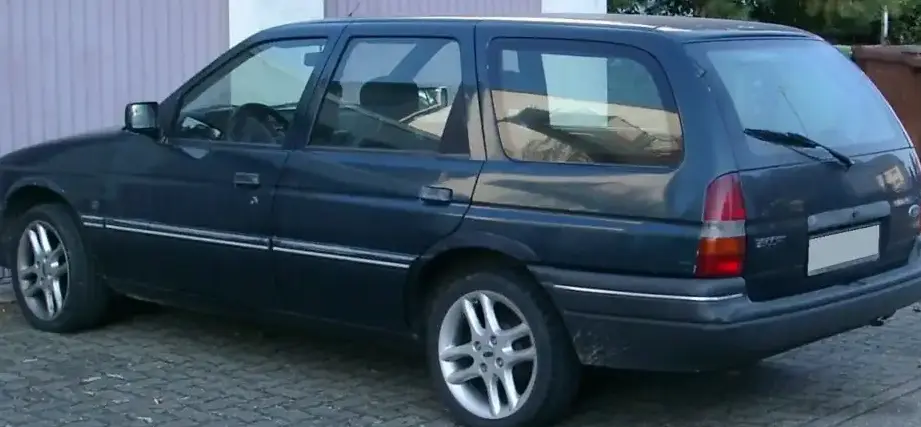
The Ford Escort V Turnier 1.6, produced between 1990 and 1992, represents a practical and popular iteration of the fifth-generation Escort range. The “Turnier” designation signifies the estate or station wagon body style, a crucial offering for European families and those requiring versatile cargo space. This particular variant, powered by the 1.6-liter LJF engine producing 105 horsepower, occupied a middle ground within the Escort V lineup, offering a balance between affordability, fuel economy, and usable performance. It was positioned above the base 1.4 models and below the more powerful 1.6 and 1.8-liter options, as well as the diesel variants. The Escort V, and specifically the Turnier, played a significant role in Ford of Europe’s market share during this period, competing directly with vehicles like the Opel Astra Caravan, Volkswagen Golf Variant, and Peugeot 305 Break.
Powertrain & Engine Architecture
The heart of the Escort V Turnier 1.6 is the Ford LJF engine, a 1.6-liter inline-four cylinder gasoline engine. This engine is a continuation of Ford’s CVH (Compound Valve angle Hemispherical) engine family, a design that had been refined over several years. The LJF featured a single overhead camshaft (SOHC) operating two valves per cylinder. Fuel delivery was managed by Bosch fuel injection, a significant upgrade from the carburetors used in earlier Escort models, contributing to improved fuel efficiency and reduced emissions. The engine’s relatively simple design prioritized reliability and ease of maintenance. The 105 horsepower output was achieved through a compression ratio of 9.2:1 and a modest amount of engine tuning. While not a high-performance engine, it provided adequate power for everyday driving and hauling loads typical of a station wagon.
The transmission paired with the LJF engine in this variant was typically a four-speed automatic gearbox. This automatic transmission, while offering convenience, was not known for its particularly quick shifts or sporty feel. It was geared towards smooth operation and fuel economy rather than performance. The automatic transmission contributed to a slightly lower fuel economy compared to the manual transmission options, but it appealed to drivers prioritizing ease of use, especially in urban environments.
Driving Characteristics
The Escort V Turnier 1.6 automatic offered a comfortable, if not particularly exciting, driving experience. Acceleration was adequate for merging onto highways and overtaking slower traffic, but it wasn’t a vehicle designed for rapid acceleration. The automatic transmission’s gear ratios were optimized for fuel efficiency and smooth cruising, resulting in a somewhat leisurely pace. Compared to the five-speed manual versions of the 1.6, the automatic suffered a noticeable performance deficit, particularly in terms of responsiveness. The manual transmission allowed drivers to keep the engine in its optimal power band, resulting in quicker acceleration and a more engaging driving experience. However, the automatic provided a more relaxed driving experience, especially in stop-and-go traffic.
The Turnier’s suspension, while basic, provided a reasonably comfortable ride, absorbing bumps and imperfections in the road surface effectively. The steering was light and easy to use, making it maneuverable in tight spaces. Overall, the driving experience was geared towards practicality and comfort rather than outright performance.
Equipment & Trim Levels
The Escort V Turnier 1.6 typically came equipped with a reasonable level of standard features for its time. These included central locking, power steering, and a basic stereo system. Interior upholstery was typically cloth, with a durable and practical design. Trim levels varied slightly depending on the market, but generally, the 1.6 model offered a step up in features compared to the base 1.4. Optional extras included electric windows, a sunroof, and upgraded stereo systems. The dashboard layout was functional and straightforward, with clearly labeled controls. The Turnier’s interior prioritized practicality and durability over luxury.
Chassis & Braking
The Escort V Turnier utilized a MacPherson strut front suspension and a semi-independent twist beam rear suspension. This setup provided a good balance between ride comfort and handling. Braking on the 1.6 model typically consisted of disc brakes on the front wheels and drum brakes on the rear wheels. The braking system was adequate for the vehicle’s weight and performance, but it lacked the stopping power of the larger disc brake setups found on higher-performance Escort models. A stabilizer bar was fitted to the front suspension to reduce body roll during cornering.
Market Reception & Comparison
The Escort V Turnier 1.6 automatic was generally well-received by critics as a practical and affordable family car. It was praised for its spacious interior, comfortable ride, and reasonable fuel economy. However, the automatic transmission was often criticized for its lack of responsiveness and its impact on performance. Compared to the manual transmission versions, the automatic was considered less engaging to drive. Against competitors like the Opel Astra Caravan and Volkswagen Golf Variant, the Escort Turnier offered a competitive package in terms of price, space, and practicality. The diesel variants of the Escort V were favored by those prioritizing fuel economy, while the higher-powered gasoline models appealed to drivers seeking more performance.
Legacy
The Ford Escort V Turnier 1.6, while not a particularly rare or collectible vehicle, remains a popular choice among classic car enthusiasts and those seeking an affordable and reliable estate car. The LJF engine is known for its durability and relatively simple maintenance requirements. Parts availability is generally good, making it relatively easy to keep these vehicles on the road. In the used car market today, these Escort Turniers are often found in well-maintained condition, offering a practical and nostalgic driving experience. The combination of a spacious interior, comfortable ride, and reliable powertrain makes it a viable option for those seeking a classic family car.