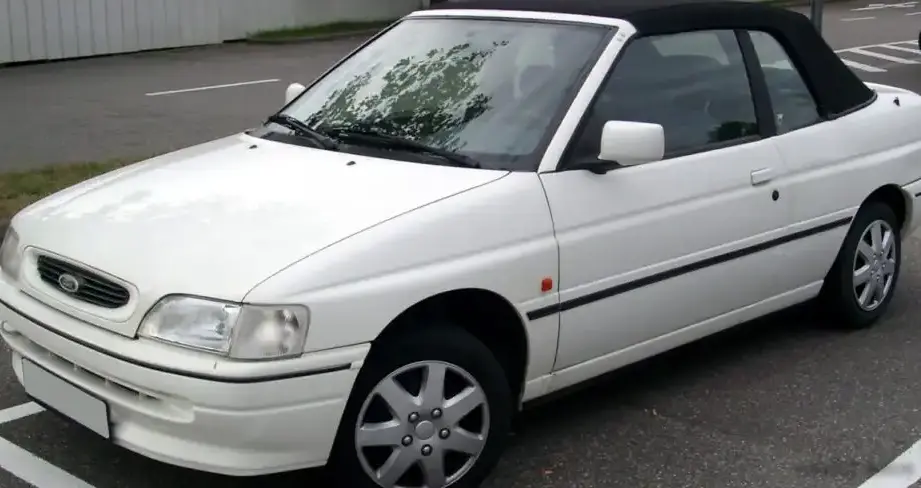
The Ford Escort VI Cabrio 1.8 i 16V XR3i, produced between 1993 and 1995, represented a sporty and desirable iteration of the sixth-generation Escort convertible. Positioned as a premium trim level, the XR3i offered a significant performance upgrade over the base models, appealing to drivers seeking a more engaging open-top experience. This variant was part of the broader Escort VI range (platform code ALL), which aimed to modernize the popular Escort nameplate with improved styling, safety features, and mechanical refinements. The XR3i specifically targeted a market segment desiring a blend of practicality, style, and spirited driving dynamics in a compact package.
Technical Specifications
| Brand | Ford |
| Model | Escort |
| Generation | Escort VI Cabrio (ALL) |
| Type (Engine) | 1.8 i 16V XR3i (130 Hp) |
| Start of production | 1993 |
| End of production | 1995 |
| Powertrain Architecture | Internal Combustion engine |
| Body type | Cabriolet |
| Seats | 5 |
| Doors | 2 |
| Fuel consumption (combined) | 8.3 l/100 km |
| Fuel consumption (US mpg) | 28.3 US mpg |
| Fuel consumption (UK mpg) | 34 UK mpg |
| Fuel consumption (km/l) | 12 km/l |
| Fuel Type | Petrol (Gasoline) |
| Acceleration 0 – 100 km/h | 10.6 sec |
| Acceleration 0 – 62 mph | 10.6 sec |
| Acceleration 0 – 60 mph | 10.1 sec |
| Maximum speed | 198 km/h (123.03 mph) |
| Weight-to-power ratio | 9.3 kg/Hp |
| Weight-to-torque ratio | 7.4 kg/Nm |
| Power | 130 Hp @ 6250 rpm |
| Power per litre | 72.4 Hp/l |
| Torque | 162 Nm @ 4500 rpm (119.49 lb.-ft. @ 4500 rpm) |
| Engine layout | Front, Transverse |
| Engine Model/Code | RQB |
| Engine displacement | 1796 cm3 (109.6 cu. in.) |
| Number of cylinders | 4 |
| Engine configuration | Inline |
| Cylinder Bore | 80.6 mm (3.17 in.) |
| Piston Stroke | 88 mm (3.46 in.) |
| Compression ratio | 10:1 |
| Number of valves per cylinder | 4 |
| Fuel injection system | Multi-port manifold injection |
| Engine aspiration | Naturally aspirated engine |
| Valvetrain | DOHC |
| Engine oil capacity | 4.25 l (4.49 US qt | 3.74 UK qt) |
| Kerb Weight | 1205 kg (2656.57 lbs.) |
| Max. weight | 1675 kg (3692.74 lbs.) |
| Max load | 470 kg (1036.17 lbs.) |
| Trunk (boot) space – minimum | 322 l (11.37 cu. ft.) |
| Fuel tank capacity | 55 l (14.53 US gal | 12.1 UK gal) |
| Length | 4040 mm (159.06 in.) |
| Width | 1692 mm (66.61 in.) |
| Height | 1379 mm (54.29 in.) |
| Wheelbase | 2525 mm (99.41 in.) |
| Front track | 1443 mm (56.81 in.) |
| Rear (Back) track | 1462 mm (57.56 in.) |
| Drivetrain Architecture | The Internal combustion engine (ICE) drives the front wheels of the vehicle. |
| Drive wheel | Front wheel drive |
| Number of gears and type of gearbox | 5 gears, manual transmission |
| Front suspension | Spring Strut |
| Rear suspension | Coil spring |
| Front brakes | Ventilated discs |
| Rear brakes | Disc |
| Assisting systems | ABS (Anti-lock braking system) |
| Steering type | Steering rack and pinion |
| Power steering | Hydraulic Steering |
| Tires size | 185/60 R14 V |
Introduction
The Ford Escort VI Cabrio 1.8 i 16V XR3i, manufactured from 1993 to 1995, was a key variant within the Escort VI Cabriolet range. Building upon the success of previous Escort generations, the VI aimed to offer a more refined and modern driving experience. The XR3i trim, in particular, was designed to appeal to buyers seeking a sporty and stylish convertible. It slotted into the lineup above the base models, offering a more powerful engine and enhanced equipment levels. The Escort VI, and specifically the Cabriolet, was primarily marketed in Europe, where compact convertibles enjoyed considerable popularity.
Powertrain & Engine Architecture
At the heart of the XR3i lay the Ford RQB engine, an 1.8-liter inline-four cylinder powerplant. This engine featured a 16-valve dual overhead camshaft (DOHC) configuration, contributing to its improved breathing and power output. The RQB utilized multi-port fuel injection, a significant advancement over earlier carburetor-based systems, ensuring precise fuel delivery and optimized combustion. The engine produced 130 horsepower at 6250 rpm and 162 Nm (119.49 lb-ft) of torque at 4500 rpm. The engine’s relatively high compression ratio of 10:1 further enhanced its performance. The XR3i was exclusively offered with a five-speed manual transmission, designed to effectively manage the engine’s power and provide a more engaging driving experience. This transmission featured a conventional layout with synchromesh on all forward gears.
Driving Characteristics
The 1.8-liter 16V engine in the XR3i provided a noticeable performance boost compared to the lower-displacement engines available in other Escort VI Cabriolet models. While not a high-performance sports car, the XR3i offered brisk acceleration, reaching 0-60 mph in approximately 10.1 seconds and achieving a top speed of 198 km/h (123 mph). The five-speed manual transmission allowed drivers to keep the engine within its optimal power band, maximizing acceleration and responsiveness. The gear ratios were well-matched to the engine’s characteristics, providing good in-gear performance for everyday driving and overtaking maneuvers. Compared to the base 1.6L models, the XR3i felt significantly more lively and capable, offering a more rewarding driving experience. The handling was typical of front-wheel-drive cars of the era, with a tendency towards understeer when pushed hard, but generally predictable and safe.
Equipment & Trim Levels
The XR3i trim level came generously equipped, reflecting its position as a premium offering. Standard features included power steering, ABS anti-lock brakes, and a well-appointed interior. The interior typically featured sporty cloth upholstery, often with a distinctive XR3i pattern. The dashboard layout was functional and driver-focused, with clear instrumentation. Optional extras included a sunroof, upgraded audio systems, and alloy wheels. The convertible top was manually operated, a common feature for vehicles in this price range at the time. The XR3i also benefited from subtle exterior styling enhancements, such as a rear spoiler and unique badging, differentiating it from the more basic Escort Cabriolet models.
Chassis & Braking
The Escort VI Cabriolet utilized a MacPherson strut front suspension and a coil spring rear suspension. This setup provided a reasonable balance between ride comfort and handling. The XR3i benefited from slightly stiffer suspension components compared to the base models, further enhancing its handling characteristics. Braking duties were handled by ventilated discs at the front and solid discs at the rear, providing adequate stopping power for the vehicle’s weight and performance. The inclusion of ABS was a significant safety feature, helping to prevent wheel lockup during hard braking and maintaining steering control.
Market Reception & Comparison
The Escort VI Cabrio 1.8 i 16V XR3i was generally well-received by automotive critics. It was praised for its sporty styling, engaging driving dynamics, and relatively affordable price point. Compared to other convertibles in its class, such as the Peugeot 205 Cabriolet and the Renault 5 Cabriolet, the Escort XR3i offered a good balance of performance, practicality, and value. Fuel economy was reasonable for a vehicle of its type, averaging around 28.3 US mpg. Reliability was generally good, although some owners reported minor issues with the electrical system. The XR3i represented a compelling alternative to more expensive and less practical sports cars.
Legacy
The Ford Escort VI Cabrio 1.8 i 16V XR3i has become a sought-after classic among enthusiasts. The RQB engine is known for its durability and relatively straightforward maintenance. Well-maintained examples are becoming increasingly rare, and prices have been steadily rising in recent years. The XR3i’s combination of sporty styling, engaging driving dynamics, and open-top fun continues to appeal to collectors and drivers alike. While not a groundbreaking vehicle in terms of technological innovation, the Escort VI Cabrio XR3i represents a fondly remembered era of affordable and enjoyable motoring.