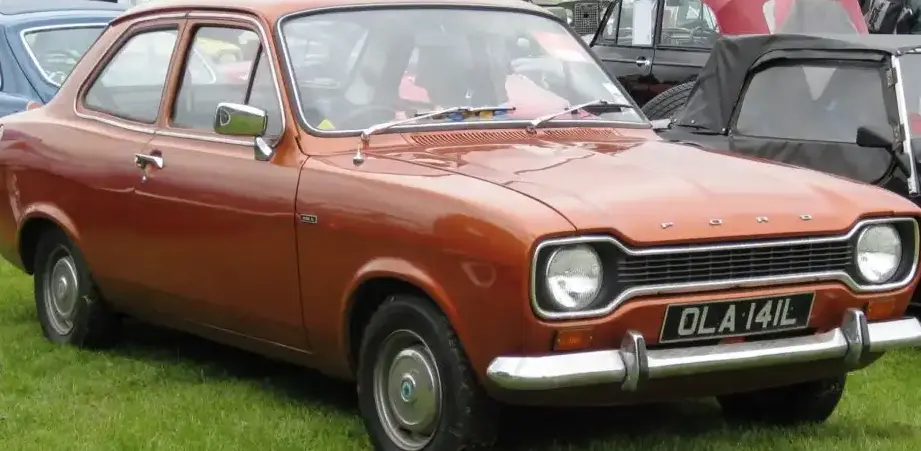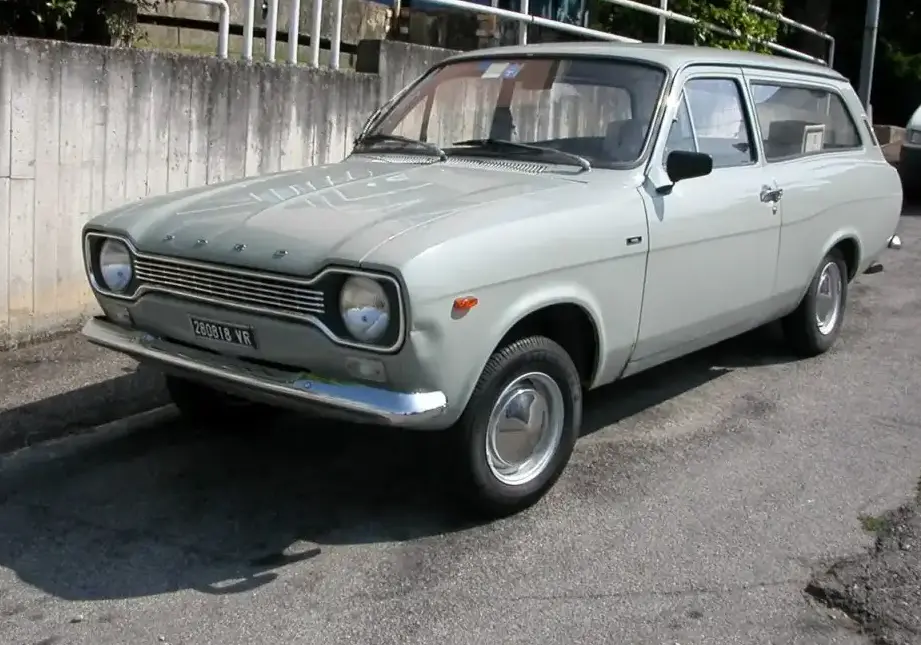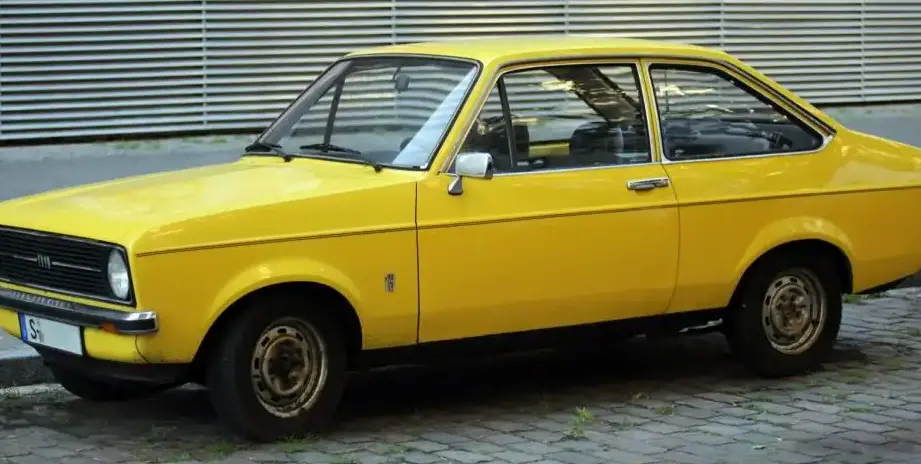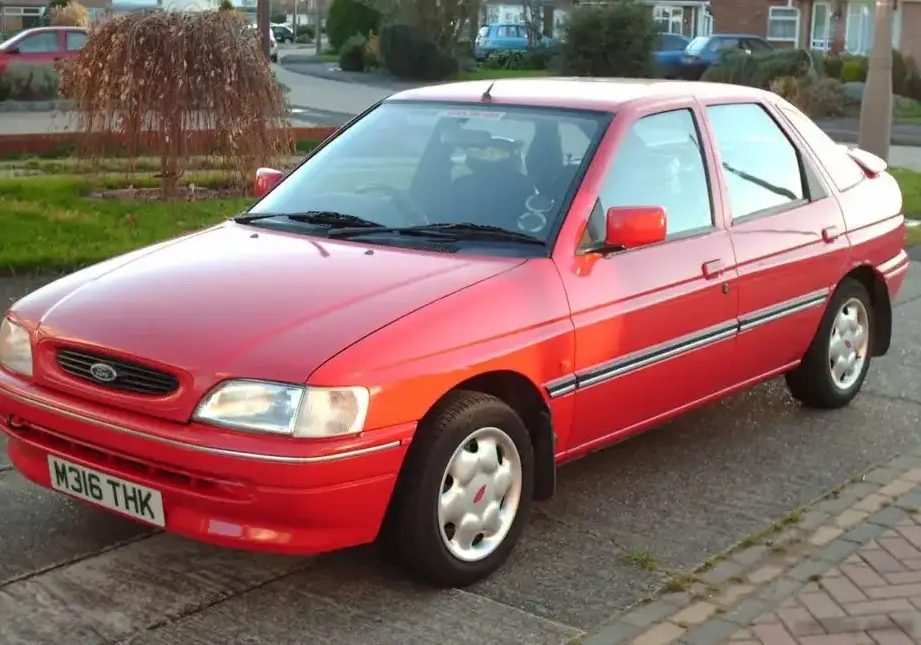
The Ford Escort VI Hatch (GAL) 1.6 i 16V, produced between 1993 and 1995, represented a mid-range offering within the sixth generation of the popular Escort line. Positioned as a step up from the base models, this variant aimed to provide a balance between performance and affordability for European buyers. The Escort VI, built on the 1HX0/A3 platform, was a significant model for Ford in Europe, offering a practical and relatively modern package in the competitive small family car segment. This particular 1.6L 16V engine paired with a manual transmission was a common sight on European roads during its production run.
Technical Specifications
| Brand | Ford |
| Model | Escort |
| Generation | Escort VI Hatch (GAL) |
| Type (Engine) | 1.6 i 16V (90 Hp) |
| Start of production | 1993 |
| End of production | 1995 |
| Powertrain Architecture | Internal Combustion engine |
| Body type | Hatchback |
| Seats | 5 |
| Doors | 3/5 |
| Fuel consumption (combined) | 7.2 l/100 km |
| Fuel consumption (US mpg) | 32.7 US mpg |
| Fuel consumption (UK mpg) | 39.2 UK mpg |
| Fuel consumption (km/l) | 13.9 km/l |
| Fuel Type | Petrol (Gasoline) |
| Acceleration 0 – 100 km/h | 12.3 sec |
| Acceleration 0 – 62 mph | 12.3 sec |
| Acceleration 0 – 60 mph | 11.7 sec |
| Maximum speed | 177 km/h (109.98 mph) |
| Weight-to-power ratio | 12.1 kg/Hp |
| Weight-to-torque ratio | 8.1 kg/Nm |
| Power | 90 Hp @ 5500 rpm |
| Power per litre | 56.4 Hp/l |
| Torque | 134 Nm @ 3000 rpm (98.83 lb.-ft. @ 3000 rpm) |
| Engine layout | Front, Transverse |
| Engine Model/Code | L1E |
| Engine displacement | 1597 cm3 (97.45 cu. in.) |
| Number of cylinders | 4 |
| Engine configuration | Inline |
| Cylinder Bore | 76 mm (2.99 in.) |
| Piston Stroke | 88 mm (3.46 in.) |
| Compression ratio | 10.3:1 |
| Number of valves per cylinder | 4 |
| Fuel injection system | Multi-port manifold injection |
| Engine aspiration | Naturally aspirated engine |
| Valvetrain | DOHC |
| Engine oil capacity | 4.25 l (4.49 US qt | 3.74 UK qt) |
| Coolant capacity | 7 l (7.4 US qt | 6.16 UK qt) |
| Kerb Weight | 1085 kg (2392.02 lbs.) |
| Max. weight | 1600 kg (3527.4 lbs.) |
| Max load | 515 kg (1135.38 lbs.) |
| Trunk (boot) space – minimum | 380 l (13.42 cu. ft.) |
| Trunk (boot) space – maximum | 735 l (25.96 cu. ft.) |
| Fuel tank capacity | 55 l (14.53 US gal | 12.1 UK gal) |
| Length | 4104 mm (161.57 in.) |
| Width | 1696 mm (66.77 in.) |
| Height | 1397 mm (55 in.) |
| Wheelbase | 2524 mm (99.37 in.) |
| Front track | 1440 mm (56.69 in.) |
| Rear track | 1455 mm (57.28 in.) |
| Drivetrain Architecture | Front wheel drive |
| Number of gears | 5 gears, manual transmission |
| Front suspension | Wishbone |
| Rear suspension | Coil spring |
| Front brakes | Ventilated discs |
| Rear brakes | Drum |
| Assisting systems | ABS (Anti-lock braking system) |
| Steering type | Steering rack and pinion |
| Power steering | Hydraulic Steering |
| Tires size | 175/70 R13 |
Powertrain & Engine Architecture
The heart of the Escort VI 1.6 i 16V was the Ford L1E engine, a 1.6-liter inline-four cylinder powerplant. This engine featured a dual overhead camshaft (DOHC) valvetrain operating four valves per cylinder, contributing to its relatively high output for its displacement. The L1E utilized multi-port fuel injection, a common technology in the early 1990s, for precise fuel delivery. The engine’s 16-valve configuration and relatively high compression ratio of 10.3:1 allowed it to produce 90 horsepower at 5500 rpm and 134 Nm (98.83 lb-ft) of torque at 3000 rpm. The five-speed manual transmission was the standard offering, providing drivers with good control over the engine’s powerband. The transmission’s gear ratios were tuned for a balance of acceleration and fuel efficiency, typical for a vehicle in this class.
Driving Characteristics
The 1.6 i 16V Escort offered a reasonably engaging driving experience for its time. While not a performance-oriented model, the 90 hp engine provided adequate power for everyday driving and occasional highway cruising. Acceleration from 0 to 60 mph took around 11.7 seconds, and the car could reach a top speed of 177 km/h (109.98 mph). Compared to the lower-powered 1.4L versions, the 1.6 i 16V offered noticeably more punch, particularly in mid-range acceleration. However, it didn’t possess the outright performance of the later, more expensive Escort RS2000 models. The manual transmission allowed for precise gear selection, and the car felt relatively nimble in corners, thanks to its front-wheel-drive layout and well-tuned suspension.
Equipment & Trim Levels
The 1.6 i 16V typically came with a reasonable level of standard equipment. Interior features included cloth upholstery, a basic dashboard layout with analog gauges, and manual windows and door locks. Power steering was standard, making the car easier to maneuver at low speeds. Optional extras included a sunroof, upgraded audio systems, and central locking. Trim levels varied slightly depending on the market, but generally, this variant occupied a mid-range position in the Escort VI lineup, offering more features than the base models but lacking the sporty enhancements of the higher-spec versions.
Chassis & Braking
The Escort VI 1.6 i 16V utilized a relatively simple but effective chassis design. The front suspension featured independent wishbones, while the rear suspension employed a coil spring setup. Braking duties were handled by ventilated discs at the front and drum brakes at the rear. Anti-lock braking system (ABS) was available as an option, enhancing safety by preventing wheel lockup during hard braking. The car’s weight of around 1085 kg (2392.02 lbs) contributed to its relatively agile handling characteristics. Stabilizer bars were fitted to both the front and rear axles to reduce body roll during cornering.
Market Reception & Comparison
The Ford Escort VI 1.6 i 16V was generally well-received by automotive critics as a practical and affordable family car. It offered a good balance of performance, fuel economy, and comfort. Compared to the base 1.4L models, the 1.6 i 16V provided a noticeable improvement in performance, making it a more appealing option for drivers who frequently traveled on highways or carried passengers. Fuel economy was respectable for its class, averaging around 7.2 l/100 km (32.7 US mpg). Reliability was generally good, although some owners reported minor issues with the fuel injection system and electrical components. The 1.6 i 16V offered a more sensible alternative to the sportier Escort RS2000, appealing to a wider range of buyers.
Legacy
The Ford Escort VI 1.6 i 16V remains a relatively common sight on European roads today, albeit primarily as a used car. The L1E engine is known for its durability and relatively straightforward maintenance requirements. While not a particularly collectible model, well-maintained examples are sought after by enthusiasts and those looking for a classic, affordable hatchback. The powertrain’s reliability has contributed to its longevity, and parts availability remains reasonably good. The Escort VI 1.6 i 16V represents a significant chapter in Ford’s history, embodying the practicality and affordability that made the Escort one of Europe’s best-selling cars for many years.