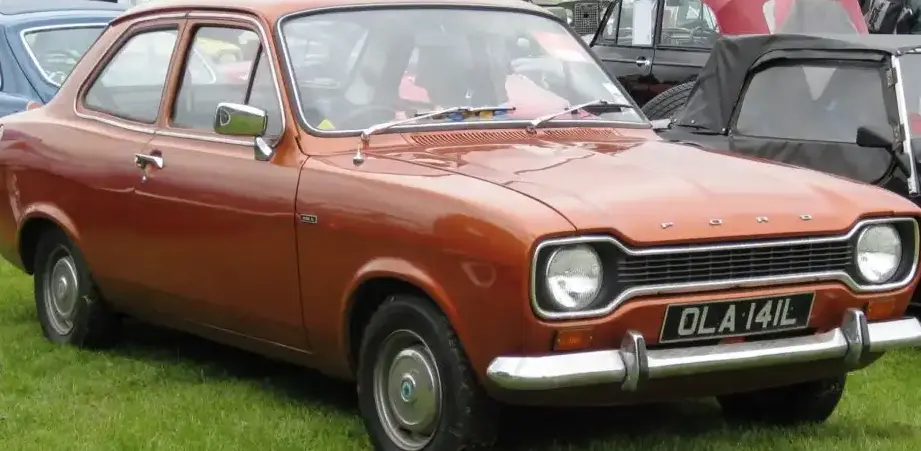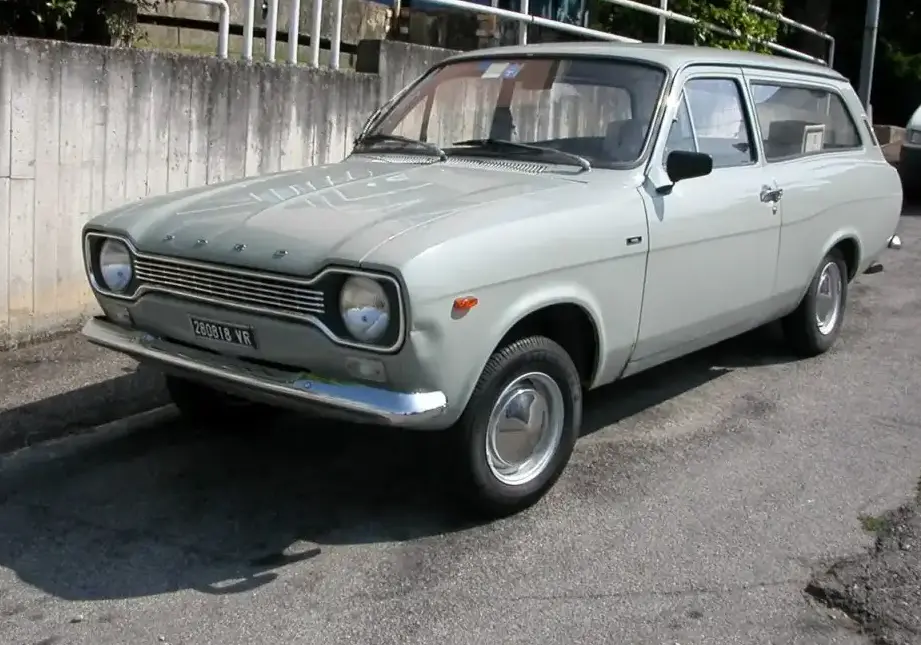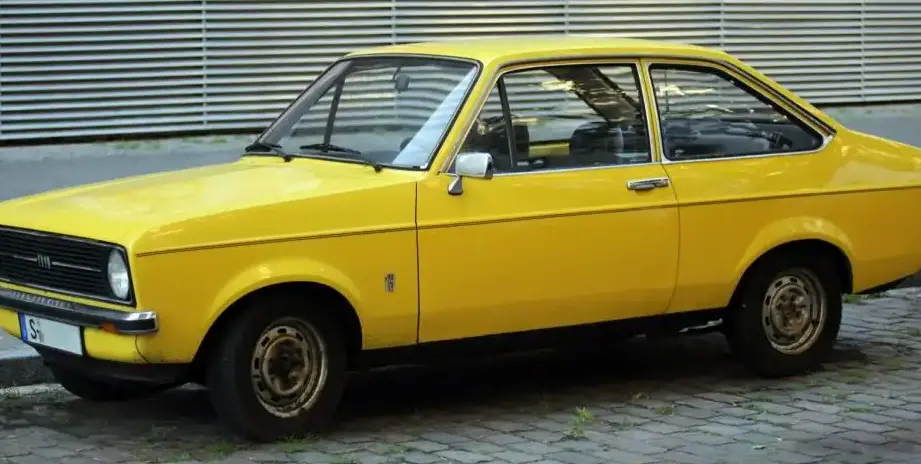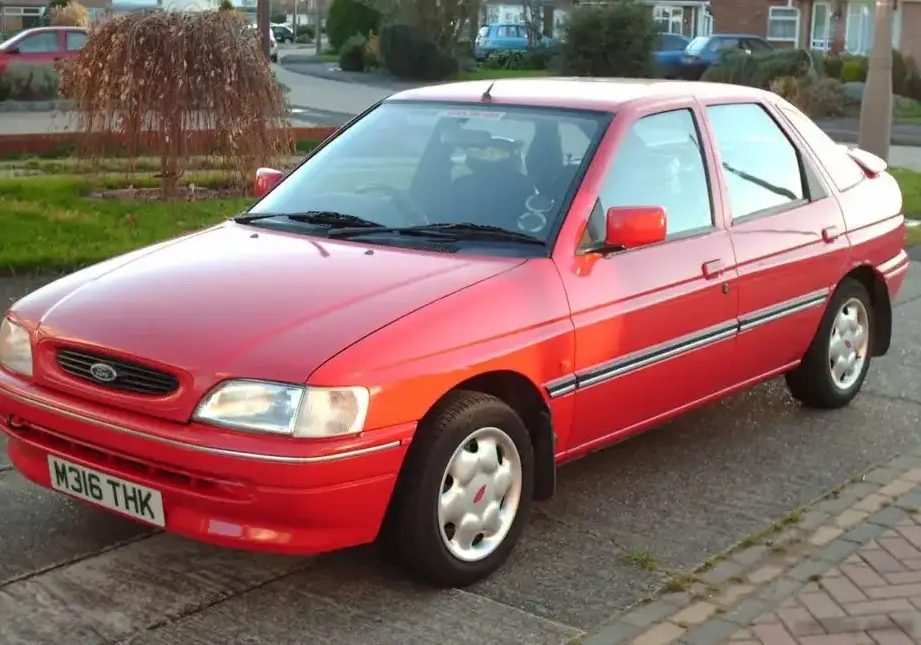
The Ford Escort VI Hatch (GAL) 1.8 i 16V XR3i, produced between 1992 and 1996, represented a sporty iteration within the sixth generation of the popular Ford Escort. Positioned as a performance-oriented trim, the XR3i aimed to deliver a more engaging driving experience than the standard Escort models. It was built on the GAL platform, a front-wheel-drive chassis shared with other Ford models of the era, and served as a key offering in the European market, where the Escort was a consistently strong seller. This variant, with its 1.8-liter engine and five-speed manual transmission, occupied a middle ground in the XR3i lineup, offering a balance between performance and affordability.
Technical Specifications
| Brand | Ford |
| Model | Escort |
| Generation | Escort VI Hatch (GAL) |
| Type | 1.8 i 16V XR3i (105 Hp) |
| Start of production | 1992 |
| End of production | 1996 |
| Powertrain Architecture | Internal Combustion engine |
| Body type | Hatchback |
| Seats | 5 |
| Doors | 3 |
| Fuel consumption (combined) | 8.1 l/100 km (29 US mpg, 34.9 UK mpg, 12.3 km/l) |
| Fuel Type | Petrol (Gasoline) |
| Acceleration 0 – 100 km/h | 10.8 sec |
| Acceleration 0 – 62 mph | 10.8 sec |
| Acceleration 0 – 60 mph | 10.3 sec |
| Maximum speed | 187 km/h (116.2 mph) |
| Weight-to-power ratio | 10.8 kg/Hp, 92.9 Hp/tonne |
| Weight-to-torque ratio | 7.4 kg/Nm, 135.4 Nm/tonne |
| Power | 105 Hp @ 5500 rpm |
| Power per litre | 58.5 Hp/l |
| Torque | 153 Nm @ 4000 rpm (112.85 lb.-ft. @ 4000 rpm) |
| Engine layout | Front, Transverse |
| Engine Model/Code | RDA |
| Engine displacement | 1796 cm3 (109.6 cu. in.) |
| Number of cylinders | 4 |
| Engine configuration | Inline |
| Cylinder Bore | 80.6 mm (3.17 in.) |
| Piston Stroke | 88 mm (3.46 in.) |
| Compression ratio | 10:1 |
| Number of valves per cylinder | 4 |
| Fuel injection system | Multi-port manifold injection |
| Engine aspiration | Naturally aspirated engine |
| Valvetrain | DOHC |
| Engine oil capacity | 4.25 l (4.49 US qt | 3.74 UK qt) |
| Coolant capacity | 7 l (7.4 US qt | 6.16 UK qt) |
| Kerb Weight | 1130 kg (2491.22 lbs.) |
| Max. weight | 1600 kg (3527.4 lbs.) |
| Max load | 470 kg (1036.17 lbs.) |
| Trunk (boot) space – minimum | 380 l (13.42 cu. ft.) |
| Trunk (boot) space – maximum | 735 l (25.96 cu. ft.) |
| Fuel tank capacity | 55 l (14.53 US gal | 12.1 UK gal) |
| Length | 4108 mm (161.73 in.) |
| Width | 1696 mm (66.77 in.) |
| Height | 1379 mm (54.29 in.) |
| Wheelbase | 2525 mm (99.41 in.) |
| Front track | 1443 mm (56.81 in.) |
| Rear track | 1455 mm (57.28 in.) |
| Drivetrain Architecture | Front wheel drive |
| Number of gears and type of gearbox | 5 gears, manual transmission |
| Front suspension | Wishbone |
| Rear suspension | Coil spring |
| Front brakes | Ventilated discs |
| Rear brakes | Drum |
| Steering type | Steering rack and pinion |
| Power steering | Hydraulic Steering |
| Tires size | 185/60 R14 H |
Powertrain & Engine Architecture
The heart of the XR3i was the Ford RDA engine, a 1.8-liter inline-four cylinder powerplant. This engine featured a 16-valve dual overhead camshaft (DOHC) configuration, which allowed for improved breathing and higher revs compared to older Ford engines. The RDA engine utilized multi-port fuel injection, a significant advancement over earlier carburetor systems, providing more precise fuel delivery and contributing to better fuel efficiency and reduced emissions. The engine’s 105 horsepower at 5500 rpm and 153 Nm (113 lb-ft) of torque at 4000 rpm were respectable figures for its time, though not class-leading. The five-speed manual transmission was the standard offering, providing drivers with good control over the engine’s powerband. The transmission’s gear ratios were tuned to provide a balance between acceleration and cruising efficiency.
Driving Characteristics
The 1.8L XR3i offered a noticeably more spirited driving experience than the base Escort models. While not a true hot hatch in the vein of the later RS2000, it provided adequate acceleration and handling for everyday driving and occasional spirited runs. The 0-60 mph time of around 10.3 seconds was competitive for its era. The five-speed gearbox allowed drivers to keep the engine in its optimal power range, and the front-wheel-drive layout provided predictable handling. Compared to the later 1.8L Zetec engine found in subsequent Escort generations, the RDA engine felt less refined and produced less peak power, but it was known for its durability and relatively simple maintenance requirements. The XR3i’s suspension was tuned for a slightly firmer ride than standard Escorts, improving body control in corners.
Equipment & Trim Levels
The XR3i trim level came standard with a number of features designed to enhance both comfort and aesthetics. Interior appointments typically included sport seats with upgraded upholstery, often featuring a distinctive pattern. The dashboard featured a more comprehensive instrument cluster than base models, including a tachometer. Power steering was standard, making the car easier to maneuver at low speeds. Exterior features included body-colored bumpers and side moldings, alloy wheels (typically 14-inch), and a rear spoiler. Optional extras included a sunroof, upgraded audio systems, and air conditioning. The XR3i was positioned as a step above the base Escort and the more economy-focused models, offering a more premium feel.
Chassis & Braking
The Escort VI utilized a front-wheel-drive chassis with independent front suspension using wishbones and a coil spring rear suspension. The XR3i benefitted from a slightly stiffer suspension setup compared to lower trims, improving handling. Braking duties were handled by ventilated discs on the front wheels and drum brakes on the rear. While adequate for normal driving, the rear drum brakes were a point of criticism, as they offered less stopping power and were more prone to fade under heavy use compared to disc brakes. The steering system employed a rack and pinion setup with hydraulic power assistance, providing precise and responsive steering feel.
Market Reception & Comparison
The Escort VI XR3i was generally well-received by automotive critics as a capable and affordable performance hatchback. It was praised for its handling, comfortable ride, and relatively fuel-efficient engine. However, some critics noted that the engine lacked the outright power of rivals such as the Volkswagen Golf GTI or the Peugeot 205 GTI. Compared to other Escort variants, the XR3i offered a significant performance upgrade, but at a higher price point. The 1.6L models were more affordable, while the later 2.0L Zetec versions offered considerably more power. Fuel economy was reasonable for a performance-oriented car of the era, averaging around 29 US mpg in combined driving.
Legacy
The Ford Escort VI XR3i, particularly the 1.8L variant, has developed a following among classic car enthusiasts. The RDA engine is known for its reliability and relative simplicity, making it a relatively easy engine to maintain. Parts availability is generally good, although some specific trim pieces can be difficult to find. Today, well-maintained examples of the XR3i are sought after by collectors and enthusiasts who appreciate its classic styling and engaging driving experience. While not a particularly rare car, the XR3i represents a significant chapter in the history of the Ford Escort and remains a popular choice for those seeking a nostalgic and affordable performance hatchback.