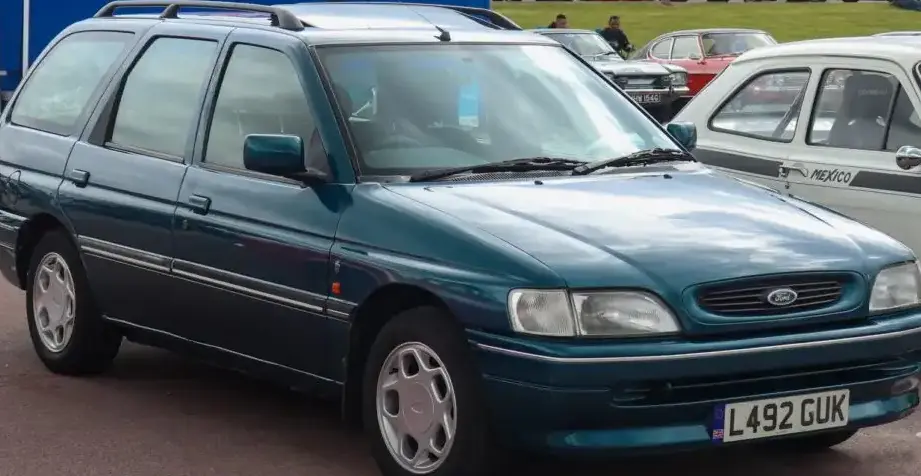
The Ford Escort VI Turnier 1.3, produced between 1992 and 1995, represents the entry-level powertrain option for the sixth-generation Escort Turnier (estate) model, designated as the GAL series. Positioned as an affordable and practical family vehicle, this variant catered to buyers prioritizing economy and functionality over outright performance. It served as the base model within the Turnier lineup, sitting below the 1.6 and 1.8-liter variants, and was primarily sold in European markets. The Escort VI generation itself was a significant update for Ford, introducing a more rounded and aerodynamic design compared to its predecessor, and benefiting from improvements in safety and build quality.
Technical Specifications
| Brand | Ford |
| Model | Escort |
| Generation | Escort VI Turnier (GAL) |
| Type (Engine) | 1.3 (60 Hp) |
| Start of production | 1992 |
| End of production | 1995 |
| Powertrain Architecture | Internal Combustion engine |
| Body type | Station wagon (estate) |
| Fuel Type | Petrol (Gasoline) |
| Power | 60 Hp |
| Engine Model/Code | J6A, J4B |
| Engine aspiration | Naturally aspirated engine |
| Engine oil capacity | 3.25 l (3.43 US qt | 2.86 UK qt) |
| Coolant capacity | 7.1 l (7.5 US qt | 6.25 UK qt) |
Powertrain & Engine Architecture
The Escort VI Turnier 1.3 was equipped with the Ford J6A or J4B engine, a 1.3-liter inline-four cylinder petrol engine. This engine was a mainstay in Ford’s European lineup for several years, known for its simplicity and reliability. The J6A and J4B codes denote slight variations in specification, often relating to emissions control equipment. The engine featured a single overhead camshaft (SOHC) valvetrain operating two valves per cylinder. Fuel delivery was managed by a Bosch fuel injection system, a significant upgrade from the carburetors used in earlier Escort models. This injection system, while relatively basic by modern standards, provided improved fuel efficiency and smoother operation. The engine’s modest 60 horsepower output was achieved through a relatively low compression ratio and conservative ignition timing, prioritizing durability and fuel economy over peak performance. The engine was typically paired with a four-speed automatic transmission, although a five-speed manual transmission was also available as an option. The automatic transmission, while offering convenience, was known to slightly reduce fuel economy and responsiveness compared to the manual counterpart.
Driving Characteristics
The 1.3-liter engine and automatic transmission combination in the Escort VI Turnier resulted in a driving experience focused on practicality rather than excitement. Acceleration was leisurely, with 0-60 mph times estimated to be around 14-16 seconds. The automatic transmission featured relatively widely spaced gear ratios, prioritizing fuel efficiency at cruising speeds. The engine felt strained when attempting brisk acceleration or climbing hills, requiring frequent downshifts from the automatic gearbox. Compared to the 1.6 and 1.8-liter versions, the 1.3 felt noticeably underpowered, particularly when fully loaded with passengers and luggage. However, for everyday commuting and urban driving, the engine provided sufficient power. The steering was light and easy, making maneuvering in tight spaces straightforward. The suspension, while not particularly sporty, offered a comfortable ride, absorbing bumps and imperfections in the road surface reasonably well.
Equipment & Trim Levels
The Escort VI Turnier 1.3 typically came with a fairly basic level of equipment, reflecting its position as the entry-level model. Standard features generally included central locking, power steering, and a basic stereo system. Interior upholstery was typically cloth, with a durable but unremarkable finish. The dashboard layout was functional and straightforward, with clearly labeled controls. Optional extras included electric front windows, a sunroof, and upgraded stereo systems. Higher trim levels, such as the Ghia, offered more luxurious appointments, including upgraded upholstery, alloy wheels, and additional comfort features. The Turnier’s estate body style provided a generous amount of cargo space, making it a practical choice for families and those requiring a versatile vehicle. The rear seats could be folded down to further increase cargo capacity.
Chassis & Braking
The Escort VI Turnier 1.3 utilized a MacPherson strut front suspension and a semi-independent twist beam rear suspension. This suspension setup provided a good balance between ride comfort and handling. The front brakes were typically disc brakes, while the rear brakes were drum brakes. This configuration was common for vehicles in this price range during the early 1990s. The braking system was adequate for normal driving conditions, but lacked the stopping power of higher-performance Escort models equipped with larger brakes. Stabilizer bars were fitted to both the front and rear axles, helping to reduce body roll during cornering. The steering system was a rack and pinion setup, providing precise and responsive steering feel.
Market Reception & Comparison
The Escort VI Turnier 1.3 was generally well-received by critics as a practical and affordable family vehicle. However, its performance was often criticized as being underwhelming, particularly when compared to the more powerful engine options available in the Escort range. Fuel economy was a strong point, with the 1.3-liter engine achieving around 35-40 mpg in mixed driving conditions. Reliability was generally good, although the automatic transmission was sometimes prone to issues if not properly maintained. Compared to rivals such as the Vauxhall Astra Estate and the Volkswagen Golf Estate, the Escort VI Turnier 1.3 offered a competitive level of practicality and affordability. The 1.6-liter Escort Turnier offered a noticeable performance improvement, but at a higher price point. The 1.8-liter version provided even more power, but was significantly more expensive and less fuel-efficient.
Legacy
The Ford Escort VI Turnier 1.3, while not a particularly exciting vehicle, remains a popular choice among classic car enthusiasts and those seeking an affordable and reliable estate car. The J6A/J4B engine is known for its durability and relatively simple maintenance requirements. Parts availability is generally good, although some components may be becoming increasingly difficult to find. The automatic transmission, while not as robust as the manual gearbox, can provide years of reliable service with proper maintenance. Today, these Escort Turniers are often found in the used car market at very affordable prices, making them an attractive option for those seeking a practical and economical vehicle. They represent a snapshot of 1990s family motoring, prioritizing functionality and affordability over outright performance and luxury.