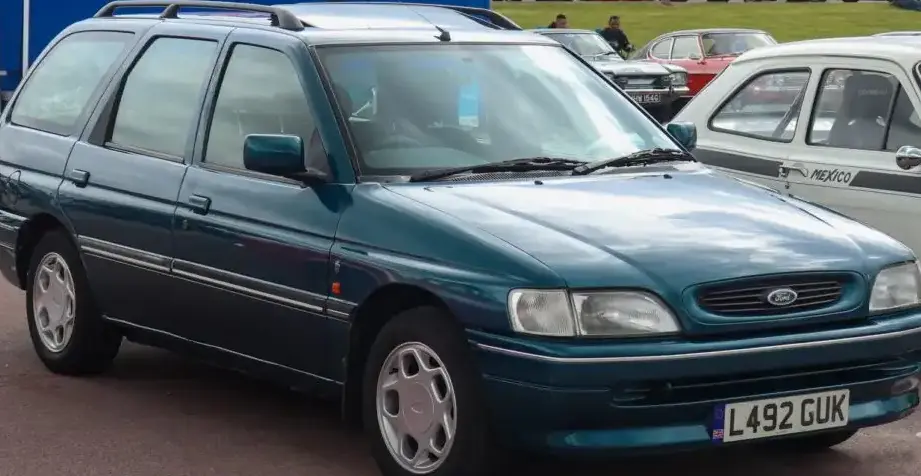
The Ford Escort VI Turnier 1.6i 16V, produced between 1994 and 1995, represents a mid-range offering within the sixth generation (GAL) of the globally successful Ford Escort line. This variant, a station wagon (estate) body style, was primarily aimed at the European market, offering a balance between practicality, fuel efficiency, and a reasonable level of performance. It occupied a position between the base-model Escorts and the more powerful, performance-oriented versions, appealing to families and individuals needing a versatile vehicle without the higher running costs of the top-tier trims. The Turnier, Ford’s designation for its station wagon models, provided increased cargo capacity compared to the saloon and hatchback versions.
Technical Specifications
| Brand | Ford |
| Model | Escort |
| Generation | Escort VI Turnier (GAL) |
| Type (Engine) | 1.6 i 16V (88 Hp) |
| Start of production | 1994 |
| End of production | 1995 |
| Powertrain Architecture | Internal Combustion engine |
| Body type | Station wagon (estate) |
| Fuel Type | Petrol (Gasoline) |
| Power | 88 Hp |
| Engine Model/Code | L1H |
| Engine aspiration | Naturally aspirated engine |
| Engine oil capacity | 4.25 l (4.49 US qt | 3.74 UK qt) |
| Coolant capacity | 7 l (7.4 US qt | 6.16 UK qt) |
Powertrain & Engine Architecture
The heart of the Escort VI Turnier 1.6i 16V is the Ford L1H engine, a 1.6-liter inline-four cylinder gasoline engine. This engine utilizes a naturally aspirated configuration and features a 16-valve dual overhead camshaft (DOHC) design. The 16-valve head, compared to earlier 8-valve Escort engines, significantly improved breathing and allowed for a higher redline, contributing to the engine’s increased power output. Fuel delivery is managed by a multi-point fuel injection system, providing precise fuel metering for improved efficiency and reduced emissions. The L1H engine produces 88 horsepower (66 kW) and approximately 137 Nm (101 lb-ft) of torque.
The engine is typically paired with a four-speed automatic transmission. This transmission, while offering convenience, was not known for its particularly sporty characteristics. It prioritized smooth shifts and ease of use over outright performance. The automatic transmission’s gear ratios were geared towards fuel economy and comfortable cruising, rather than rapid acceleration. The transmission was a common Ford unit of the era, known for its relative reliability, though it lacked the sophistication of more modern automatic gearboxes.
Driving Characteristics
The driving experience in the Escort VI Turnier 1.6i 16V Automatic is best described as competent and comfortable. The 88 hp output, while not exhilarating, provides adequate power for everyday driving situations. Acceleration from 0 to 60 mph takes approximately 12-13 seconds, and top speed is around 105 mph. The automatic transmission contributes to a relaxed driving style, but it does detract from the overall responsiveness compared to the five-speed manual versions. The automatic’s shift points are programmed for fuel efficiency, meaning the engine can sometimes feel strained during overtaking maneuvers or when climbing hills. The suspension, typical of European Ford models of the period, offers a good balance between ride comfort and handling. It’s not a particularly sporty setup, but it effectively absorbs bumps and provides reasonable stability in corners.
Compared to the 1.8-liter versions of the Escort, the 1.6i 16V Automatic offers slightly less power and torque, resulting in slower acceleration and a lower top speed. However, the 1.6-liter engine is generally considered to be more fuel-efficient. Against the diesel variants, the 1.6i 16V provides a smoother and quieter driving experience, but at the cost of significantly higher fuel consumption.
Equipment & Trim Levels
The Escort VI Turnier 1.6i 16V typically came equipped with a reasonable level of standard features for its time. These included power steering, central locking, electric front windows, and an adjustable steering column. Interior upholstery was typically cloth, with a relatively simple dashboard layout. Optional extras included air conditioning, a sunroof, and upgraded audio systems. The trim level of the 1.6i 16V generally positioned it as a mid-range offering, bridging the gap between the basic ‘Popular’ and ‘LX’ models and the more luxurious ‘Ghia’ trim. The exterior styling was relatively understated, with body-colored bumpers and door handles being common features.
Chassis & Braking
The Escort VI Turnier 1.6i 16V utilizes a MacPherson strut front suspension and a semi-independent twist beam rear suspension. This setup provides a good compromise between ride comfort and handling. The front brakes are typically disc brakes, while the rear brakes are drum brakes. This configuration was common for vehicles in this class during the 1990s. The braking system is adequate for everyday use, but it lacks the stopping power of more modern braking systems. Stabilizer bars are fitted to both the front and rear axles to reduce body roll during cornering.
Market Reception & Comparison
The Escort VI Turnier 1.6i 16V Automatic received generally positive reviews from automotive critics. It was praised for its practicality, fuel efficiency, and comfortable ride. However, the automatic transmission was often criticized for its lack of responsiveness and its impact on fuel economy. Compared to other station wagons in its class, such as the Vauxhall/Opel Astra Estate and the Volkswagen Golf Estate, the Escort offered a competitive package in terms of price, features, and running costs. The 1.6-liter engine was considered a good all-rounder, providing sufficient power for most drivers without being overly expensive to run.
Legacy
The Ford Escort VI Turnier 1.6i 16V, while not a particularly rare or collectible model, remains a relatively reliable and affordable used car. The L1H engine is known for its durability, and the automatic transmission, while not the most sophisticated, is generally dependable if properly maintained. Common issues include oil leaks, corrosion (particularly in colder climates), and wear and tear on suspension components. Today, these Escorts are often sought after by enthusiasts looking for a classic European family car or as a project vehicle. Parts availability is generally good, thanks to the Escort’s widespread popularity during its production run. The 1.6i 16V Automatic represents a practical and affordable entry point into the world of classic Ford ownership.