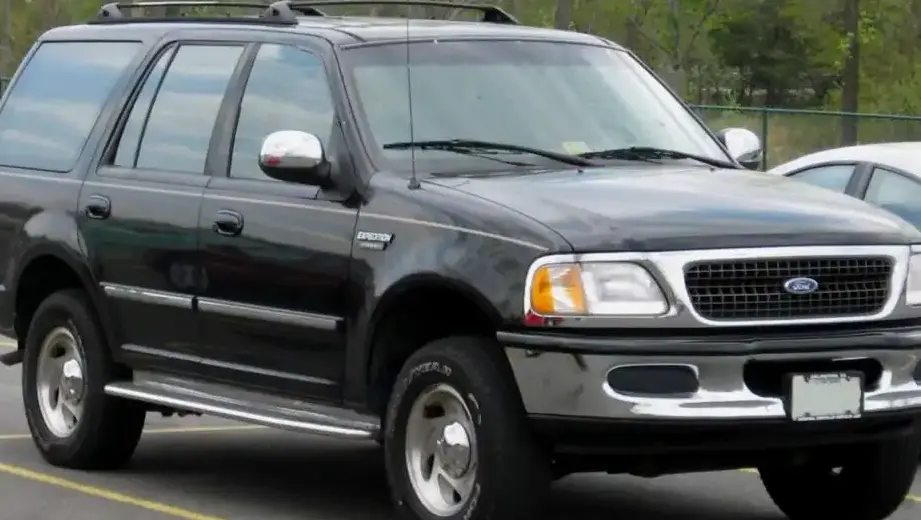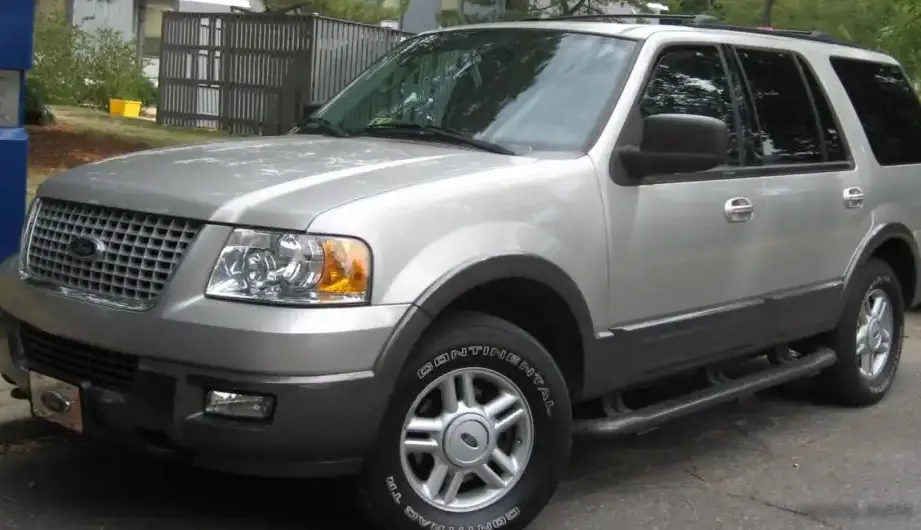
The Ford Expedition II 5.4i V8, produced from 2003 to 2004, represented a significant iteration of Ford’s full-size SUV offering. Positioned as a larger, more spacious alternative to the standard Expedition, the “II” designation denoted its extended wheelbase and increased cargo capacity. This generation, built on the U246 platform, aimed to cater to families and those requiring substantial towing capabilities. The 5.4-liter V8 engine, paired with a four-speed automatic transmission, was a mainstay of the Expedition II lineup, offering a balance of power and usability for the North American market. It sat as the primary engine option, offering a step up in performance from potential future smaller engine variants.
Technical Specifications
| Brand | Ford |
| Model | Expedition |
| Generation | Expedition II |
| Type (Engine) | 5.4 i V8 16V L (263 Hp) |
| Start of production | 2003 |
| End of production | 2004 |
| Powertrain Architecture | Internal Combustion engine |
| Body type | SUV |
| Seats | 8 |
| Doors | 5 |
| Fuel consumption (urban) | 18.1 l/100 km (13 US mpg, 15.6 UK mpg, 5.5 km/l) |
| Fuel consumption (extra urban) | 13.1 l/100 km (18 US mpg, 21.6 UK mpg, 7.6 km/l) |
| Fuel Type | Petrol (Gasoline) |
| Acceleration 0 – 100 km/h | 9.5 sec |
| Acceleration 0 – 62 mph | 9.5 sec |
| Acceleration 0 – 60 mph | 9 sec |
| Maximum speed | 170 km/h (105.63 mph) |
| Weight-to-power ratio | 9.6 kg/Hp, 104.4 Hp/tonne |
| Weight-to-torque ratio | 5.3 kg/Nm, 188.1 Nm/tonne |
| Power | 263 Hp @ 4500 rpm |
| Power per litre | 48.7 Hp/l |
| Torque | 474 Nm @ 2500 rpm (349.6 lb.-ft. @ 2500 rpm) |
| Engine layout | Front, Longitudinal |
| Engine displacement | 5398 cm3 (329.41 cu. in.) |
| Number of cylinders | 8 |
| Engine configuration | V-engine |
| Cylinder Bore | 90.2 mm (3.55 in.) |
| Piston Stroke | 105.7 mm (4.16 in.) |
| Compression ratio | 9:1 |
| Number of valves per cylinder | 2 |
| Fuel injection system | Multi-port manifold injection |
| Engine aspiration | Naturally aspirated engine |
| Valvetrain | OHC |
| Engine oil capacity | 5.7 l (6.02 US qt | 5.02 UK qt) |
| Coolant | 18.4 l (19.44 US qt | 16.19 UK qt) |
| Kerb Weight | 2520 kg (5555.65 lbs.) |
| Max. weight | 3198 kg (7050.38 lbs.) |
| Max load | 678 kg (1494.73 lbs.) |
| Trunk (boot) space – minimum | 571 l (20.16 cu. ft.) |
| Trunk (boot) space – maximum | 1723 l (60.85 cu. ft.) |
| Fuel tank capacity | 106 l (28 US gal | 23.32 UK gal) |
| Length | 5228 mm (205.83 in.) |
| Width | 2000 mm (78.74 in.) |
| Height | 1971 mm (77.6 in.) |
| Wheelbase | 3023 mm (119.02 in.) |
| Front track | 1702 mm (67.01 in.) |
| Rear (Back) track | 1709 mm (67.28 in.) |
| Drivetrain Architecture | The Internal combustion engine (ICE) drives the rear wheels of the vehicle. |
| Drive wheel | Rear wheel drive |
| Number of gears and type of gearbox | 4 gears, automatic transmission |
| Front suspension | Double wishbone |
| Rear suspension | Double wishbone |
| Front brakes | Ventilated discs |
| Rear brakes | Ventilated discs |
| Assisting systems | ABS (Anti-lock braking system) |
| Steering type | Steering rack and pinion |
| Tires size | 265/70 R17 |
Powertrain & Engine Architecture
The heart of the Expedition II 5.4i was the 5.4-liter Triton V8 engine. This engine, designated with Ford engine codes like 3V, was a three-valve-per-cylinder design, enhancing volumetric efficiency and contributing to improved power output. The engine utilized a sequential multi-port fuel injection system, delivering fuel directly to each intake port for precise control. The 9:1 compression ratio was a compromise between performance and the ability to run on readily available gasoline grades. The four-speed 4R70W automatic transmission was chosen for its durability and suitability for towing. This transmission featured electronic control, optimizing shift points based on throttle position and vehicle speed. While not the most modern transmission by today’s standards, it was considered reliable and capable for the intended application.
Driving Characteristics
The 263 horsepower and 349 lb-ft of torque provided by the 5.4-liter V8 and 4R70W automatic combination resulted in respectable, though not exhilarating, performance. Acceleration from 0-60 mph took approximately 9 seconds. The automatic transmission, while smooth, wasn’t particularly quick to downshift, resulting in a slightly less responsive feel compared to the manual transmission options available in other Expedition trims. The gear ratios were optimized for towing and cruising, prioritizing usability over outright speed. The Expedition II felt substantial on the road, with a noticeable weight that contributed to a comfortable, stable ride. However, this weight also impacted handling, making it less agile than smaller SUVs.
Equipment & Trim Levels
The Expedition II 5.4i typically came standard with features like air conditioning, power windows and locks, a CD player, and cloth upholstery. Higher trim levels, such as the XLT and Limited, added features like leather seats, a premium sound system, heated front seats, and power-adjustable pedals. Optional extras included a DVD entertainment system, a sunroof, and upgraded wheels. The interior design was functional and family-oriented, with ample space for passengers and cargo. The extended wheelbase of the Expedition II provided significantly more cargo space behind the third row of seats compared to the standard Expedition.
Chassis & Braking
The Expedition II utilized a body-on-frame construction, providing a robust and durable platform. The suspension consisted of independent double wishbones at both the front and rear, offering a comfortable ride. Rear disc brakes were standard, providing adequate stopping power for the vehicle’s weight. An anti-lock braking system (ABS) was also standard equipment. The steering was rack-and-pinion, providing reasonable precision, though it lacked the feel of more modern steering systems. The tires, typically 265/70 R17, were chosen for a balance of on-road comfort and off-road capability.
Market Reception & Comparison
The Expedition II 5.4i was generally well-received by critics and consumers alike. It was praised for its spacious interior, comfortable ride, and strong towing capacity. However, some reviewers noted its relatively low fuel economy and somewhat sluggish acceleration. Compared to the standard Expedition, the II offered significantly more cargo space, making it a popular choice for large families. Compared to other full-size SUVs of the time, such as the Chevrolet Tahoe and GMC Yukon, the Expedition II offered a competitive combination of features, performance, and price. The 5.4L engine was known to be reliable, but required regular maintenance, including spark plug replacement, to prevent issues.
Legacy
The Ford Expedition II 5.4i remains a popular choice in the used car market today, particularly among those seeking a spacious and capable SUV for family transportation or towing. The 5.4-liter V8 engine, while not the most fuel-efficient, is generally considered reliable when properly maintained. Common issues include phaser failure and spark plug issues, but these are often addressed with preventative maintenance. The Expedition II’s robust construction and ample space have ensured its continued relevance, making it a viable option for those seeking a durable and practical full-size SUV.