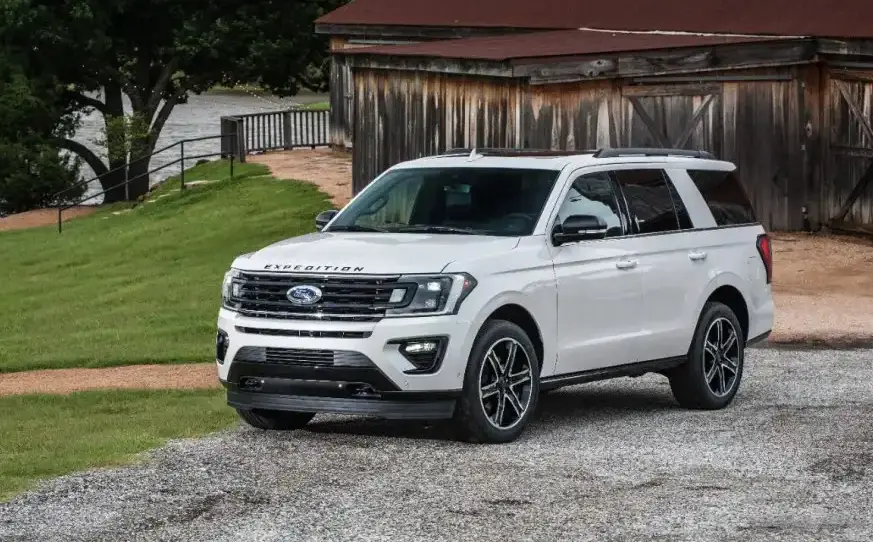
The Ford Expedition IV (U553), produced from 2017 to 2021, represents the fourth generation of Ford’s full-size SUV. This generation marked a significant shift for the Expedition, moving to an aluminum-alloy body construction and adopting a more independent rear suspension. Among the various powertrain options offered, the 3.5 EcoBoost V6 paired with a 10-speed automatic transmission became a popular choice, delivering a blend of power, capability, and improved fuel efficiency compared to previous generations. This variant positioned itself as the premium engine option within the Expedition lineup, appealing to buyers needing substantial towing capacity and a refined driving experience.
Technical Specifications
| Brand | Ford |
| Model | Expedition |
| Generation | Expedition IV (U553) |
| Type (Engine) | 3.5 EcoBoost V6 (375 Hp) Automatic |
| Start of production | 2017 |
| End of production | 2021 |
| Powertrain Architecture | Internal Combustion engine |
| Body type | SUV |
| Seats | 8 |
| Doors | 5 |
| Fuel consumption (economy) – urban | 13.8 l/100 km (17 US mpg, 20.5 UK mpg, 7.2 km/l) |
| Fuel consumption (economy) – extra urban | 9.8 l/100 km (24 US mpg, 28.8 UK mpg, 10.2 km/l) |
| Fuel consumption (economy) – combined | 11.7 l/100 km (20.1 US mpg, 24.1 UK mpg, 8.5 km/l) |
| Fuel Type | Petrol (Gasoline) |
| Weight-to-power ratio | 6.6 kg/Hp, 151.9 Hp/tonne |
| Weight-to-torque ratio | 3.9 kg/Nm, 258 Nm/tonne |
| Power | 375 Hp @ 5000 rpm |
| Power per litre | 107.3 Hp/l |
| Torque | 637 Nm @ 2250 rpm (469.83 lb.-ft. @ 2250 rpm) |
| Engine layout | Front, Longitudinal |
| Engine displacement | 3496 cm3 (213.34 cu. in.) |
| Number of cylinders | 6 |
| Engine configuration | V-engine |
| Compression ratio | 10:1 |
| Number of valves per cylinder | 4 |
| Fuel injection system | Direct injection |
| Engine aspiration | Twin-Turbo, Intercooler |
| Valvetrain | DOHC, Ti-VCT |
| Engine oil capacity | 5.7 l (6.02 US qt | 5.02 UK qt) |
| Coolant | 17.5 l (18.49 US qt | 15.4 UK qt) |
| Kerb Weight | 2469 kg (5443.21 lbs.) |
| Trunk (boot) space – minimum | 547 l (19.32 cu. ft.) |
| Trunk (boot) space – maximum | 2962 l (104.6 cu. ft.) |
| Fuel tank capacity | 88 l (23.25 US gal | 19.36 UK gal) |
| Permitted trailer load with brakes (12%) | 2722 kg (6000.98 lbs.) |
| Length | 5334 mm (210 in.) |
| Width | 2029 mm (79.88 in.) |
| Width with mirrors folded | 2123 mm (83.58 in.) |
| Width including mirrors | 2372 mm (93.39 in.) |
| Height | 1946 mm (76.61 in.) |
| Wheelbase | 3112 mm (122.52 in.) |
| Front track | 1717 mm (67.6 in.) |
| Rear (Back) track | 1707 mm (67.2 in.) |
| Front overhang | 970 mm (38.19 in.) |
| Rear overhang | 1252 mm (49.29 in.) |
| Ride height (ground clearance) | 249 mm (9.8 in.) |
| Approach angle | 23.4° |
| Departure angle | 22.2° |
| Ramp-over (brakeover) angle | 21.5° |
| Drivetrain Architecture | The Internal combustion engine (ICE) drives the rear wheels of the vehicle. |
| Drive wheel | Rear wheel drive |
| Number of gears and type of gearbox | 10 gears, automatic transmission SelectShift |
| Front suspension | Double wishbone |
| Rear suspension | Independent multi-link suspension |
| Front brakes | Ventilated discs |
| Rear brakes | Ventilated discs |
| Assisting systems | ABS (Anti-lock braking system) |
| Steering type | Steering rack and pinion |
| Power steering | Electric Steering |
Powertrain & Engine Architecture
The heart of this Expedition variant is the 3.5-liter EcoBoost V6 engine, internally designated as the third generation of the EcoBoost family. This engine utilizes a twin-turbocharged configuration, with the turbochargers positioned within the V-shape of the engine. This layout contributes to a more compact engine design and improved responsiveness. Direct fuel injection is employed to precisely deliver fuel into the combustion chambers, optimizing combustion efficiency and power output. The engine features a double overhead camshaft (DOHC) valvetrain with variable valve timing (Ti-VCT) on both intake and exhaust valves, further enhancing performance and fuel economy. The 10-speed automatic transmission, branded as SelectShift, provides a wide range of gear ratios, optimizing the engine’s power delivery for both acceleration and highway cruising. This transmission is a crucial component in maximizing the efficiency of the EcoBoost engine.
Driving Characteristics
The 3.5 EcoBoost V6 in the Expedition delivers a noticeable performance upgrade compared to lower-trim engines. The 375 horsepower and 637 lb-ft of torque provide ample power for accelerating a full-size SUV and towing substantial loads. The 10-speed automatic transmission contributes to smooth and responsive shifts, and the wide gear ratio spread allows the engine to operate in its optimal power band more frequently. While not as fuel-efficient as the naturally aspirated engine options, the EcoBoost offers a compelling balance of power and efficiency. The rear-wheel-drive configuration provides a traditional SUV feel, while available four-wheel drive enhances traction in various conditions. Compared to the base engine, the EcoBoost variant offers significantly quicker acceleration and a more confident feel when towing.
Equipment & Trim Levels
The 3.5 EcoBoost engine was typically offered on higher trim levels of the Expedition, such as the Limited, Platinum, and King Ranch. Standard features included leather upholstery, heated and ventilated front seats, a premium sound system, and advanced driver-assistance technologies like adaptive cruise control and lane-keeping assist. Optional extras often included a panoramic sunroof, rear-seat entertainment system, and upgraded towing packages. The interior design emphasized luxury and comfort, with high-quality materials and a spacious cabin. The Platinum and King Ranch trims further enhanced the luxury experience with unique exterior styling cues and exclusive interior appointments.
Chassis & Braking
The Expedition IV utilizes a fully independent rear suspension, a significant upgrade from the solid rear axle found in previous generations. This independent suspension improves ride quality and handling, particularly when compared to earlier Expeditions. The front suspension employs a double wishbone design. Braking duties are handled by ventilated discs on all four wheels, providing ample stopping power. An anti-lock braking system (ABS) is standard. The chassis is designed to handle the increased power and torque of the EcoBoost engine, providing a stable and controlled driving experience. The steering system utilizes an electric power steering (EPS) system, offering precise and responsive steering feel.
Market Reception & Comparison
The 3.5 EcoBoost V6-equipped Expedition received generally positive reviews from automotive critics. The engine was praised for its strong performance and refined power delivery. The 10-speed automatic transmission was also well-received for its smooth shifting and wide gear ratio spread. Fuel economy was considered competitive for a full-size SUV, although it was still lower than some of the smaller crossover SUVs. Compared to other trims, the EcoBoost variant commanded a higher price but offered a significant upgrade in performance and towing capacity. Reliability reports have been generally positive, with the EcoBoost engine proving to be a durable and dependable powertrain.
Legacy
The 3.5 EcoBoost V6 has become a mainstay in Ford’s lineup, powering a wide range of vehicles, including the F-150 and Explorer. The Expedition IV’s adoption of this engine marked a turning point for the model, establishing it as a capable and refined full-size SUV. In the used car market, the 2017-2021 Expedition with the 3.5 EcoBoost engine holds its value well, due to its strong performance, spacious interior, and proven reliability. These models continue to be a popular choice for families and those needing a versatile and capable SUV.