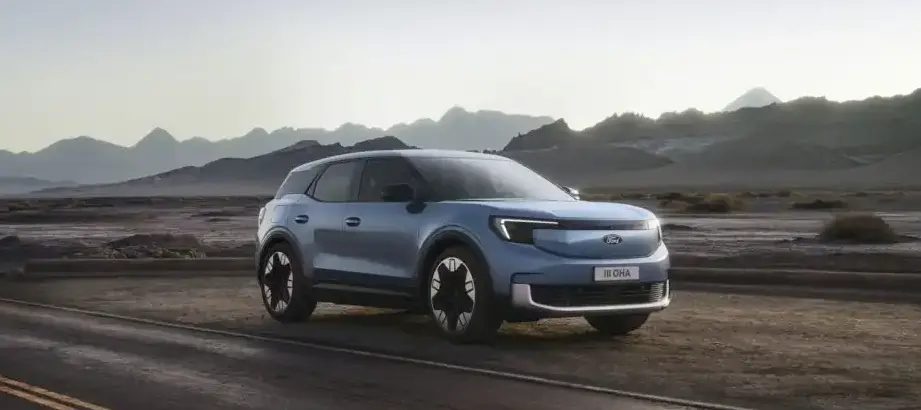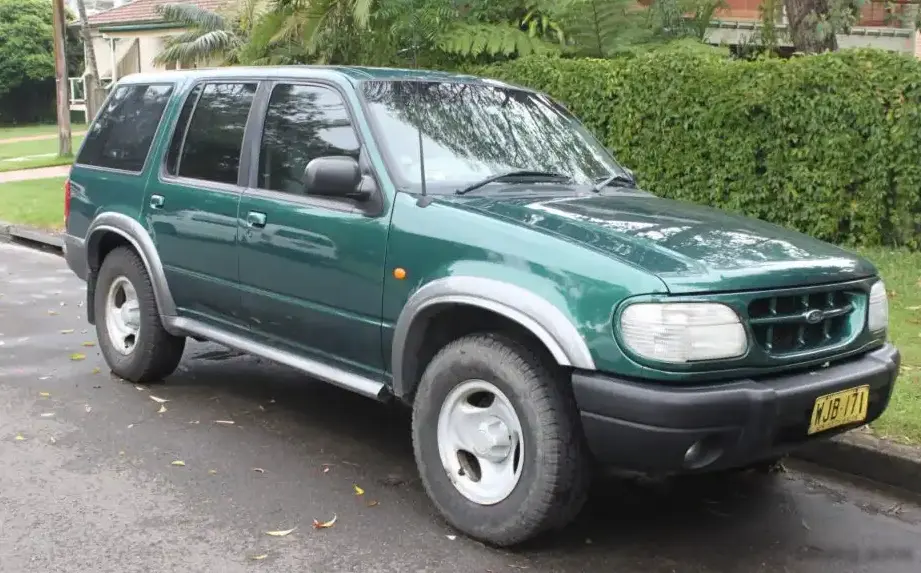
The Ford Explorer II 4.0 XL 4WD, produced from 1996 to 2003, represented a significant evolution of Ford’s popular SUV. This second-generation Explorer, built on the updated 1HX0 platform, aimed to refine the formula that made the first Explorer a sales success. The 4.0 XL 4WD trim occupied a middle ground in the Explorer lineup, offering a balance between capability, features, and affordability. It served as a workhorse for families and those needing a versatile vehicle capable of both on-road comfort and moderate off-road excursions. While a manual transmission was available, this article focuses specifically on the variant equipped with the 4.0-liter V6 engine and a four-speed automatic transmission.
Technical Specifications
| Brand | Ford |
| Model | Explorer |
| Generation | Explorer II |
| Type (Engine) | 4.0 XL 4WD (208 Hp) |
| Start of production | 1996 |
| End of production | 2003 |
| Powertrain Architecture | Internal Combustion engine |
| Body type | SUV |
| Seats | 5 |
| Doors | 3 |
| Fuel consumption (urban) | 18.2 l/100 km (12.9 US mpg) |
| Fuel consumption (extra urban) | 11.1 l/100 km (21.2 US mpg) |
| Fuel Type | Petrol (Gasoline) |
| Acceleration 0 – 100 km/h | 10.9 sec |
| Acceleration 0 – 62 mph | 10.9 sec |
| Acceleration 0 – 60 mph | 10.4 sec |
| Maximum speed | 171 km/h (106.25 mph) |
| Weight-to-power ratio | 8 kg/Hp |
| Weight-to-torque ratio | 4.9 kg/Nm |
| Power | 208 Hp @ 5250 rpm |
| Torque | 339 Nm @ 3000 rpm (250.03 lb.-ft. @ 3000 rpm) |
| Engine layout | Front, Longitudinal |
| Engine displacement | 3996 cm3 (243.85 cu. in.) |
| Number of cylinders | 6 |
| Engine configuration | V-engine |
| Cylinder Bore | 100.3 mm (3.95 in.) |
| Piston Stroke | 84.3 mm (3.32 in.) |
| Compression ratio | 9.7:1 |
| Number of valves per cylinder | 2 |
| Fuel injection system | Multi-port manifold injection |
| Engine aspiration | Naturally aspirated engine |
| Engine oil capacity | 4.7 l (4.97 US qt | 4.14 UK qt) |
| Coolant capacity | 7.4 l (7.82 US qt | 6.51 UK qt) |
| Kerb Weight | 1670 kg (3681.72 lbs.) |
| Max. weight | 2450 kg (5401.33 lbs.) |
| Max load | 780 kg (1719.61 lbs.) |
| Trunk (boot) space – minimum | 925 l (32.67 cu. ft.) |
| Trunk (boot) space – maximum | 1965 l (69.39 cu. ft.) |
| Fuel tank capacity | 83 l (21.93 US gal | 18.26 UK gal) |
| Length | 4530 mm (178.35 in.) |
| Width | 1790 mm (70.47 in.) |
| Height | 1800 mm (70.87 in.) |
| Wheelbase | 2595 mm (102.17 in.) |
| Front track | 1490 mm (58.66 in.) |
| Rear (Back) track | 1490 mm (58.66 in.) |
| Drive wheel | All wheel drive (4×4) |
| Number of gears and type of gearbox | 5 gears, manual transmission |
| Front suspension | Coil spring |
| Rear suspension | Leaf spring |
| Front brakes | Disc |
| Rear brakes | Disc |
| Assisting systems | ABS (Anti-lock braking system) |
| Steering type | Steering rack and pinion |
| Power steering | Hydraulic Steering |
| Tires size | 255/70 R16 |
Powertrain & Engine Architecture
The heart of the Explorer II 4.0 XL 4WD was the 4.0-liter (3996 cc) Cologne V6 engine. This engine, designated as the 4.0 OHV, was a staple of Ford’s lineup for many years. It featured a cast iron block and cylinder heads, a relatively simple design known for its durability. The engine utilized a multi-port fuel injection system, delivering fuel directly to each intake port for improved efficiency and power delivery. The valvetrain employed two valves per cylinder, operated by a single overhead camshaft. The 4.0L V6 produced 208 horsepower at 5250 rpm and 250 lb-ft of torque at 3000 rpm. Paired with the four-speed 4R70W automatic transmission, the powertrain offered a balance of usability and capability. The 4R70W was a robust automatic known for its reliability, though it wasn’t the most technologically advanced transmission of the era. It featured electronic control for smoother shifting and overdrive for improved highway fuel economy.
Driving Characteristics
The Explorer II 4.0 XL 4WD with the automatic transmission offered a comfortable and predictable driving experience. Acceleration from a standstill to 60 mph took around 10.4 seconds, which was adequate for everyday driving but not particularly sporty. The automatic transmission’s gear ratios were tuned for practicality rather than performance, prioritizing smooth shifts and fuel efficiency. Compared to the five-speed manual transmission option, the automatic resulted in slightly slower acceleration and reduced fuel economy. However, the automatic provided a more relaxed driving experience, especially in city traffic. The 4WD system, when engaged, provided enhanced traction in slippery conditions, making the Explorer a capable vehicle for light off-roading and inclement weather. The leaf spring rear suspension, while contributing to load-carrying capacity, could result in a somewhat bouncy ride, particularly when unladen.
Equipment & Trim Levels
The XL trim level represented a mid-range offering in the Explorer II lineup. Standard features typically included air conditioning, power windows and locks, an AM/FM stereo with a cassette player, and cloth upholstery. The 4WD system was a key feature of this trim. Optional extras included a CD player, upgraded sound system, power driver’s seat, and alloy wheels. Interior appointments were functional and durable, prioritizing practicality over luxury. The dashboard layout was straightforward and easy to use, with clearly labeled controls. The Explorer II offered a spacious interior for its class, with ample room for five passengers and a generous cargo area.
Chassis & Braking
The Explorer II utilized a body-on-frame construction, providing a robust and durable chassis. The front suspension consisted of coil springs and independent control arms, offering a reasonable level of ride comfort and handling. The rear suspension employed leaf springs, which were well-suited for carrying heavy loads but could contribute to a firmer ride. Braking duties were handled by disc brakes on all four wheels, providing adequate stopping power for the vehicle’s weight. An Anti-lock Braking System (ABS) was standard, enhancing safety by preventing wheel lockup during hard braking. The steering system was a hydraulic rack-and-pinion setup, offering responsive and precise steering control.
Market Reception & Comparison
The Explorer II 4.0 XL 4WD was generally well-received by critics and consumers alike. It was praised for its spacious interior, comfortable ride, and capable 4WD system. However, some reviewers noted the engine’s lack of refinement and the somewhat dated interior design. Compared to the V8-powered Explorer models, the 4.0L V6 offered better fuel economy but less outright performance. Against competitors like the Jeep Grand Cherokee and the Chevrolet Blazer, the Explorer II offered a compelling combination of features, reliability, and value. Fuel economy was average for the class, with EPA estimates around 15 mpg city and 20 mpg highway.
Legacy
The Ford Explorer II 4.0 XL 4WD has proven to be a relatively reliable vehicle, with many examples still on the road today. The 4.0-liter V6 engine is known for its durability, although regular maintenance is essential to prevent issues such as oil leaks and timing chain wear. The 4R70W automatic transmission is also generally reliable, but it may require occasional servicing. In the used car market, these Explorers are often sought after for their affordability and practicality. They represent a good value for those seeking a capable and versatile SUV, but potential buyers should be aware of potential maintenance needs associated with a vehicle of this age. The Explorer II solidified the Explorer’s position as a leading SUV in the American market, paving the way for future generations of the popular model.