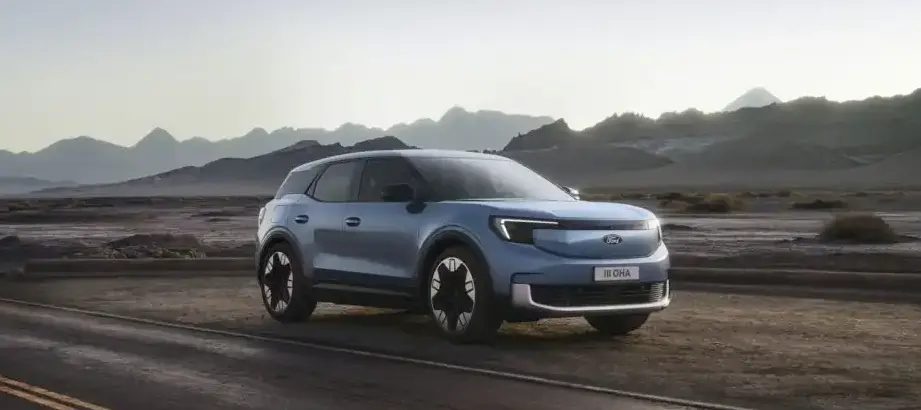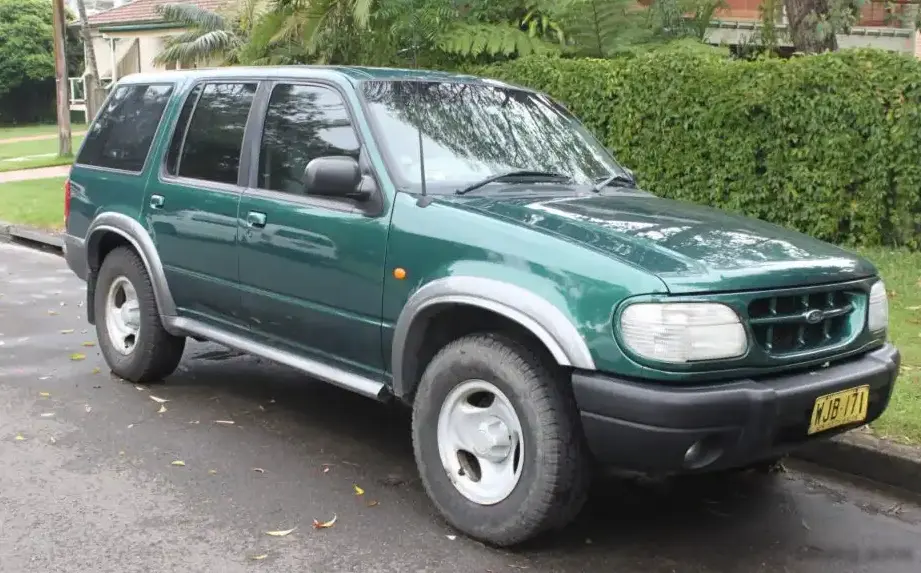
The Ford Explorer II 4.9 XL (3-door) was a short-wheelbase variant of the second-generation Ford Explorer, produced from 1999 to 2003. Positioned as a more rugged and utilitarian offering within the Explorer lineup, it catered to buyers seeking a compact SUV with off-road capability and a focus on practicality. This model distinguished itself from the standard five-door Explorer through its shorter length, two fewer doors, and a generally more basic trim level, making it a popular choice for those needing a versatile vehicle without the added bulk or expense of the full-size model. It was primarily sold in North America, offering a unique alternative in a market increasingly dominated by larger SUVs.
Technical Specifications
| Brand | Ford |
| Model | Explorer |
| Generation | Explorer II |
| Type (Engine) | 4.9 XL (3 dr) (213 Hp) |
| Start of production | 1999 |
| End of production | 2003 |
| Powertrain Architecture | Internal Combustion engine |
| Body type | SUV |
| Seats | 5 |
| Doors | 3 |
| Fuel consumption (urban) | 16.8 l/100 km (14 US mpg, 16.8 UK mpg) |
| Fuel consumption (extra urban) | 13.1 l/100 km (18 US mpg, 21.6 UK mpg) |
| Fuel Type | Petrol (Gasoline) |
| Maximum speed | 180 km/h (111.85 mph) |
| Weight-to-power ratio | 7.8 kg/Hp, 127.5 Hp/tonne |
| Weight-to-torque ratio | 4.4 kg/Nm, 227.5 Nm/tonne |
| Power | 213 Hp @ 4500 rpm |
| Power per litre | 43.1 Hp/l |
| Torque | 380 Nm @ 3500 rpm (280.27 lb.-ft. @ 3500 rpm) |
| Engine layout | Front, Longitudinal |
| Engine displacement | 4942 cm3 (301.58 cu. in.) |
| Number of cylinders | 8 |
| Engine configuration | V-engine |
| Cylinder Bore | 101.6 mm (4 in.) |
| Piston Stroke | 76.2 mm (3 in.) |
| Compression ratio | 9:1 |
| Number of valves per cylinder | 2 |
| Fuel injection system | Multi-port manifold injection |
| Engine aspiration | Naturally aspirated engine |
| Engine oil capacity | 4.7 l (4.97 US qt | 4.14 UK qt) |
| Coolant | 14.9 l (15.74 US qt | 13.11 UK qt) |
| Kerb Weight | 1670 kg (3681.72 lbs.) |
| Max. weight | 2450 kg (5401.33 lbs.) |
| Max load | 780 kg (1719.61 lbs.) |
| Trunk (boot) space – minimum | 925 l (32.67 cu. ft.) |
| Trunk (boot) space – maximum | 1965 l (69.39 cu. ft.) |
| Fuel tank capacity | 83 l (21.93 US gal | 18.26 UK gal) |
| Length | 4530 mm (178.35 in.) |
| Width | 1790 mm (70.47 in.) |
| Height | 1800 mm (70.87 in.) |
| Wheelbase | 2595 mm (102.17 in.) |
| Front track | 1490 mm (58.66 in.) |
| Rear (Back) track | 1490 mm (58.66 in.) |
| Drivetrain Architecture | The Internal combustion engine (ICE) drives the rear wheels of the vehicle. |
| Drive wheel | Rear wheel drive |
| Number of gears and type of gearbox | 4 gears, automatic transmission |
| Front suspension | Coil spring |
| Rear suspension | Leaf spring |
| Front brakes | Disc |
| Rear brakes | Disc |
| Assisting systems | ABS (Anti-lock braking system) |
| Steering type | Steering rack and pinion |
| Power steering | Hydraulic Steering |
| Tires size | 225/75 R15 |
Powertrain & Engine Architecture
The Explorer II 4.9 XL was powered by Ford’s 4.9-liter (301 cubic inch) Windsor V8 engine. This engine, a staple of Ford trucks and SUVs for decades, was known for its robust construction and ample low-end torque. The 4.9L engine featured a cast iron block and cylinder heads, a 9:1 compression ratio, and a multi-port fuel injection system. The engine produced 213 horsepower at 4500 rpm and 380 lb-ft of torque at 3500 rpm. The engine’s longitudinal mounting and rear-wheel-drive configuration were typical for body-on-frame SUVs of the era. Paired with the 4.9L V8 was a four-speed automatic transmission, providing smooth, if not particularly sporty, shifts. This transmission was chosen for its durability and ability to handle the engine’s torque output, rather than for maximizing fuel efficiency or performance.
Driving Characteristics
The 4.9L V8 and four-speed automatic combination in the Explorer II 4.9 XL delivered adequate, but not exhilarating, performance. Acceleration was sufficient for everyday driving and towing, but the vehicle wasn’t designed for quick sprints. The automatic transmission’s gear ratios were optimized for towing and off-road crawling, resulting in a relatively relaxed driving experience. Compared to the later, more fuel-efficient V6 options available in the Explorer lineup, the 4.9L V8 offered significantly more low-end torque, making it a better choice for those who frequently hauled loads or ventured off-road. However, this came at the expense of fuel economy. The shorter wheelbase of the Explorer II also contributed to a slightly more nimble feel compared to the standard Explorer, though it didn’t transform the vehicle into a sports car.
Equipment & Trim Levels
The Explorer II 4.9 XL trim level represented the base model of the two-door Explorer. Standard features typically included air conditioning, a basic AM/FM radio, cloth upholstery, and manual windows and locks. Power steering and disc brakes were standard. Optional extras included a CD player, upgraded sound system, cruise control, and a limited-slip rear differential. The interior was generally functional and durable, prioritizing practicality over luxury. The XL trim focused on providing essential features at an affordable price point.
Chassis & Braking
The Explorer II utilized a traditional body-on-frame construction, providing a robust and durable platform. The front suspension consisted of coil springs, while the rear suspension employed leaf springs – a configuration common for trucks and SUVs of this era. This setup prioritized load-carrying capacity and durability over refined handling. Braking duties were handled by disc brakes on all four wheels, supplemented by an anti-lock braking system (ABS) for improved stopping power and control. The Explorer II’s relatively heavy weight and high center of gravity meant that its handling characteristics were not as sharp as those of more modern crossover SUVs.
Market Reception & Comparison
The Explorer II 4.9 XL received mixed reviews from automotive critics. While the V8 engine and off-road capability were praised, the vehicle’s fuel economy and relatively basic interior were often criticized. Compared to the standard five-door Explorer, the II offered a more rugged and utilitarian alternative, but at the cost of practicality and passenger space. The 4.9L V8 was less fuel-efficient than the V6 engines offered in later Explorer models, but it provided significantly more torque for towing and off-road use. The Explorer II appealed to a niche market of buyers who prioritized durability, off-road capability, and a more compact size.
Legacy
The Ford Explorer II 4.9 XL, while a relatively short-lived model, has gained a following among enthusiasts and collectors. The 4.9L V8 engine is known for its reliability and longevity, and parts availability remains relatively good. However, like all older vehicles, the Explorer II is susceptible to rust and age-related wear and tear. Today, well-maintained examples of the Explorer II 4.9 XL are sought after by those looking for a classic SUV with a robust powertrain and a unique character. Its simplicity and durability make it a popular choice for restoration projects and off-road adventures.