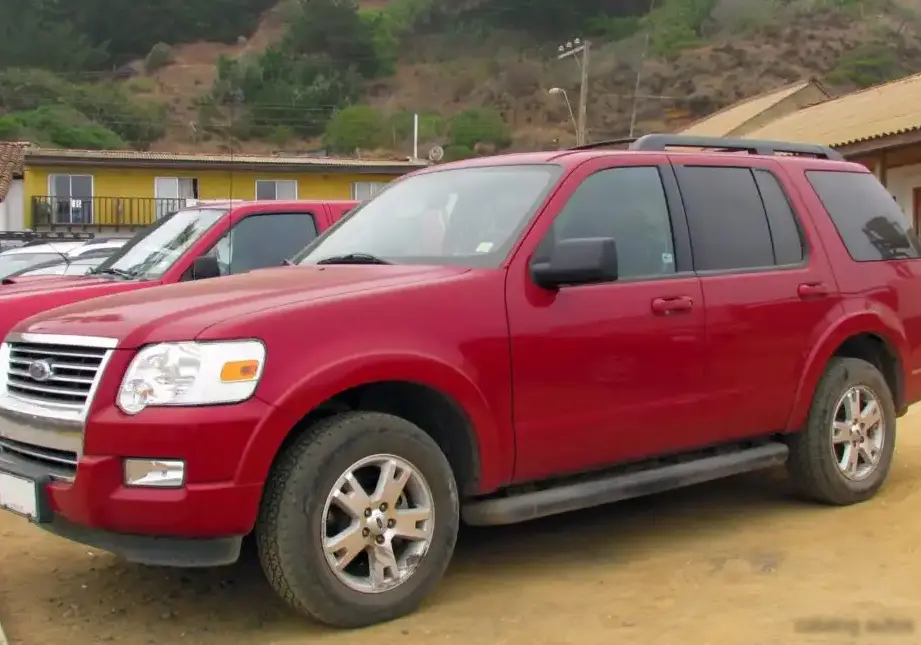
The Ford Explorer IV, produced from 2006 to 2010, represented a significant evolution in Ford’s popular SUV lineup. This fourth generation Explorer, built on the U246 platform, aimed to blend traditional body-on-frame construction with improved refinement and features. The 4.0 i V6 12V 4WD FFV (Flexible Fuel Vehicle) variant, generating 212 horsepower, occupied a middle ground in the Explorer IV range, offering a balance between capability, fuel efficiency, and affordability. It served as a popular choice for families and those needing a versatile vehicle capable of handling both on-road driving and light off-road conditions. This particular configuration was a mainstay of the Explorer lineup during these years, appealing to a broad customer base.
Technical Specifications
| Brand | Ford |
| Model | Explorer |
| Generation | Explorer IV |
| Type | 4.0 i V6 12V 4WD FFV (212 Hp) |
| Start of production | 2006 |
| End of production | 2010 |
| Powertrain Architecture | Internal Combustion engine |
| Body type | SUV |
| Seats | 5 |
| Doors | 5 |
| Fuel consumption (urban) | 21.4 l/100 km (11 US mpg) |
| Fuel consumption (extra urban) | 15.7 l/100 km (15 US mpg) |
| Fuel Type | Petrol (Gasoline) |
| Maximum speed | 158 km/h (98.18 mph) |
| Weight-to-power ratio | 9.5 kg/Hp |
| Weight-to-torque ratio | 5.8 kg/Nm |
| Power | 212 Hp @ 5100 rpm |
| Power per litre | 53 Hp/l |
| Torque | 344 Nm @ 3700 rpm (253.72 lb.-ft. @ 3700 rpm) |
| Engine layout | Front, Longitudinal |
| Engine displacement | 3998 cm3 (243.97 cu. in.) |
| Number of cylinders | 6 |
| Engine configuration | V-engine |
| Cylinder Bore | 100.33 mm (3.95 in.) |
| Piston Stroke | 84.3 mm (3.32 in.) |
| Compression ratio | 9.7:1 |
| Number of valves per cylinder | 2 |
| Fuel injection system | Multi-port manifold injection |
| Engine aspiration | Naturally aspirated engine |
| Engine oil capacity | 4.7 l (4.97 US qt | 4.14 UK qt) |
| Coolant capacity | 11.5 l (12.15 US qt | 10.12 UK qt) |
| Kerb Weight | 2005 kg (4420.27 lbs.) |
| Max. weight | 2604 kg (5740.84 lbs.) |
| Max load | 599 kg (1320.57 lbs.) |
| Trunk (boot) space – minimum | 391 l (13.81 cu. ft.) |
| Trunk (boot) space – maximum | 2492 l (88 cu. ft.) |
| Fuel tank capacity | 85 l (22.45 US gal | 18.7 UK gal) |
| Length | 4813 mm (189.49 in.) |
| Width | 1832 mm (72.13 in.) |
| Height | 1814 mm (71.42 in.) |
| Wheelbase | 2890 mm (113.78 in.) |
| Front track | 1547 mm (60.91 in.) |
| Rear track | 1555 mm (61.22 in.) |
| Drive wheel | All wheel drive (4×4) |
| Number of gears | 5 |
| Gearbox type | Automatic transmission |
| Front suspension | Torsion |
| Rear suspension | Coil spring |
| Front brakes | Disc |
| Rear brakes | Disc |
| Steering type | Steering rack and pinion |
| Tires size | 235/70 R16 |
Powertrain & Engine Architecture
The heart of the Explorer IV 4.0 i was the 4.0-liter Cologne V6 engine. This engine, designated with various codes depending on the year and specific calibration (though generally consistent across the 2006-2010 run), featured a 12-valve configuration (two valves per cylinder) and a cast iron block with aluminum cylinder heads. The “FFV” designation indicated its capability to run on up to 85% ethanol (E85) fuel, offering some flexibility at the pump. Fuel delivery was handled by a multi-port fuel injection system, providing adequate atomization for efficient combustion. The engine’s 9.7:1 compression ratio was a compromise between performance and the ability to run on lower octane fuels. The 5-speed automatic transmission, a Ford 5R55E unit, was the standard transmission for this variant. This transmission was known for its relatively smooth shifting, but also for potential issues with torque converter failure in some cases.
Driving Characteristics
The 212 horsepower and 254 lb-ft of torque produced by the 4.0L V6, when paired with the 5-speed automatic, provided adequate, though not exhilarating, performance. Acceleration from 0 to 60 mph typically took around 8-9 seconds. The automatic transmission’s gear ratios were tuned for everyday drivability and towing capacity rather than outright speed. Compared to the higher-output 4.6L V8 option, the 4.0L felt noticeably less powerful, especially when fully loaded or climbing hills. However, it offered better fuel economy. The 4WD system provided enhanced traction in slippery conditions, making it suitable for light off-roading and inclement weather. The automatic transmission, while convenient, did result in some power loss compared to the available manual transmission, and didn’t offer the same level of driver engagement.
Equipment & Trim Levels
The 4.0L V6 4WD Explorer IV typically came standard with features like air conditioning, power windows and locks, a CD player, and cloth upholstery. Higher trim levels, such as the Limited, added features like leather upholstery, heated front seats, a premium sound system, and alloy wheels. Optional extras included a power moonroof, a navigation system, and a rear-seat entertainment system. Safety features included anti-lock brakes and front airbags. The interior design was functional and family-oriented, with ample storage space and comfortable seating.
Chassis & Braking
The Explorer IV retained a traditional body-on-frame construction, providing a robust and durable platform. The front suspension utilized a torsion bar setup, while the rear featured coil springs. This configuration offered a comfortable ride, but wasn’t particularly sporty in handling. Braking duties were handled by disc brakes on all four wheels, providing adequate stopping power for the vehicle’s weight. The 4WD system was typically a part-time system, allowing the driver to switch between 2WD and 4WD modes as needed. Stabilizer bars were included at both the front and rear to reduce body roll during cornering.
Market Reception & Comparison
The Explorer IV 4.0L V6 4WD FFV was generally well-received by critics as a practical and versatile SUV. It was praised for its spacious interior, comfortable ride, and decent fuel economy for its class. However, some reviewers noted that the 4.0L engine felt underpowered compared to the V8 option. Compared to competitors like the Chevrolet TrailBlazer and the Jeep Grand Cherokee, the Explorer offered a more refined interior and a smoother ride. Fuel economy was comparable to other V6-powered SUVs of the time, averaging around 14-16 mpg in mixed driving. Reliability was generally good, although some owners reported issues with the automatic transmission and the fuel pump.
Legacy
The Ford Explorer IV 4.0L V6 4WD FFV remains a popular choice in the used car market today, particularly for those seeking an affordable and capable SUV. The 4.0L engine, while not the most powerful, is known for its durability and relatively low maintenance costs. The 5R55E transmission, however, remains a potential weak point, and should be inspected carefully before purchase. Overall, this Explorer variant represents a solid and reliable option for families and individuals needing a versatile vehicle for everyday use and occasional adventures. Its flexible fuel capability also adds a degree of future-proofing, allowing it to run on alternative fuels as they become more readily available.