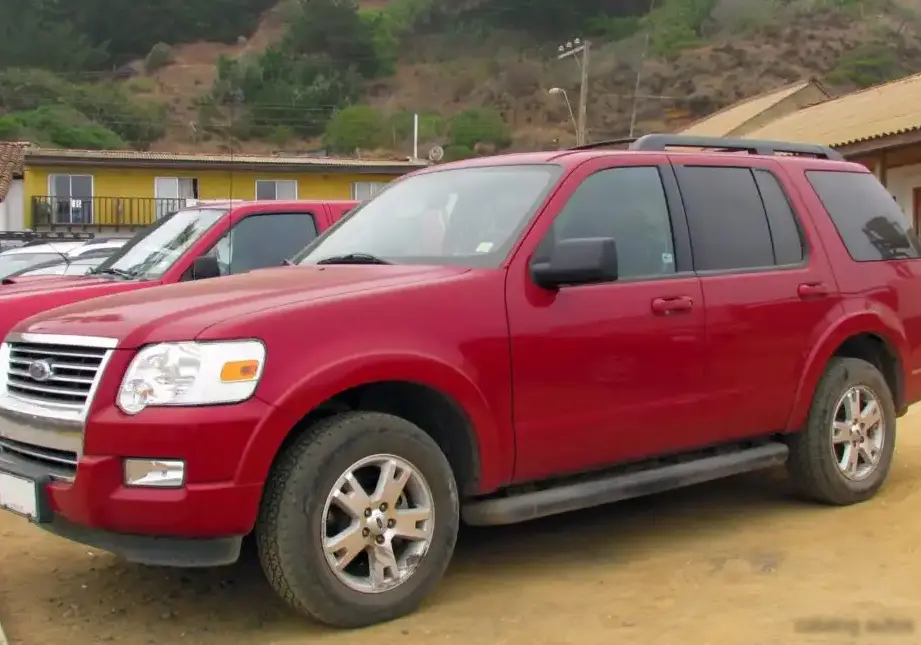
The Ford Explorer IV 4.0i V6, produced between 2006 and 2010, represented a significant iteration of Ford’s popular SUV. This fourth-generation Explorer (platform U246) aimed to blend traditional body-on-frame construction with more refined on-road manners. The 4.0i V6 variant, generating 212 horsepower, occupied a middle ground in the Explorer lineup, offering a balance between performance and affordability. It served as a step up from the base 4.0L engine, while remaining more accessible than the higher-trim level options. This model was primarily targeted at the North American market, where large SUVs remained a dominant force in the automotive landscape.
Technical Specifications
| Brand | Ford |
| Model | Explorer |
| Generation | Explorer IV |
| Type (Engine) | 4.0i V6 (212 Hp) |
| Start of production | 2006 |
| End of production | 2010 |
| Powertrain Architecture | Internal Combustion engine |
| Body type | SUV |
| Seats | 5 |
| Doors | 5 |
| Fuel consumption (urban) | 14.7 l/100 km (16 US mpg, 19.2 UK mpg) |
| Fuel consumption (extra urban) | 11.2 l/100 km (21 US mpg, 25.2 UK mpg) |
| Fuel Type | Petrol (Gasoline) |
| Acceleration 0 – 100 km/h | 9.4 sec |
| Acceleration 0 – 62 mph | 9.4 sec |
| Acceleration 0 – 60 mph | 8.9 sec |
| Maximum speed | 158 km/h (98.18 mph) |
| Weight-to-power ratio | 9.4 kg/Hp |
| Weight-to-torque ratio | 5.8 kg/Nm |
| Power | 212 Hp @ 5100 rpm |
| Power per litre | 53 Hp/l |
| Torque | 344 Nm @ 3700 rpm (253.72 lb.-ft. @ 3700 rpm) |
| Engine layout | Front, Longitudinal |
| Engine displacement | 3998 cm3 (243.97 cu. in.) |
| Number of cylinders | 6 |
| Engine configuration | V-engine |
| Cylinder Bore | 100.33 mm (3.95 in.) |
| Piston Stroke | 84.3 mm (3.32 in.) |
| Compression ratio | 9.7:1 |
| Number of valves per cylinder | 2 |
| Fuel injection system | Multi-port manifold injection |
| Engine aspiration | Naturally aspirated engine |
| Engine oil capacity | 4.7 l (4.97 US qt | 4.14 UK qt) |
| Coolant | 11.5 l (12.15 US qt | 10.12 UK qt) |
| Kerb Weight | 1995 kg (4398.22 lbs.) |
| Max. weight | 2595 kg (5721 lbs.) |
| Max load | 600 kg (1322.77 lbs.) |
| Trunk (boot) space – minimum | 391 l (13.81 cu. ft.) |
| Trunk (boot) space – maximum | 2492 l (88 cu. ft.) |
| Fuel tank capacity | 85 l (22.45 US gal | 18.7 UK gal) |
| Length | 4813 mm (189.49 in.) |
| Width | 1832 mm (72.13 in.) |
| Height | 1814 mm (71.42 in.) |
| Wheelbase | 2890 mm (113.78 in.) |
| Front track | 1547 mm (60.91 in.) |
| Rear (Back) track | 1555 mm (61.22 in.) |
| Drivetrain Architecture | The Internal combustion engine (ICE) drives the rear wheels of the vehicle. |
| Drive wheel | Rear wheel drive |
| Number of gears and type of gearbox | 5 gears, manual transmission |
| Front suspension | Torsion |
| Rear suspension | Coil spring |
| Front brakes | Ventilated discs |
| Rear brakes | Disc |
| Assisting systems | ABS (Anti-lock braking system) |
| Steering type | Steering rack and pinion |
| Tires size | 235/70 R16 |
Powertrain & Engine Architecture
The heart of the Explorer 4.0i V6 was the 4.0-liter Cologne V6 engine. This engine, internally designated as the 4.0L SOHC, featured a single overhead camshaft design, two valves per cylinder, and multi-port fuel injection. While not a cutting-edge design, it was a proven and reliable powerplant. The 212 horsepower output was achieved through a combination of engine tuning and a slightly higher compression ratio compared to the base 4.0L engine. The engine’s longitudinal mounting and rear-wheel-drive configuration were traditional for body-on-frame SUVs. The 5-speed manual transmission was the standard offering for this trim, providing drivers with direct control over the engine’s power. The transmission was chosen for its durability and ability to handle the engine’s torque output.
Driving Characteristics
The Explorer 4.0i V6 with the manual transmission offered a reasonably engaging driving experience for a large SUV. Acceleration from 0-60 mph took approximately 8.9 seconds, which was adequate for everyday driving and light towing. The 344 Nm (253.72 lb-ft) of torque provided sufficient pulling power for navigating hills and carrying loads. The manual transmission allowed drivers to maximize engine performance and maintain control in various driving conditions. Compared to the base 4.0L engine, the 4.0i V6 offered noticeably improved acceleration and responsiveness. However, it didn’t possess the outright performance of the optional V8 engine. The gear ratios were tuned for a balance between fuel efficiency and acceleration, with a relatively tall fifth gear for highway cruising.
Equipment & Trim Levels
The 4.0i V6 trim typically included standard features such as air conditioning, power windows and locks, a basic audio system, and cloth upholstery. Optional extras included leather upholstery, a premium sound system, a sunroof, and alloy wheels. Safety features like anti-lock brakes (ABS) were standard. The interior design was functional and durable, prioritizing practicality over luxury. The dashboard layout was straightforward, with easy-to-read gauges and controls. The Explorer offered a spacious cabin with ample room for passengers and cargo.
Chassis & Braking
The Explorer IV retained the body-on-frame construction of previous generations, providing a robust and durable chassis. The front suspension utilized a torsion bar setup, while the rear suspension employed coil springs. This configuration offered a comfortable ride quality, although it wasn’t as refined as the independent suspension systems found in some competing SUVs. The braking system consisted of ventilated discs at the front and solid discs at the rear. ABS was standard, enhancing braking performance and stability. The Explorer’s relatively high curb weight (1995 kg / 4398.22 lbs) required a capable braking system to ensure safe stopping distances.
Market Reception & Comparison
The Explorer 4.0i V6 was generally well-received by critics as a competent and affordable SUV. It offered a good balance of performance, fuel economy, and features. However, some reviewers noted that the interior materials were not as upscale as those found in some competitors. Compared to the base 4.0L Explorer, the 4.0i V6 offered a noticeable improvement in performance, making it a more appealing option for drivers who frequently tow or carry heavy loads. Fuel economy was reasonable for a vehicle of its size, averaging around 16 mpg in the city and 21 mpg on the highway. Reliability was generally good, although some owners reported minor issues with the fuel injection system and cooling system.
Legacy
The Ford Explorer IV 4.0i V6 remains a popular choice in the used car market today, particularly among buyers seeking a reliable and affordable SUV. The 4.0-liter V6 engine is known for its durability and relatively low maintenance costs. While not the most fuel-efficient or technologically advanced SUV, it offers a practical and capable transportation solution. Parts availability is generally good, and repair costs are reasonable. The Explorer IV 4.0i V6 represents a significant chapter in the history of the Ford Explorer, solidifying its position as one of America’s most popular SUVs.