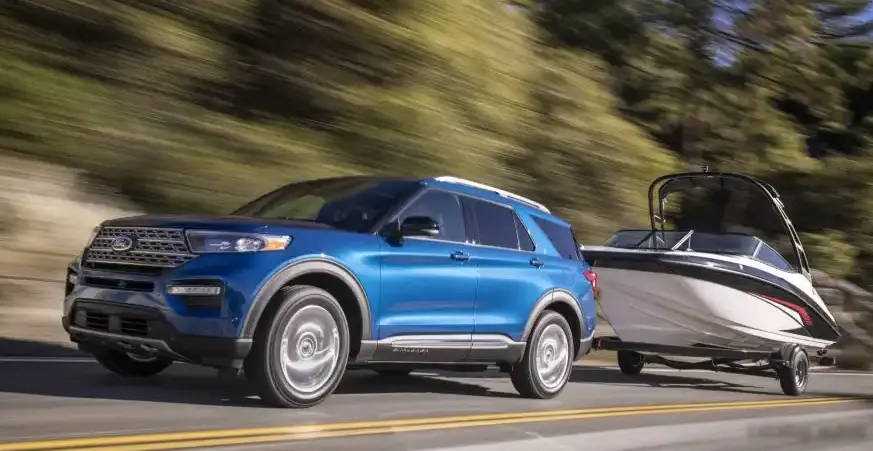
The Ford Explorer VI 3.3 V6 Hybrid SelectShift, produced from May 2019 to October 2023, represents a significant step in the evolution of Ford’s popular SUV. Positioned as a mid-to-upper trim level within the sixth generation Explorer (2020-2023), this variant combined a naturally aspirated 3.3-liter V6 engine with a full hybrid electric vehicle (FHEV) system and a sophisticated 10-speed automatic transmission. It aimed to deliver a balance of power, fuel efficiency, and towing capability, appealing to families and drivers seeking a versatile and comfortable driving experience. The Explorer VI moved to a rear-wheel-drive based platform, a departure from previous generations, and this hybrid variant was a key component of Ford’s electrification strategy.
Technical Specifications
| Brand | Ford |
| Model | Explorer |
| Generation | Explorer VI |
| Type (Engine) | 3.3 V6 (318 Hp) Hybrid SelectShift |
| Start of production | May, 2019 |
| End of production | October, 2023 |
| Powertrain Architecture | FHEV (Full Hybrid Electric Vehicle) |
| Body type | SUV |
| Seats | 6 |
| Doors | 5 |
| Fuel consumption (urban) | 8.7 l/100 km (27 US mpg) |
| Fuel consumption (extra urban) | 8.4 l/100 km (28 US mpg) |
| Fuel Type | Petrol (Gasoline) |
| Weight-to-power ratio | 7.1 kg/Hp |
| Weight-to-torque ratio | 5.2 kg/Nm |
| Electric motor power | 44 Hp |
| System power | 318 Hp @ 6500 rpm |
| System torque | 437 Nm @ 2500 rpm (322.31 lb.-ft. @ 2500 rpm) |
| Engine power | 290 Hp @ 6500 rpm |
| Engine torque | 353 Nm @ 4000 rpm (260.36 lb.-ft. @ 4000 rpm) |
| Engine displacement | 3340 cm3 (203.82 cu. in.) |
| Number of cylinders | 6 |
| Engine configuration | V-engine |
| Cylinder Bore | 90.41 mm (3.56 in.) |
| Piston Stroke | 86.7 mm (3.41 in.) |
| Compression ratio | 12:1 |
| Number of valves per cylinder | 4 |
| Fuel injection system | Direct injection and Multi-port manifold injection |
| Engine aspiration | Naturally aspirated engine |
| Valvetrain | DOHC |
| Engine oil capacity | 5.7 l (6.02 US qt | 5.02 UK qt) |
| Coolant capacity | 13.4 l (14.16 US qt | 11.79 UK qt) |
| Kerb Weight | 2251 kg (4962.61 lbs.) |
| Trunk (boot) space – minimum | 515 l (18.19 cu. ft.) |
| Trunk (boot) space – maximum | 2485 l (87.76 cu. ft.) |
| Fuel tank capacity | 68 l (17.96 US gal | 14.96 UK gal) |
| Permitted trailer load with brakes (12%) | 2265 kg (4993.47 lbs.) |
| Length | 5049 mm (198.78 in.) |
| Width | 2004 mm (78.9 in.) |
| Width with mirrors folded | 2100 mm (82.68 in.) |
| Width including mirrors | 2268 mm (89.29 in.) |
| Height | 1775 mm (69.88 in.) |
| Wheelbase | 3025 mm (119.09 in.) |
| Front track | 1699 mm (66.89 in.) |
| Rear track | 1699 mm (66.89 in.) |
| Front overhang | 856 mm (33.7 in.) |
| Rear overhang | 1168 mm (45.98 in.) |
| Ride height (ground clearance) | 200 mm (7.87 in.) |
| Approach angle | 20.1° |
| Departure angle | 22° |
| Ramp-over angle | 17.1° |
| Drivetrain Architecture | Rear wheel drive. FHEV. ICE and electric motor drive rear wheels. |
| Number of gears | 10 |
| Gearbox type | Automatic transmission SelectShift |
| Front suspension | Independent, McPherson with coil spring and anti-roll bar |
| Rear suspension | Independent multi-link spring suspension with stabilizer |
| Front brakes | Disc |
| Rear brakes | Disc |
| Steering type | Steering rack and pinion |
| Power steering | Electric |
| Tires size | 255/65 R18; 255/55 R20; 275/45 R21 |
| Wheel rims size | 18; 20; 21 |
Powertrain & Engine Architecture
At the heart of the Explorer VI 3.3 Hybrid lies the 3.3-liter “Dragon” V6 engine. This engine utilizes both direct injection and multi-port fuel injection, optimizing combustion efficiency and power delivery. The engine features a double overhead camshaft (DOHC) valvetrain with four valves per cylinder, contributing to its responsive nature. The hybrid system incorporates a single electric motor, integrated into the transmission, providing supplemental power and enabling electric-only driving at lower speeds. The combined system output of 318 horsepower at 6500 rpm and 437 Nm (322.31 lb-ft) of torque at 2500 rpm provides ample power for everyday driving and towing. The 10-speed SelectShift automatic transmission, co-developed with General Motors, is a key component, offering smooth and efficient gear changes. Its wide gear ratio spread allows the engine to operate in its optimal power band more frequently, improving both performance and fuel economy.
Driving Characteristics
The 3.3L Hybrid SelectShift Explorer offers a noticeably different driving experience compared to the turbocharged EcoBoost variants. While lacking the immediate punch of the turbo engines, the hybrid provides smooth, linear acceleration. The electric motor fills in torque gaps, making the powertrain feel responsive in city driving. The 10-speed transmission is well-tuned, providing seamless shifts and keeping the engine in its sweet spot. The rear-wheel-drive bias contributes to a more balanced feel, especially during cornering. Compared to the 1.5L EcoBoost, the 3.3L Hybrid offers significantly more power, making it better suited for towing and highway cruising. However, it doesn’t match the outright performance of the 2.3L or 3.5L EcoBoost models. The hybrid system prioritizes efficiency, and while not a sports car, the Explorer VI 3.3 Hybrid delivers a comfortable and capable driving experience.
Equipment & Trim Levels
The 3.3L Hybrid SelectShift was typically offered in higher trim levels, such as Limited and Platinum. Standard features included leather upholstery, heated and ventilated front seats, a power liftgate, a panoramic sunroof, and a premium sound system. Infotainment was handled by Ford’s SYNC 3 system, featuring an 8-inch touchscreen display with Apple CarPlay and Android Auto compatibility. Optional extras included adaptive cruise control, lane-keeping assist, a 360-degree camera system, and a rear-seat entertainment system. The Platinum trim added even more luxury features, such as quilted leather seats, premium wood trim, and a more powerful audio system.
Chassis & Braking
The Explorer VI utilizes a longitudinal rear-wheel-drive platform, providing a more stable and engaging driving experience. The front suspension features an independent McPherson strut setup with coil springs and an anti-roll bar. The rear suspension employs an independent multi-link design, also with coil springs and a stabilizer bar. This configuration provides a comfortable ride while maintaining good handling characteristics. All four wheels are equipped with disc brakes, providing ample stopping power. Anti-lock braking system (ABS) is standard, enhancing safety and control during emergency braking situations. The Explorer’s chassis is tuned to balance ride comfort with handling precision, making it suitable for both daily commuting and long road trips.
Market Reception & Comparison
The Explorer VI 3.3L Hybrid SelectShift was generally well-received by critics, who praised its smooth powertrain, comfortable ride, and spacious interior. Fuel economy was a key selling point, with the hybrid system delivering significantly better mileage than the non-hybrid variants. However, some reviewers noted that the hybrid system added weight, slightly impacting handling. Compared to the EcoBoost models, the hybrid offered a more refined and relaxed driving experience, appealing to buyers who prioritized comfort and efficiency over outright performance. Reliability reports have been mixed, with some owners reporting issues with the hybrid system, while others have experienced no problems.
Legacy
The Ford Explorer VI 3.3L Hybrid SelectShift represents an important step in Ford’s transition to electrified vehicles. While not without its quirks, the powertrain proved to be a capable and efficient option for families and drivers seeking a versatile SUV. On the used car market, these Explorers hold their value reasonably well, particularly those in higher trim levels with low mileage. The long-term reliability of the hybrid system remains a concern for some potential buyers, but with proper maintenance, these vehicles can provide years of reliable service. The Explorer VI 3.3 Hybrid paved the way for future Ford hybrid and electric SUVs, demonstrating the company’s commitment to sustainable transportation.