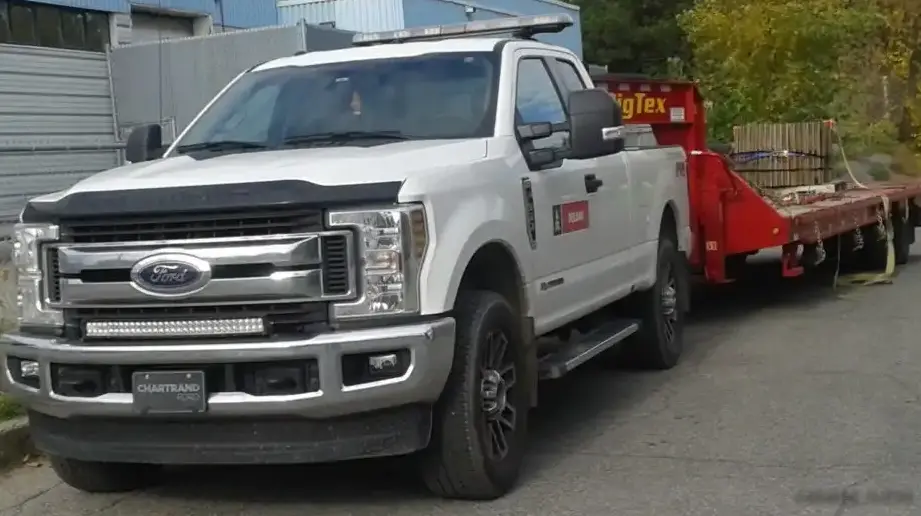
The Ford F-350 Super Duty IV, produced from 2017 to 2019, represents the fourth generation of Ford’s heavy-duty pickup truck line. This iteration, specifically the Super Cab configuration with a short bed and powered by the 6.2-liter V8 engine paired with a six-speed automatic transmission and four-wheel drive (designated SRW – Single Rear Wheel), occupied a significant position in the American truck market. It was aimed at buyers needing substantial towing and hauling capacity, but who didn’t necessarily require the highest output available in the F-350 range. This variant bridged the gap between the base engine options and the more powerful diesel offerings, providing a balance of capability and cost.
Technical Specifications
| Brand | Ford |
| Model | F-350 Super Duty |
| Generation | F-350 Super Duty IV Super Cab Short box |
| Type (Engine) | 6.2 V8 (385 Hp) 4×4 Automatic SRW |
| Start of production | 2017 |
| End of production | 2019 |
| Powertrain Architecture | Internal Combustion engine |
| Body type | Pick-up |
| Seats | 6 |
| Doors | 2 |
| Fuel Type | Petrol (Gasoline) |
| Weight-to-power ratio | 7.7 kg/Hp, 129.7 Hp/tonne |
| Weight-to-torque ratio | 5.1 kg/Nm, 196.4 Nm/tonne |
| Power | 385 Hp @ 5750 rpm |
| Power per litre | 62 Hp/l |
| Torque | 583 Nm @ 3800 rpm, 430 lb.-ft. @ 3800 rpm |
| Engine layout | Front, Longitudinal |
| Engine displacement | 6211 cm3, 379.02 cu. in. |
| Number of cylinders | 8 |
| Engine configuration | V-engine |
| Cylinder Bore | 102.1 mm, 4.02 in. |
| Piston Stroke | 95 mm, 3.74 in. |
| Compression ratio | 9.8:1 |
| Number of valves per cylinder | 2 |
| Fuel injection system | Multi-port manifold injection |
| Engine aspiration | Naturally aspirated engine |
| Valvetrain | SOHC |
| Engine oil capacity | 6.6 l, 6.97 US qt | 5.81 UK qt |
| Coolant | 20.2 l, 21.35 US qt | 17.77 UK qt |
| Kerb Weight | 2968-2994 kg, 6543.32 – 6600.64 lbs. |
| Trunk (boot) space – minimum | 1852 l, 65.4 cu. ft. |
| Fuel tank capacity | 129 l, 34.08 US gal | 28.38 UK gal |
| Permitted trailer load with brakes (12%) | 5625 kg, 12401 lbs. |
| Length | 6050 mm, 238.19 in. |
| Width | 2032 mm, 80 in. |
| Width including mirrors | 2690 mm, 105.91 in. |
| Height | 2065 mm, 81.3 in. |
| Wheelbase | 3759 mm, 147.99 in. |
| Front track | 1735 mm, 68.31 in. |
| Rear (Back) track | 1707 mm, 67.2 in. |
| Front overhang | 970 mm, 38.19 in. |
| Rear overhang | 1321 mm, 52.01 in. |
| Ride height (ground clearance) | 208 mm, 8.19 in. |
| Approach angle | 17.7° |
| Departure angle | 21.4° |
| Ramp-over (brakeover) angle | 23.9° |
| Drivetrain Architecture | The Internal combustion engine (ICE) drives the rear wheels permanently, and the front wheels are driven through an electrically or mechanically operated clutch if necessary. |
| Drive wheel | All wheel drive (4×4) |
| Number of gears and type of gearbox | 6 gears, automatic transmission TorqShift |
| Front suspension | Dependent spring suspension with anti-roll bar, Trailing arm |
| Rear suspension | Rigid axle suspension, Leaf spring |
| Front brakes | Ventilated discs, 363 mm |
| Rear brakes | Ventilated discs, 363 mm |
| Assisting systems | ABS (Anti-lock braking system) |
| Steering type | Cone worm with recirculation balls |
| Power steering | Hydraulic Steering |
| Tires size | 245/75 R17 |
Powertrain & Engine Architecture
At the heart of this F-350 variant lies Ford’s 6.2-liter “Boss” V8 engine. This naturally aspirated powerplant, designated as the engine code 3V, is a robust and relatively simple design. It features a cast-iron block with aluminum cylinder heads, and utilizes a single overhead camshaft (SOHC) design with two valves per cylinder. Fuel delivery is managed by a multi-port fuel injection system, providing adequate atomization for efficient combustion. The engine produces 385 horsepower at 5,750 rpm and 430 lb-ft of torque at 3,800 rpm. The engine’s torque curve is relatively flat, providing usable power across a wide range of engine speeds. The engine is longitudinally mounted in the chassis. The six-speed TorqShift automatic transmission, a heavy-duty unit designed to handle the engine’s output and the truck’s substantial weight, is paired with the engine. This transmission features a wide gear ratio spread, optimizing both towing performance and fuel efficiency.
Driving Characteristics
The 6.2L V8 and six-speed automatic combination in the F-350 delivers a driving experience focused on usability and capability rather than outright speed. Acceleration is adequate for everyday driving, but the truck’s considerable weight (between 6,543 and 6,600 lbs) is always apparent. The automatic transmission shifts smoothly and predictably, and the wide gear ratios allow the engine to stay within its optimal power band during most driving situations. Compared to the diesel-powered F-350s, this gasoline variant offers a quieter and smoother ride, but lacks the immense low-end torque that makes the diesel engines so adept at heavy towing. The 4×4 system provides excellent traction in various conditions, making it suitable for both on-road and off-road use.
Equipment & Trim Levels
The F-350 Super Duty IV offered a range of trim levels, with the 6.2L V8/automatic combination typically found in the XL, XLT, and Lariat trims. The XL trim was the base model, offering essential features like air conditioning, a basic audio system, and vinyl upholstery. The XLT trim added features such as power windows and locks, keyless entry, and an upgraded audio system. The Lariat trim offered a more luxurious experience, with leather upholstery, heated and ventilated front seats, and a premium audio system. Standard features across most trims included a rearview camera, trailer sway control, and a limited-slip differential. Optional extras included a navigation system, a sunroof, and various towing packages.
Chassis & Braking
The F-350 Super Duty IV utilizes a robust body-on-frame construction, providing a solid and durable platform. The front suspension consists of a dependent spring suspension with an anti-roll bar and trailing arms, while the rear suspension features a rigid axle with leaf springs. This setup is designed to handle heavy loads and provide a comfortable ride. Braking duties are handled by ventilated discs on all four wheels, providing ample stopping power. An Anti-lock Braking System (ABS) is standard, enhancing safety and control during emergency braking situations. The truck’s steering system is a hydraulic power steering setup, offering responsive and precise steering feel.
Market Reception & Comparison
The 6.2L V8-equipped F-350 Super Duty received generally positive reviews. Critics praised its smooth ride, quiet engine, and ample power for most tasks. However, it was often noted that the gasoline engine lacked the towing capacity and fuel efficiency of the diesel options. Compared to the 6.7L Power Stroke diesel, the 6.2L V8 offered significantly less torque and a lower maximum towing capacity. However, the gasoline engine was considerably less expensive to purchase and maintain. Fuel economy was rated at around 15 mpg city and 17 mpg highway, which was comparable to other gasoline-powered heavy-duty trucks.
Legacy
The 6.2L V8 engine in the F-350 Super Duty IV has proven to be a reliable and durable powerplant. While not as popular as the diesel options, it remains a viable choice for buyers who prioritize affordability and simplicity. On the used car market, these trucks are generally well-regarded and hold their value reasonably well. Common maintenance items include regular oil changes, spark plug replacements, and transmission fluid flushes. Overall, the 2017-2019 Ford F-350 Super Duty with the 6.2L V8 and automatic transmission represents a capable and dependable heavy-duty truck that continues to serve owners well today.