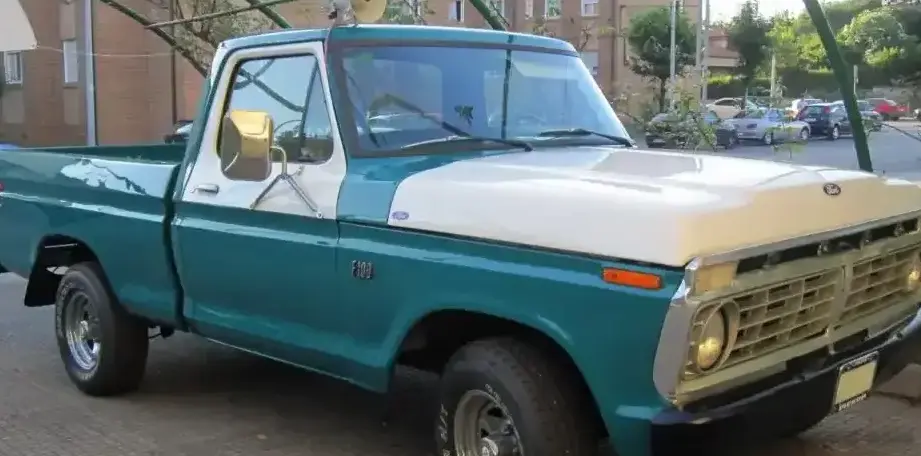
The Ford F-100, part of the broader F-Series lineup, occupied a crucial role in the American pickup truck market from 1953 to 1972, and then again as the F-150 from 1973 onwards. The sixth generation, produced from 1973 to 1976, represented a significant redesign, offering increased size, comfort, and capability. The F-100 VI Regular Cab with the 5.9L (360 cubic inch) V8 engine paired with an automatic transmission was a popular configuration during these years, aimed at buyers needing a robust work truck with the convenience of two pedals. This variant sat in the middle of the F-100 range, offering more power than the inline-six options but remaining more affordable than the larger displacement V8s.
Technical Specifications
| Brand | Ford |
| Model | F-Series F-100/F-150 |
| Generation | F-Series F-100 VI Regular Cab |
| Type (Engine) | 5.9 360 V8 (145 Hp) Automatic |
| Start of production | 1973 |
| End of production | 1976 |
| Powertrain Architecture | Internal Combustion engine |
| Body type | Pick-up |
| Seats | 3 |
| Doors | 2 |
| Fuel Type | Petrol (Gasoline) |
| Power | 145 Hp |
| Power per litre | 24.6 Hp/l |
| Engine displacement | 5899 cm3 / 359.98 cu. in. |
| Number of cylinders | 8 |
| Engine configuration | V-engine |
| Cylinder Bore | 102.87 mm / 4.05 in. |
| Piston Stroke | 88.9 mm / 3.5 in. |
| Fuel injection system | Carburettor |
| Engine aspiration | Naturally aspirated engine |
| Max. weight | 2495 kg / 5500.53 lbs. |
| Trunk (boot) space – minimum | 1713-2084 l / 60.49 – 73.6 cu. ft. |
| Length | 4803-5215 mm / 189.09 – 205.31 in. |
| Wheelbase | 2972-3378 mm / 117.01 – 132.99 in. |
| Wading depth | 630 mm / 24.8 in. |
| Drivetrain Architecture | The Internal combustion engine (ICE) drives the rear wheels of the vehicle. |
| Drive wheel | Rear wheel drive |
| Number of gears and type of gearbox | 3 gears, automatic transmission Cruise-O-Matic |
| Front suspension | Independent coil spring |
| Rear suspension | Leaf spring |
| Front brakes | Disc |
| Rear brakes | Drum |
| Steering type | Cone worm with recirculation balls |
| Power steering | Electric Steering |
| Tires size | 215/75 R15; 225/75 R15 |
| Wheel rims size | 7J x 15 |
Powertrain & Engine Architecture
The heart of this F-100 variant was the 5.9-liter (360 cubic inch) Ford Windsor V8 engine. This engine, designated within Ford as the 351W, was a staple of the era, known for its relatively compact size and robust construction. The 1973-1976 versions typically produced around 145 horsepower, a figure impacted by increasingly stringent emissions regulations. Fuel delivery was managed by a two-barrel carburetor, a common setup for the time. The engine featured a cast iron block and cylinder heads, and utilized a hydraulic lifter valvetrain for quieter operation and reduced maintenance. The automatic transmission was Ford’s Cruise-O-Matic, a three-speed unit known for its smooth shifting and durability. This transmission was a popular choice for buyers who preferred the convenience of an automatic over a manual gearbox, particularly for everyday driving and hauling lighter loads.
Driving Characteristics
The 145 hp 5.9L V8 and Cruise-O-Matic combination provided adequate, but not exhilarating, performance. Acceleration was modest, and the truck wasn’t designed for rapid speeds. However, it offered sufficient torque for hauling and towing typical loads for the period. The Cruise-O-Matic’s gear ratios were optimized for fuel economy and drivability, rather than outright performance. Compared to the available manual transmissions, the automatic resulted in a slight decrease in fuel efficiency and a less direct connection to the engine. Compared to the larger 390 cubic inch V8, the 360 offered a noticeable step down in power, but also a reduction in fuel consumption and a lower initial purchase price. The rear-wheel-drive configuration and leaf spring rear suspension provided a firm ride, typical of trucks of this era, and were well-suited for carrying heavy payloads.
Equipment & Trim Levels
The F-100 VI in this configuration typically came standard with basic features, reflecting its work-oriented nature. This included a vinyl bench seat, a basic instrument cluster, and a simple AM radio. Options included upgraded interior trim, air conditioning, power steering, and a heavier-duty suspension package. The exterior trim was relatively minimal, with bright metal accents around the grille, headlights, and windshield. The “Custom” trim package was a popular upgrade, adding features like chrome bumpers, improved interior materials, and additional sound insulation. The standard cab configuration offered seating for three passengers, and the bed was available in various lengths depending on the buyer’s needs.
Chassis & Braking
The F-100 VI utilized a body-on-frame construction, providing a robust and durable platform. The front suspension consisted of independent coil springs, offering a degree of ride comfort. The rear suspension employed leaf springs, designed to handle heavy loads. Braking was accomplished via disc brakes on the front wheels and drum brakes on the rear. Power steering was an available option, making maneuvering the large truck easier, especially at low speeds. Tire sizes typically ranged from 215/75R15 to 225/75R15, providing a balance of traction and ride quality. The steering system employed a cone worm and recirculating ball mechanism, a common setup for trucks of this era.
Market Reception & Comparison
The F-100 with the 360 V8 and automatic transmission was generally well-received by buyers seeking a versatile and reliable work truck. Critics noted the engine’s adequate power and the transmission’s smooth operation. However, some reviewers pointed out the relatively low horsepower output compared to other V8 options. Fuel economy, while not a primary concern for truck buyers at the time, was considered reasonable for a vehicle of its size and capability. Compared to the Chevrolet C10 and Dodge D100, the F-100 offered a competitive combination of features, performance, and price. The automatic transmission was a popular choice, particularly among buyers who used their trucks for both work and personal transportation.
Legacy
The 1973-1976 Ford F-100, particularly the 360 V8 automatic variant, has become a popular classic among truck enthusiasts. The 360 Windsor V8 is known for its durability and relative ease of maintenance, making it a desirable engine for restoration projects. While not the most powerful engine option available, the 360 offers a good balance of performance and reliability. Today, well-maintained examples of this F-100 command respectable prices in the used car market. The Cruise-O-Matic transmission, while aging, is generally considered to be a durable unit, but may require occasional servicing. These trucks represent a significant era in American automotive history, embodying the ruggedness and practicality that defined the pickup truck segment for decades.