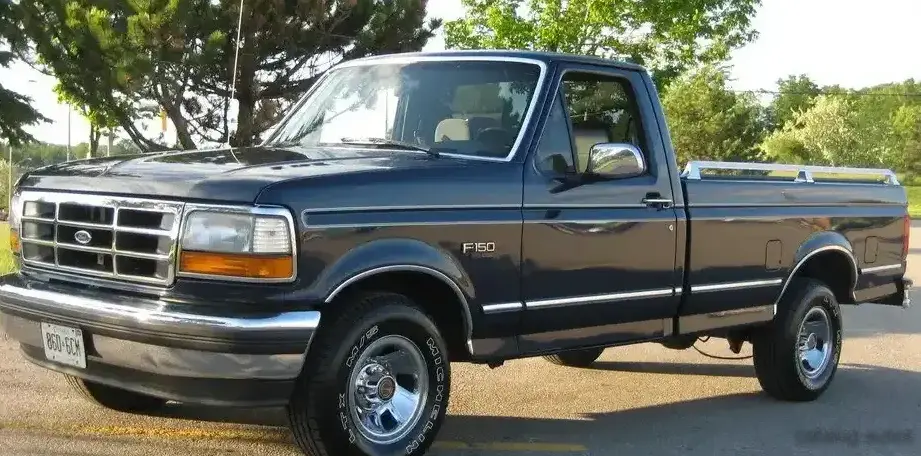
The Ford F-Series F-150 IX Regular Cab, equipped with the 4.9-liter inline-six engine and four-wheel drive, was a mainstay of Ford’s truck lineup from 1991 to 1993. This configuration represented a work-oriented, value-focused option within the broader ninth-generation F-Series (1987-1991, with minor updates extending into 1993). Positioned as an entry-level 4×4 offering, it catered to buyers prioritizing capability and durability over outright performance or luxury. The “IX” designation denoted a specific trim level, typically indicating a more basic configuration compared to higher trims like the XLT or Eddie Bauer.
Technical Specifications
| Brand | Ford |
| Model | F-Series F-150 IX Regular Cab |
| Type (Engine) | 4.9 (145 Hp) 4×4 |
| Start of production | August, 1991 |
| End of production | 1993 |
| Powertrain Architecture | Internal Combustion engine |
| Body type | Pick-up |
| Seats | 3 |
| Doors | 2 |
| Fuel Type | Petrol (Gasoline) |
| Power | 145 Hp @ 3400 rpm |
| Power per litre | 29.6 Hp/l |
| Torque | 360 Nm @ 2000 rpm / 265.52 lb.-ft. @ 2000 rpm |
| Engine layout | Front, Longitudinal |
| Engine displacement | 4900 cm3 / 299.02 cu. in. |
| Number of cylinders | 6 |
| Engine configuration | Inline |
| Cylinder Bore | 101.6 mm / 4 in. |
| Piston Stroke | 101 mm / 3.98 in. |
| Number of valves per cylinder | 2 |
| Fuel injection system | Multi-port manifold injection |
| Engine aspiration | Naturally aspirated engine |
| Engine oil capacity | 4.7 l / 4.97 US qt | 4.14 UK qt |
| Max. weight | 2835 kg / 6250.11 lbs |
| Fuel tank capacity | 69-141 l / 18.23 – 37.25 US gal | 15.18 – 31.02 UK gal |
| Length | 5006-5418 mm / 197.09 – 213.31 in. |
| Width | 2007 mm / 79.02 in. |
| Height | 1872 mm / 73.7 in. |
| Wheelbase | 2972-3378 mm / 117.01 – 132.99 in. |
| Wading depth | 851 mm / 33.5 in. |
| Drivetrain Architecture | The Internal combustion engine (ICE) drives the rear wheels permanently, and the front wheels are driven through an electrically or mechanically operated clutch if necessary. |
| Drive wheel | All wheel drive (4×4) |
| Number of gears and type of gearbox | 5 gears, manual transmission |
| Front suspension | Independent coil spring |
| Rear suspension | Leaf spring |
| Front brakes | Disc |
| Rear brakes | Drum |
| Power steering | Electric Steering |
| Tires size | 235/75 R15 |
| Wheel rims size | 15 |
Powertrain & Engine Architecture
The heart of this F-150 IX was the 4.9-liter (299 cubic inch) inline-six engine, often referred to as the “300 six” despite its actual displacement. This engine, internally designated as the 302, was a long-stroke design known for its robust construction and ample low-end torque. It featured a cast-iron block and cylinder head, and a two-valve-per-cylinder configuration. Fuel delivery was handled by a multi-port fuel injection system, a significant upgrade from the carburetor-equipped engines of earlier F-Series generations. The 145 horsepower output at 3400 rpm and 265 lb-ft of torque at 2000 rpm were respectable for the time, but not class-leading. The engine’s longevity and relatively simple design made it a favorite among those needing a dependable workhorse. The standard transmission was a five-speed manual, contributing to the truck’s utilitarian character.
Driving Characteristics
The 4.9-liter engine, paired with the five-speed manual transmission, provided adequate, though not exhilarating, performance. Acceleration was modest, and the truck wasn’t designed for quick sprints. However, the engine’s strong low-end torque made it well-suited for hauling and towing. The manual transmission allowed for precise control, especially in off-road situations or when navigating challenging terrain. Compared to the optional 5.0-liter V8, the 4.9-liter offered less horsepower but better fuel economy and a more manageable power curve for everyday tasks. The 4×4 system, typically a shift-on-the-fly setup, provided enhanced traction in slippery conditions. The truck’s ride quality, typical of body-on-frame construction, was firm but acceptable for a work truck.
Equipment & Trim Levels
The F-150 IX Regular Cab, as a base trim, was fairly spartan in terms of standard features. It typically included a basic vinyl interior, a simple dashboard layout, and manual windows and locks. An AM/FM radio was standard, with an optional cassette player available. The exterior featured minimal brightwork, focusing on functionality over aesthetics. Optional extras included air conditioning, a sliding rear window, and upgraded interior trim. The IX trim was designed to be affordable and practical, appealing to buyers who prioritized utility over comfort and convenience.
Chassis & Braking
The F-150 IX utilized a traditional body-on-frame construction, providing a robust and durable platform. The front suspension consisted of independent coil springs, while the rear suspension employed leaf springs. This setup was designed to handle heavy loads and provide a stable ride. Brakes were disc brakes in the front and drum brakes in the rear, a common configuration for trucks of this era. Power steering was standard, making maneuvering the large truck easier. The 4×4 system featured a solid front axle and a rear axle, providing excellent off-road capability. Tire size was typically 235/75R15, offering a balance of on-road comfort and off-road traction.
Market Reception & Comparison
The 4.9-liter F-150 4×4 was well-received by buyers seeking a dependable and affordable work truck. Critics generally praised its durability and low-end torque, but noted its lack of refinement and modest performance. Compared to the V8-powered F-150s, the 4.9-liter offered better fuel economy, but at the expense of horsepower and acceleration. The 4.9-liter engine was also known for its relatively simple maintenance requirements, making it a popular choice for those who preferred to perform their own repairs. Against competitors like the Chevrolet C/K series and the Dodge Ram, the F-150 IX offered a competitive combination of price, capability, and reliability.
Legacy
The 4.9-liter inline-six engine has earned a reputation for exceptional longevity and reliability. Many examples are still on the road today, a testament to its robust construction. In the used car market, these F-150s are often sought after by those looking for a simple, dependable truck that can handle a variety of tasks. While not a collector’s item, well-maintained examples hold their value reasonably well. The engine’s simplicity makes it relatively easy to repair, and parts are readily available. The F-150 IX Regular Cab 4.9 4×4 remains a symbol of Ford’s commitment to building tough and reliable trucks for the working class.