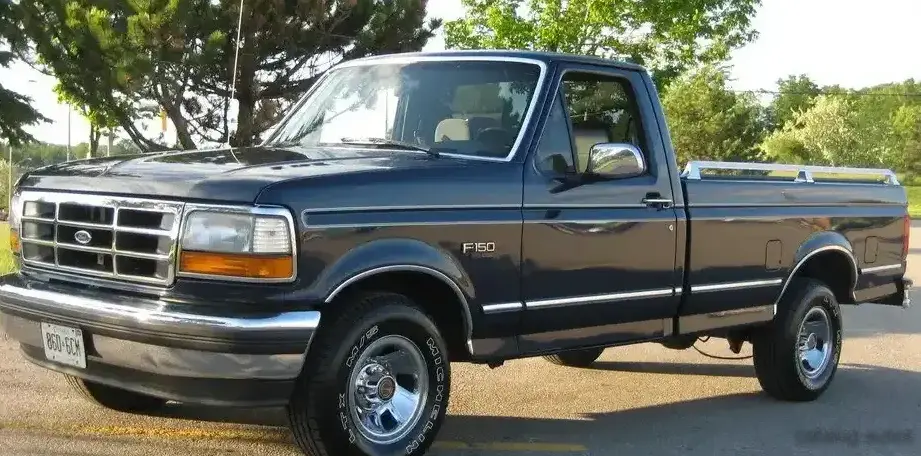
The Ford F-Series F-150 SVT Lightning, specifically the 5.8 V8 variant paired with an automatic transmission, marked a significant entry into the performance truck segment when it debuted for the 1993 model year and continued through 1995. Built on the F-Series IX platform, this iteration represented Ford’s response to the growing demand for trucks that combined utility with substantial performance capabilities. Positioned as a high-performance version of the popular F-150, it targeted enthusiasts seeking a truck suitable for both work and spirited driving. The SVT Lightning differentiated itself from standard F-150s through a unique combination of engine upgrades, suspension modifications, and cosmetic enhancements.
Technical Specifications
| Brand | Ford |
| Model | F-Series F-100/F-150 |
| Generation | F-Series F-150 IX Regular Cab |
| Type (Engine) | SVT Lightning 5.8 V8 (240 Hp) Automatic |
| Start of production | 1993 |
| End of production | 1995 |
| Powertrain Architecture | Internal Combustion engine |
| Body type | Pick-up |
| Seats | 3 |
| Doors | 2 |
| Fuel consumption (urban) | 19.6 l/100 km (12 US mpg) |
| Fuel consumption (extra urban) | 14.7 l/100 km (16 US mpg) |
| Fuel Type | Petrol (Gasoline) |
| Acceleration 0 – 60 mph | 7.6 sec |
| Maximum speed | 177 km/h (109.98 mph) |
| Weight-to-power ratio | 8.4 kg/Hp |
| Weight-to-torque ratio | 4.4 kg/Nm |
| Power | 240 Hp @ 4200 rpm |
| Power per litre | 41.7 Hp/l |
| Torque | 461 Nm @ 3200 rpm (340.02 lb.-ft. @ 3200 rpm) |
| Engine layout | Front, Longitudinal |
| Engine displacement | 5752 cm3 (351.01 cu. in.) |
| Number of cylinders | 8 |
| Engine configuration | V-engine |
| Cylinder Bore | 101.6 mm (4 in.) |
| Piston Stroke | 88.9 mm (3.5 in.) |
| Compression ratio | 8.8:1 |
| Fuel injection system | Multi-port manifold injection |
| Engine aspiration | Naturally aspirated engine |
| Engine oil capacity | 4.7 l (4.97 US qt | 4.14 UK qt) |
| Kerb Weight | 2017 kg (4446.72 lbs.) |
| Permitted trailer load with brakes (12%) | 2268 kg (5000.08 lbs.) |
| Length | 5126 mm (201.81 in.) |
| Width | 2007 mm (79.02 in.) |
| Wheelbase | 2967 mm (116.81 in.) |
| Front track | 1631 mm (64.21 in.) |
| Rear track | 1613 mm (63.5 in.) |
| Drivetrain Architecture | Rear wheel drive |
| Number of gears and type of gearbox | 4 gears, automatic transmission |
| Front suspension | Independent coil spring, Transverse stabilizer |
| Rear suspension | Leaf spring |
| Front brakes | Disc, 298 mm |
| Rear brakes | Drum, 280×57 mm |
| Steering type | Cone worm with recirculation balls |
| Power steering | Electric Steering |
| Tires size | 275/60 R17 |
| Wheel rims size | 8J x 17 |
Powertrain & Engine Architecture
The core of the 1993-1995 SVT Lightning was the 5.8-liter (351 cubic inch) Windsor V8 engine. While rooted in the standard Ford small-block V8, the Lightning’s engine received substantial upgrades. These included a unique intake manifold designed for increased airflow, higher-flow cylinder heads to improve volumetric efficiency, and a more aggressive camshaft profile for enhanced power delivery. The engine employed a multi-port fuel injection system, contributing to improved throttle response and overall efficiency. The engine code is commonly associated with the 351W designation. The automatic transmission utilized was a Ford AOD (Automatic Overdrive) unit, specifically calibrated to complement the Lightning’s performance characteristics. This transmission featured a torque converter engineered for quicker acceleration and a slightly lower gear ratio for improved off-the-line responsiveness. The AOD was a four-speed automatic, balancing performance with reasonable fuel economy for a truck of its size.
Driving Characteristics
The combination of the 5.8L V8 and the AOD automatic transmission delivered a noticeable performance increase compared to standard F-150s. The 240 horsepower and 340 lb-ft of torque provided brisk acceleration, with 0-60 mph times consistently achieved in the mid-7 second range. While not designed for outright drag racing, the Lightning offered a level of performance previously uncommon in a full-size pickup truck. The automatic transmission, while lacking the direct engagement of a manual, provided smooth shifts and allowed drivers to concentrate on controlling the truck’s power. The gear ratios were optimized for acceleration, while the overdrive gear helped maintain reasonable engine speeds during highway cruising. Compared to later Lightning models equipped with manual transmissions or supercharged engines, this variant offered a more relaxed driving experience, prioritizing usability and everyday drivability over sheer speed.
Equipment & Trim Levels
The SVT Lightning came reasonably well-equipped, with optional extras available to personalize the vehicle. Standard features included a distinctive exterior appearance package featuring a color-matched grille, body-colored bumpers, and unique Lightning badging. The interior boasted upgraded cloth bucket seats, a tilt steering wheel, and a premium sound system. Optional additions included air conditioning, power windows and locks, and a sliding rear window. The interior trim was generally functional and durable, reflecting the truck’s intended purpose. The Lightning’s interior represented a step up from base F-150 models, though it didn’t quite reach the luxury levels of higher-end trim packages.
Chassis & Braking
The SVT Lightning incorporated a revised suspension system aimed at enhancing handling and minimizing body roll. Upgraded shock absorbers and a thicker front stabilizer bar were key components of the suspension upgrade. The rear suspension retained the traditional leaf spring setup, but with stiffer springs and improved dampers. Braking was provided by disc brakes at the front and drum brakes at the rear. While adequate for most driving scenarios, the braking system wasn’t as powerful as those found in some contemporary sports cars. The tires, typically sized 275/60R17, were wider than those on standard F-150s, providing increased grip and improved handling characteristics.
Market Reception & Comparison
The 1993-1995 SVT Lightning generally received positive reviews from automotive critics. It was lauded for its blend of performance, utility, and distinctive styling. However, some critics pointed out the relatively basic interior and the absence of a manual transmission option. Compared to other F-150 trims, the Lightning offered significantly more power and a more engaging driving experience. Fuel economy was understandably lower than that of the base models, averaging around 12-16 mpg in real-world driving conditions. Reliability was generally good, although the AOD transmission could be susceptible to issues if not properly maintained. The Lightning occupied a unique position in the truck market, appealing to buyers who desired a performance-oriented pickup without compromising practicality.
Legacy
The 1993-1995 Ford F-150 SVT Lightning 5.8L automatic continues to be a popular vehicle among truck enthusiasts. The 5.8L Windsor V8 is recognized for its durability and relatively straightforward maintenance requirements. While not as highly sought after as the later supercharged Lightning models, these early versions offer a unique combination of classic truck aesthetics and respectable performance. In the used car market, well-maintained examples command a premium, particularly those with low mileage and original components. The powertrain, despite its age, is generally considered reliable, but consistent maintenance is essential for ensuring long-term durability. The SVT Lightning played a crucial role in establishing the performance truck segment and paved the way for subsequent generations of high-performance pickups.