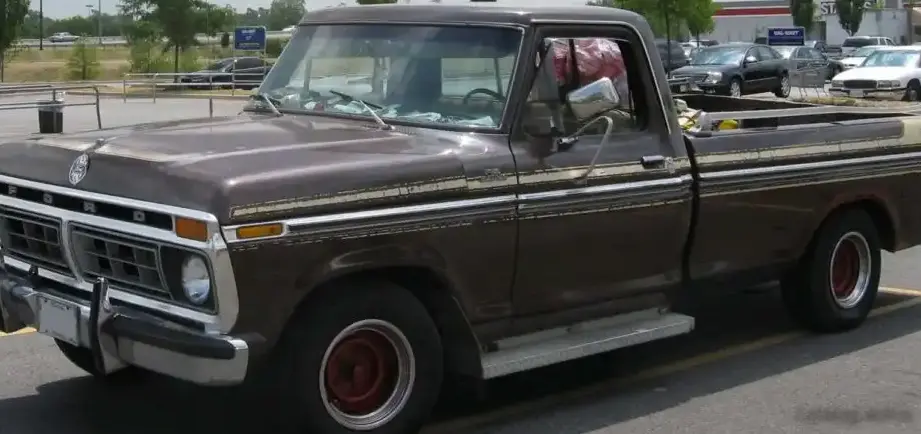
The Ford F-Series F-150 VI Regular Cab, equipped with the 5.9-liter (360 cubic inch) V8 engine producing 145 horsepower, represents a significant iteration in the long and storied history of Ford’s full-size pickup trucks. Produced for the 1975 and 1976 model years, this variant occupied a middle ground in the F-150 lineup, offering a balance between affordability and capability for buyers needing a robust work vehicle. It was part of the sixth generation of the F-Series (1973-1979), a generation known for its increased size, improved comfort, and a wider range of available options compared to its predecessors. This particular configuration, with its relatively low horsepower output, was aimed at buyers prioritizing durability and fuel economy (by the standards of the era) over outright performance.
Technical Specifications
| Brand | Ford |
| Model | F-Series F-100/F-150 |
| Generation | F-Series F-150 VI Regular Cab |
| Type (Engine) | 5.9 360 V8 (145 Hp) |
| Start of production | 1975 |
| End of production | 1976 |
| Powertrain Architecture | Internal Combustion engine |
| Body type | Pick-up |
| Seats | 3 |
| Doors | 2 |
| Fuel Type | Petrol (Gasoline) |
| Power | 145 Hp |
| Power per litre | 24.6 Hp/l |
| Engine displacement | 5899 cm3 |
| Engine displacement (cu. in.) | 359.98 cu. in. |
| Number of cylinders | 8 |
| Engine configuration | V-engine |
| Cylinder Bore | 102.87 mm |
| Cylinder Bore (in.) | 4.05 in. |
| Piston Stroke | 88.9 mm |
| Piston Stroke (in.) | 3.5 in. |
| Number of valves per cylinder | 2 |
| Fuel injection system | Carburettor |
| Engine aspiration | Naturally aspirated engine |
| Max. weight | 2744 kg |
| Max. weight (lbs.) | 6049.48 lbs. |
| Trunk (boot) space – minimum | 1852-2084 l |
| Trunk (boot) space – minimum (cu. ft.) | 65.4 – 73.6 cu. ft. |
| Length | 5215 mm |
| Length (in.) | 205.31 in. |
| Wheelbase | 3378 mm |
| Wheelbase (in.) | 132.99 in. |
| Wading depth | 665 mm |
| Wading depth (in.) | 26.18 in. |
| Drivetrain Architecture | The Internal combustion engine (ICE) drives the rear wheels of the vehicle. |
| Drive wheel | Rear wheel drive |
| Number of gears and type of gearbox | 3 gears, manual transmission |
| Front suspension | Independent coil spring, Transverse stabilizer |
| Rear suspension | Leaf spring |
| Front brakes | Disc |
| Rear brakes | Drum |
| Power steering | Electric Steering |
| Tires size | 215/75 R15; 225/75 R15 |
| Wheel rims size | 7J x 15 |
Powertrain & Engine Architecture
The heart of this F-150 variant was the 360 cubic inch (5.9-liter) Ford Windsor V8 engine. This engine, designated as the 360, was a member of the small-block Ford family, known for its relatively compact size and robust construction. The 1975-1976 version produced 145 horsepower, a figure significantly lower than the higher-output 390 and 460 cubic inch V8s available in the F-150 lineup. This lower output was primarily due to emissions regulations tightening during this period, necessitating reductions in compression ratios and modifications to the carburetor. The engine utilized a two-barrel carburetor for fuel delivery, and featured hydraulic lifters for simplified maintenance. The engine was longitudinally mounted in the chassis, driving the rear wheels. The standard transmission for this configuration was a three-speed manual, although a three-speed automatic transmission was also available as an option. The 360 Windsor was known for its durability and relatively simple design, making it a popular choice for those prioritizing reliability over outright performance.
Driving Characteristics
The 145 horsepower 360 V8, coupled with the three-speed manual transmission, provided adequate, but not exhilarating, performance. Acceleration was modest, and the truck was best suited for hauling moderate loads and general-purpose work. The gear ratios in the three-speed manual were spaced to prioritize low-end torque for towing and hauling, rather than high-speed acceleration. Compared to the more powerful V8 options, this configuration felt noticeably slower, especially when fully loaded. However, the lower horsepower output also contributed to slightly better fuel economy, a consideration for owners who used their trucks extensively. The ride quality, typical of trucks of this era, was firm, and handling was best described as utilitarian. Steering wasn’t particularly precise, and body roll was noticeable in corners. The overall driving experience was focused on functionality and durability rather than driver enjoyment.
Equipment & Trim Levels
The F-150 Regular Cab with the 360 V8 typically came with a fairly basic level of equipment. Standard features included a vinyl bench seat, a basic AM radio, and a cigarette lighter. Options included upgraded interior trim, a more powerful radio, air conditioning, and a sliding rear window. The trim level for this configuration generally fell into the base or mid-range category, depending on the specific options selected. The interior was functional and durable, designed to withstand the rigors of daily use. The exterior typically featured minimal chrome trim, reflecting its work-oriented nature. Buyers could also opt for heavier-duty suspension packages if they anticipated frequent towing or hauling. The overall aesthetic was one of practicality and ruggedness.
Chassis & Braking
The F-150 chassis was a traditional body-on-frame design, providing a robust and durable platform. The front suspension utilized independent coil springs with a transverse stabilizer bar, while the rear suspension employed leaf springs. This setup provided a reasonable balance between ride comfort and load-carrying capacity. Braking duties were handled by disc brakes at the front and drum brakes at the rear. Power steering was available as an option, making maneuvering the large truck easier, particularly at low speeds. Tire sizes typically ranged from 215/75R15 to 225/75R15, providing adequate traction for most road conditions. The frame itself was heavily reinforced to withstand the stresses of heavy-duty use, and the overall construction was designed for longevity.
Market Reception & Comparison
The 1975-1976 F-150 with the 360 V8 and manual transmission was generally well-received by buyers seeking a dependable and affordable work truck. Critics noted its adequate power for most tasks, its durable construction, and its relatively low price. However, it was often criticized for its lack of refinement and its modest performance compared to the larger-displacement V8 options. Compared to the 390 and 460 cubic inch V8s, the 360 offered lower towing capacity and slower acceleration. However, it also offered slightly better fuel economy and lower maintenance costs. The 300 cubic inch inline-six engine was another alternative, offering even better fuel economy but significantly less power. The 360 V8 struck a balance between these two extremes, appealing to buyers who needed a capable truck without the expense of the larger engines.
Legacy
The 360 Windsor V8 engine, in this F-150 configuration, has proven to be a remarkably durable and reliable powertrain. Many examples are still on the road today, a testament to its robust design and construction. While not particularly sought after by collectors, these trucks remain popular among those seeking a classic American workhorse. Parts availability is generally good, making maintenance and repairs relatively straightforward. In the used car market, these F-150s typically command modest prices, reflecting their age and basic equipment levels. However, well-maintained examples are increasingly appreciated by enthusiasts who value their simplicity, durability, and classic American styling. The engine’s simplicity also makes it a favorite among those who prefer to perform their own maintenance and repairs, contributing to its continued presence on the road.