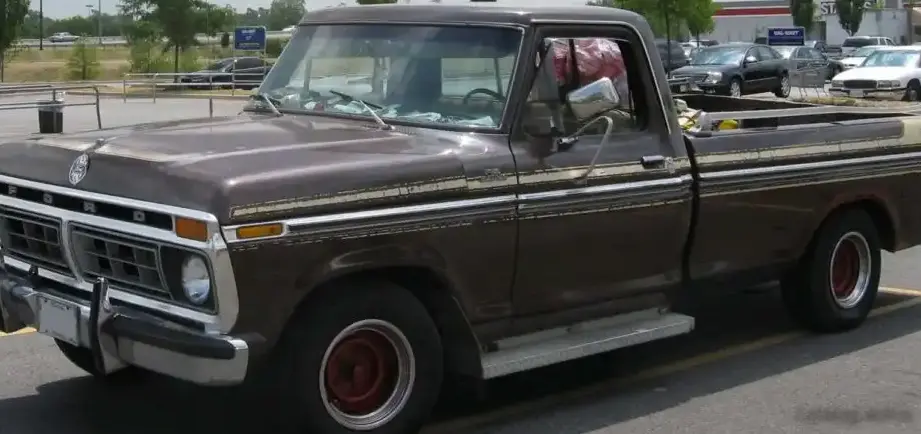
The Ford F-Series F-150, spanning the sixth generation from 1973 to 1979, marked a pivotal evolution in the iconic pickup truck’s history. The 1975-1976 model years continued this generation, offering a diverse range of engine and trim configurations. The F-150 Regular Cab, equipped with the 6.4-liter (390 cubic inch) V8 engine producing 160 horsepower, paired with a three-speed Cruise-O-Matic automatic transmission, occupied a distinct position within the lineup. This combination was geared towards buyers seeking a work-capable truck with the convenience of an automatic transmission, prioritizing usability over outright performance.
Technical Specifications
| Brand | Ford |
| Model | F-Series F-150 |
| Generation | F-Series F-150 VI Regular Cab |
| Type (Engine) | 6.4 390 V8 (160 Hp) Automatic |
| Start of production | 1975 |
| End of production | 1976 |
| Powertrain Architecture | Internal Combustion engine |
| Body type | Pick-up |
| Seats | 3 |
| Doors | 2 |
| Fuel Type | Petrol (Gasoline) |
| Power | 160 Hp |
| Power per litre | 25 Hp/l |
| Engine displacement | 6391 cm3 |
| Engine displacement (cu. in.) | 390 cu. in. |
| Number of cylinders | 8 |
| Engine configuration | V-engine |
| Cylinder Bore | 102.87 mm (4.05 in.) |
| Piston Stroke | 96.01 mm (3.78 in.) |
| Number of valves per cylinder | 4 |
| Fuel injection system | Carburettor |
| Engine aspiration | Naturally aspirated engine |
| Max. weight | 2744 kg (6049.48 lbs.) |
| Trunk (boot) space – minimum | 1852-2084 l (65.4 – 73.6 cu. ft.) |
| Length | 5215 mm (205.31 in.) |
| Wheelbase | 3378 mm (132.99 in.) |
| Wading depth | 665 mm (26.18 in.) |
| Drivetrain Architecture | The Internal combustion engine (ICE) drives the rear wheels of the vehicle. |
| Drive wheel | Rear wheel drive |
| Number of gears and type of gearbox | 3 gears, automatic transmission Cruise-O-Matic |
| Front suspension | Independent coil spring, Transverse stabilizer |
| Rear suspension | Leaf spring |
| Front brakes | Disc |
| Rear brakes | Drum |
| Power steering | Electric Steering |
| Tires size | 215/75 R15; 225/75 R15 |
| Wheel rims size | 7J x 15 |
Powertrain & Engine Architecture
The core of this F-150 variant was the 6.4-liter (390 cubic inch) Ford Windsor V8 engine. Belonging to the 335-series Ford V8 family, this engine was known for its durability and straightforward design. It featured a cast iron block and cylinder heads, with a two-barrel carburetor responsible for fuel delivery. The engine employed a conventional pushrod valvetrain with two valves per cylinder. While 160 horsepower may seem modest in contemporary terms, it was considered sufficient for the truck’s primary functions – hauling and towing. The three-speed Cruise-O-Matic automatic transmission was a common feature in Ford trucks of this era. It was a fully automatic system, offering selections for Park, Reverse, Neutral, Drive, and Low. The transmission was lauded for its robustness, but its three-speed design often resulted in higher engine RPMs during highway driving, negatively impacting fuel efficiency.
Driving Characteristics
The 160 hp, automatic transmission-equipped F-150 delivered a comfortable, though not particularly spirited, driving experience. Acceleration was adequate for typical driving scenarios, but the truck wasn’t engineered for rapid acceleration or quick overtaking maneuvers. The automatic transmission’s gear ratios were optimized for towing and hauling, causing the engine to rev higher before shifting, particularly under load. In comparison to the available manual transmission options, or the more potent V8 engines offered in the F-150 range (such as the 302 or 360 cubic inch engines), this configuration prioritized ease of operation over performance. The rear-wheel-drive layout provided good traction in most conditions, but could prove challenging in slippery conditions without proper weight distribution or the inclusion of limited-slip differentials.
Equipment & Trim Levels
The 1975-1976 F-150 Regular Cab with the 390 V8 and automatic transmission generally came with a relatively basic standard equipment package. This included a vinyl bench seat, a simple instrument cluster, and a heater. Air conditioning, power steering, and upgraded interior trim were available as optional extras. Trim levels varied, offering choices in exterior paint colors, wheel covers, and interior upholstery materials. This specific configuration was frequently selected by buyers who needed a capable work truck but didn’t desire the luxury features found in higher trim levels.
Chassis & Braking
The F-150’s chassis utilized a traditional body-on-frame construction, providing a strong and durable foundation. The front suspension incorporated independent coil springs and a transverse stabilizer bar, contributing to a reasonably comfortable ride. The rear suspension consisted of leaf springs, designed to accommodate heavy payloads. Braking was provided by disc brakes at the front and drum brakes at the rear. Power steering was often an optional feature, but its adoption increased over the years. Tires, typically sized 215/75 R15 or 225/75 R15, were chosen for their balance of durability and ride quality.
Market Reception & Comparison
The 1975-1976 F-150 equipped with the 390 V8 and automatic transmission was generally well-received by buyers requiring a dependable and capable work truck. Reviewers acknowledged the engine’s sufficient power for most tasks, but also noted its relatively poor fuel economy compared to smaller engine options. Compared to the inline-six engines available in the F-150, the 390 V8 offered significantly more power and torque, making it a better choice for towing and hauling substantial loads. However, this came at the expense of increased fuel consumption and a higher initial cost. When compared to competing trucks like the Chevrolet C/K series and the Dodge D-Series, the F-150 was considered a competitive offering, recognized for its durability and relatively comfortable ride.
Legacy
The 390 V8 engine, while not the most powerful option in the F-150 lineup, proved to be a reliable and long-lasting powerplant. Numerous examples of these trucks remain operational today, a testament to their robust construction. The Cruise-O-Matic automatic transmission also earned a reputation for longevity. In the current used car market, these F-150s are often sought after by collectors and enthusiasts who appreciate their classic styling and uncomplicated mechanical design. While fuel economy is a concern by modern standards, the 1975-1976 F-150 with the 390 V8 and automatic transmission continues to be a popular choice for those seeking a capable and dependable vintage pickup truck.