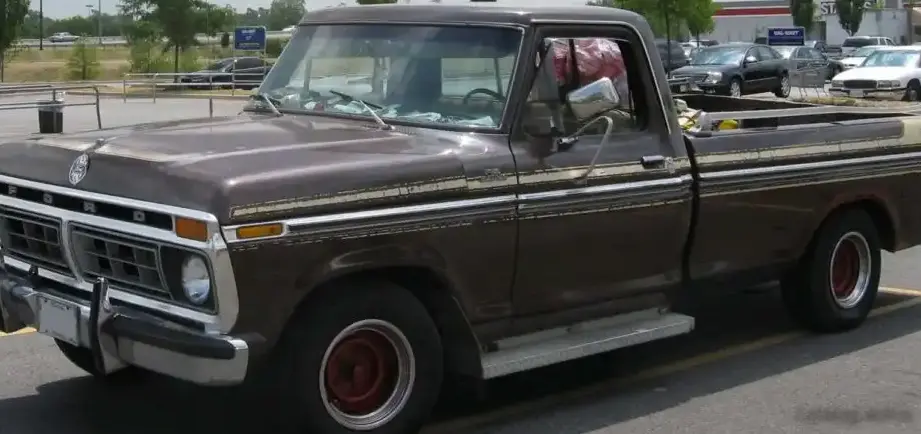
The Ford F-Series F-150 VI Regular Cab, equipped with the 6.6-liter (400 cubic inch) 169 horsepower V8 engine and a three-speed automatic transmission, represents a significant iteration in the long and storied history of Ford’s full-size pickup trucks. Produced from 1977 through 1979, this configuration occupied a middle ground within the F-150 lineup, offering a balance between capability and affordability. It was part of the sixth generation of the F-Series (1973-1979), a generation known for its increased size, improved comfort, and a wider range of available options compared to its predecessors. This particular variant aimed to provide a comfortable and capable work truck for buyers who didn’t require the higher performance of the larger engine options, or the cost savings of the smaller six-cylinder.
Technical Specifications
| Brand | Ford |
| Model | F-Series F-100/F-150 |
| Generation | F-Series F-150 VI Regular Cab |
| Type (Engine) | 6.6 400 V8 (169 Hp) Automatic |
| Start of production | 1977 |
| End of production | 1979 |
| Powertrain Architecture | Internal Combustion engine |
| Body type | Pick-up |
| Seats | 3 |
| Doors | 2 |
| Fuel Type | Petrol (Gasoline) |
| Power | 169 Hp |
| Power per litre | 25.8 Hp/l |
| Engine displacement | 6555 cm3 / 400.01 cu. in. |
| Number of cylinders | 8 |
| Engine configuration | V-engine |
| Cylinder Bore | 101.35 mm / 3.99 in. |
| Piston Stroke | 101.35 mm / 3.99 in. |
| Number of valves per cylinder | 2 |
| Fuel injection system | Carburettor |
| Engine aspiration | Naturally aspirated engine |
| Max. weight | 2744 kg / 6049.48 lbs. |
| Trunk (boot) space – minimum | 1679-2084 l / 59.29 – 73.6 cu. ft. |
| Fuel tank capacity | 73 l / 19.28 US gal | 16.06 UK gal |
| Length | 5215 mm / 205.31 in. |
| Wheelbase | 3378 mm / 132.99 in. |
| Wading depth | 665 mm / 26.18 in. |
| Drivetrain Architecture | Rear wheel drive. Internal Combustion engine (ICE) drives the rear wheels. |
| Drive wheel | Rear wheel drive |
| Number of gears and type of gearbox | 3 gears, automatic transmission Cruise-O-Matic |
| Front suspension | Independent coil spring, Transverse stabilizer |
| Rear suspension | Leaf spring |
| Front brakes | Disc |
| Rear brakes | Drum |
| Power steering | Electric Steering |
| Tires size | 215/75 R15; 225/75 R15 |
| Wheel rims size | 7J x 15 |
Powertrain & Engine Architecture
The heart of this F-150 variant is Ford’s 400 cubic inch (6.6-liter) V8 engine. Designated within Ford’s engine family as the 335-series, this engine was known for its robust construction and relatively simple design. The 169 horsepower output was achieved through a two-barrel carburetor, a relatively conservative setup compared to the four-barrel carburetors found on higher-performance versions. The engine featured a cast iron block and cylinder heads, and a hydraulic lifter valvetrain. The 400 cubic inch engine was known for its low-end torque, making it suitable for hauling and towing, even if its peak horsepower wasn’t particularly high. The three-speed Cruise-O-Matic automatic transmission was standard, offering smooth, if not particularly quick, shifts. This transmission was a workhorse unit, known for its durability, but lacked the efficiency of more modern automatic transmissions.
Driving Characteristics
Behind the wheel, the 1977-1979 F-150 with the 400 V8 and automatic transmission delivered a driving experience focused on practicality rather than performance. Acceleration was adequate for everyday driving, but it wasn’t a truck designed for quick starts or spirited driving. The automatic transmission’s gear ratios were optimized for towing and hauling, resulting in a relatively low first gear and a higher final drive ratio. This meant the truck could comfortably pull heavy loads, but it also meant that highway speeds required the engine to work harder, impacting fuel economy. Compared to the available manual transmissions, the automatic reduced driver involvement and offered greater convenience, but at the expense of some responsiveness and fuel efficiency. Compared to the larger 460 cubic inch V8, this engine felt noticeably less powerful, especially when fully loaded.
Equipment & Trim Levels
The F-150 Regular Cab with the 400 V8 automatic typically fell into the mid-range of available trim levels. Standard equipment included a basic vinyl bench seat, a simple dashboard with essential gauges, and a basic AM radio. Options included upgraded interior trim, air conditioning, power steering, and a variety of convenience features. The exterior typically featured minimal brightwork, reflecting its work-oriented nature. Buyers could choose from a range of paint colors, but the emphasis was on durability rather than flashy aesthetics. The “Custom” trim level was a popular upgrade, adding features like chrome exterior trim and a more comfortable interior.
Chassis & Braking
The F-150’s chassis was a traditional body-on-frame design, providing a robust and durable platform. The front suspension utilized independent coil springs and a transverse stabilizer bar, offering a reasonable ride quality for a truck of its size. The rear suspension employed leaf springs, which were well-suited for carrying heavy loads. Braking duties were handled by disc brakes at the front and drum brakes at the rear. Power steering was often an optional extra, making maneuvering the large truck easier, especially in tight spaces. Tire sizes typically ranged from 215/75R15 to 225/75R15, providing a good balance between ride comfort and load-carrying capacity.
Market Reception & Comparison
The F-150 with the 400 V8 automatic was generally well-received by buyers seeking a capable and affordable work truck. Critics noted its solid construction, comfortable ride (for a truck), and adequate power for most tasks. However, it wasn’t praised for its fuel economy, which was typical for trucks of that era. Compared to the six-cylinder F-150, the 400 V8 offered significantly more power and towing capacity, but at a higher price. Compared to the larger 460 V8, it provided a more economical option for buyers who didn’t need the extra power. Reliability was generally good, although the carburetor required periodic maintenance.
Legacy
Today, the 1977-1979 Ford F-150 with the 400 V8 automatic has become a popular choice among classic truck enthusiasts. The 400 engine, while not the most powerful option, is known for its durability and relative simplicity, making it easier to maintain and repair than some of the more complex engines of the era. Parts availability is generally good, and the truck’s robust construction ensures that many examples are still on the road today. These trucks are often sought after for restoration projects or as reliable work trucks for those who appreciate their classic styling and rugged capabilities. While not a high-performance machine, this F-150 variant represents a significant piece of American automotive history and continues to be appreciated for its practicality and enduring appeal.