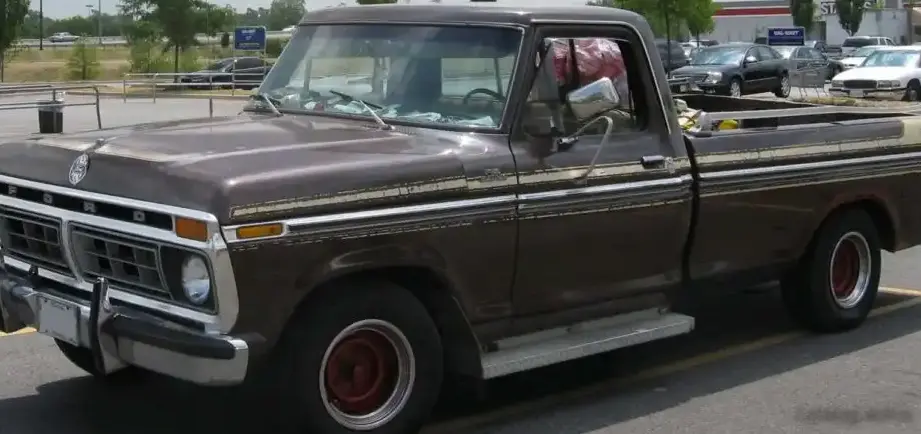
The Ford F-Series F-150 VI Regular Cab, specifically equipped with the 7.5L 460 cubic inch V8 engine and a three-speed automatic transmission, represents a significant iteration in the long and storied history of Ford’s full-size pickup trucks. Produced from 1977 through 1979, this configuration occupied a middle ground within the F-150 lineup, offering a balance between capability and affordability. It was part of the sixth generation of the F-Series (1973-1979), a generation known for its increased size, improved comfort, and a wider range of available options compared to its predecessors. This particular variant catered to buyers who needed substantial towing and hauling capacity but didn’t require the higher performance or luxury features of the top-tier trims.
Technical Specifications
| Brand | Ford |
| Model | F-Series F-100/F-150 |
| Generation | F-Series F-150 VI Regular Cab |
| Type (Engine) | 7.5L 460 V8 (220 Hp) Automatic |
| Start of production | 1977 |
| End of production | 1979 |
| Powertrain Architecture | Internal Combustion engine |
| Body type | Pick-up |
| Seats | 3 |
| Doors | 2 |
| Fuel Type | Petrol (Gasoline) |
| Power | 220 Hp |
| Power per litre | 29.2 Hp/l |
| Engine displacement | 7538 cm3 / 460 cu. in. |
| Number of cylinders | 8 |
| Engine configuration | V-engine |
| Piston Stroke | 97.79 mm / 3.85 in. |
| Number of valves per cylinder | 4 |
| Fuel injection system | Carburettor |
| Engine aspiration | Naturally aspirated engine |
| Max. weight | 2744 kg / 6049.48 lbs. |
| Trunk (boot) space – minimum | 1679-2084 l / 59.29 – 73.6 cu. ft. |
| Fuel tank capacity | 73 l / 19.28 US gal | 16.06 UK gal |
| Length | 5215 mm / 205.31 in. |
| Wheelbase | 3378 mm / 132.99 in. |
| Wading depth | 665 mm / 26.18 in. |
| Drivetrain Architecture | Rear wheel drive. Internal Combustion engine (ICE) drives the rear wheels. |
| Drive wheel | Rear wheel drive |
| Number of gears and type of gearbox | 3 gears, automatic transmission Cruise-O-Matic |
| Front suspension | Independent coil spring, Transverse stabilizer |
| Rear suspension | Leaf spring |
| Front brakes | Disc |
| Rear brakes | Drum |
| Power steering | Electric Steering |
| Tires size | 215/75 R15; 225/75 R15 |
| Wheel rims size | 7J x 15 |
Powertrain & Engine Architecture
The heart of this F-150 variant is the 7.5-liter (460 cubic inch) Ford 385-series V8 engine. This engine, designated as a “385” due to its bore size, was a mainstay of Ford’s truck and large car lineup for many years. The 1977-1979 versions typically employed a two-barrel carburetor, contributing to its 220 horsepower output. While not the most powerful engine available in the F-Series – the 460 could be optioned with a four-barrel carburetor for increased performance – it provided ample torque for hauling and towing. The engine’s architecture featured a cast iron block and cylinder heads, a robust design intended for longevity and durability. The automatic transmission was the Ford Cruise-O-Matic, a three-speed unit known for its smooth operation and reliability. This transmission was well-suited to the engine’s torque curve, providing adequate acceleration and comfortable cruising.
Driving Characteristics
Behind the wheel, the F-150 with the 460 V8 and Cruise-O-Matic offered a distinctly American driving experience. The emphasis was on effortless power and comfortable ride quality rather than sporty handling. The three-speed automatic transmission, while not as efficient as modern transmissions, provided smooth shifts and allowed the driver to focus on the task at hand. Acceleration was adequate for everyday driving and hauling loads, but it wasn’t particularly quick. The gear ratios were optimized for low-end torque, making it well-suited for towing trailers or carrying heavy payloads. Compared to the available manual transmissions or the higher-output 460 variants, this combination prioritized ease of use and relaxed cruising over outright performance.
Equipment & Trim Levels
The F-150 Regular Cab with the 460 V8 and automatic transmission typically fell into the mid-range of available trim levels. Standard equipment included a basic interior with vinyl upholstery, a simple dashboard layout, and a functional steering wheel. Options included upgraded interior trim, air conditioning, a radio, and various convenience features. The Regular Cab configuration offered a no-frills approach, prioritizing practicality and affordability. Buyers could customize their trucks with a range of options to suit their specific needs and preferences. The exterior typically featured minimal chrome trim and durable paint finishes designed to withstand the rigors of truck ownership.
Chassis & Braking
The F-150’s chassis was a traditional body-on-frame design, providing a robust and durable platform for heavy-duty use. The front suspension utilized independent coil springs and a transverse stabilizer bar, offering a reasonably comfortable ride. The rear suspension employed leaf springs, which were well-suited for carrying heavy loads. Braking duties were handled by disc brakes at the front and drum brakes at the rear. Power steering was standard, making it easier to maneuver the large truck. Tire sizes typically ranged from 215/75 R15 to 225/75 R15, providing a good balance between ride comfort and load-carrying capacity.
Market Reception & Comparison
The F-150 with the 460 V8 and automatic transmission was generally well-received by buyers who needed a capable and reliable work truck. Critics praised its ample power and comfortable ride, but some noted that the carburetor-equipped engine wasn’t as fuel-efficient as newer fuel-injected engines. Compared to the smaller six-cylinder engines, the 460 V8 offered significantly more power and towing capacity. Compared to the higher-output 460 variants, this configuration provided a more affordable option for buyers who didn’t need maximum performance. Its fuel economy, while not exceptional, was considered acceptable for a full-size pickup truck of that era.
Legacy
Today, the 1977-1979 Ford F-150 with the 460 V8 and automatic transmission holds a nostalgic appeal for many truck enthusiasts. The 385-series engine is known for its durability and relative simplicity, making it a popular choice for restoration projects. While not as technologically advanced as modern trucks, these F-150s represent a classic era of American truck design. The availability of parts and the relatively straightforward mechanical design contribute to their continued popularity in the used car market. Properly maintained examples can still provide years of reliable service, serving as a testament to Ford’s engineering prowess and the enduring appeal of the full-size pickup truck.