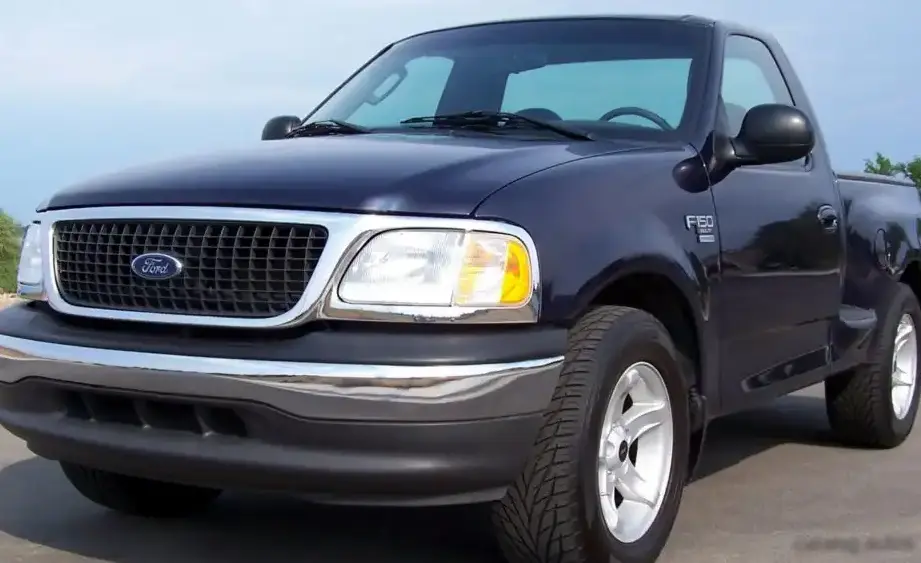
The Ford F-Series F-150 X Regular Cab, equipped with the 5.4-liter V8 Triton engine producing 235 horsepower and paired with a four-speed automatic transmission and a 4×4 drivetrain, was a mainstay of Ford’s full-size pickup truck lineup during the 1997 and 1998 model years. This configuration represented a mid-range offering within the tenth generation (1997-2003) of the F-Series, balancing capability with a more accessible price point compared to higher trim levels and larger engine options. It was designed to appeal to buyers needing a robust work truck with the convenience of an automatic transmission and the added security of four-wheel drive.
Technical Specifications
| Brand | Ford |
| Model | F-Series F-150 X Regular Cab |
| Generation | F-Series F-150 X Regular Cab |
| Type (Engine) | 5.4 V8 Triton (235 Hp) 4×4 Automatic |
| Start of production | 1997 |
| End of production | 1998 |
| Powertrain Architecture | Internal Combustion engine |
| Body type | Pick-up |
| Seats | 3 |
| Doors | 2 |
| Fuel Type | Petrol (Gasoline) |
| Power | 235 Hp @ 4250 rpm |
| Power per litre | 43.5 Hp/l |
| Torque | 447 Nm @ 3000 rpm / 329.69 lb.-ft. @ 3000 rpm |
| Engine layout | Front, Longitudinal |
| Engine displacement | 5408 cm3 / 330.02 cu. in. |
| Number of cylinders | 8 |
| Engine configuration | V-engine |
| Compression ratio | 9:1 |
| Number of valves per cylinder | 2 |
| Fuel injection system | Multi-port manifold injection |
| Engine aspiration | Naturally aspirated engine |
| Valvetrain | SOHC |
| Engine oil capacity | 5.7 l / 6.02 US qt | 5.02 UK qt |
| Coolant | 22.6 l / 23.88 US qt | 19.89 UK qt |
| Max. weight | 2722 kg / 6000.98 lbs |
| Trunk (boot) space – minimum | 1659 l / 58.59 cu. ft |
| Trunk (boot) space – maximum | 2056 l / 72.61 cu. ft |
| Fuel tank capacity | 93-114 l / 24.57 – 30.12 US gal | 20.46 – 25.08 UK gal |
| Permitted trailer load with brakes (12%) | 3538 kg / 7799.95 lbs |
| Length | 5174-5646 mm / 203.7 – 222.28 in |
| Wheelbase | 3048-3531 mm / 120 – 139.02 in |
| Ride height (ground clearance) | 185 mm / 7.28 in |
| Wading depth | 886-889 mm / 34.88 – 35 in |
| Drivetrain Architecture | The Internal combustion engine (ICE) drives the rear wheels permanently, and the front wheels are driven through an electrically or mechanically operated clutch if necessary. |
| Drive wheel | All wheel drive (4×4) |
| Number of gears and type of gearbox | 4 gears, automatic transmission |
| Front suspension | Torsion |
| Front brakes | Ventilated discs |
| Rear brakes | Ventilated discs |
| Power steering | Electric Steering |
| Tires size | 235/70 R16 |
| Wheel rims size | 7.0J x 16 |
Powertrain & Engine Architecture
The heart of this F-150 X was the 5.4-liter Triton V8 engine. This engine, designated as the engine code 460, was a significant departure from previous Ford V8s, utilizing a single overhead camshaft (SOHC) design with two valves per cylinder. This configuration, while simpler than dual overhead cam designs, offered a good balance of power, reliability, and cost-effectiveness. The engine featured multi-port fuel injection, delivering fuel directly to each cylinder for improved efficiency and performance. The 9:1 compression ratio was a compromise between power output and the ability to run on readily available gasoline. The four-speed automatic transmission (4R70W) was chosen for its durability and ease of use, making it a popular choice for truck buyers who preferred the convenience of an automatic over a manual transmission. The 4R70W featured electronic control for smoother shifting and improved fuel economy.
Driving Characteristics
The 235 horsepower and 330 lb-ft of torque provided by the 5.4-liter Triton were adequate for most everyday tasks, including towing and hauling moderate loads. However, compared to the available 4.6-liter V8 or the larger 5.8-liter V8, the 5.4-liter offered a noticeable step up in capability. The four-speed automatic transmission, while reliable, wasn’t known for its sporty responsiveness. Gear ratios were optimized for towing and hauling, resulting in relatively conservative acceleration. The 4×4 system provided enhanced traction in slippery conditions, making it a valuable asset for those living in areas with inclement weather or needing to navigate off-road terrain. The overall driving experience was typical of a full-size pickup truck – comfortable for long distances but not particularly nimble or sporty.
Equipment & Trim Levels
The F-150 X Regular Cab, in this configuration, typically included standard features such as air conditioning, a basic AM/FM radio, and cloth upholstery. Power windows and locks were often optional extras. The interior was functional and durable, designed to withstand the rigors of work truck use. The Regular Cab configuration offered a bench seat for up to three occupants, but rear passenger space was limited. Optional extras included upgraded sound systems, cruise control, and various towing packages. The “X” trim level positioned this F-150 as a step above the base model, offering a slightly more refined interior and a few additional convenience features.
Chassis & Braking
The F-150 X Regular Cab utilized a body-on-frame construction, providing a robust and durable platform. The front suspension featured torsion bars, while the rear suspension employed leaf springs. This setup was designed to handle heavy loads and provide a comfortable ride. Braking duties were handled by ventilated discs on all four wheels, offering adequate stopping power for the truck’s weight. Power steering was standard, making it easier to maneuver the large vehicle. The tires, typically 235/70R16, were chosen for their balance of on-road comfort and off-road capability.
Market Reception & Comparison
The 1997-1998 F-150 X with the 5.4-liter V8 and automatic transmission was generally well-received by critics and buyers alike. It offered a good combination of power, convenience, and affordability. Compared to the 4.6-liter V8, the 5.4-liter provided a noticeable increase in towing capacity and overall performance. However, the 5.4-liter was also slightly less fuel-efficient. Compared to the larger 5.8-liter V8, the 5.4-liter offered a better balance of power and fuel economy. Reliability was generally good, although some owners reported issues with the spark plugs breaking during removal – a common problem with the early Triton engines.
Legacy
The 5.4-liter Triton V8 engine became a mainstay of the Ford F-Series lineup for many years, undergoing several revisions and improvements over time. The 1997-1998 version, while not the most refined iteration, remains a relatively reliable and affordable option in the used truck market. These trucks are often sought after by those needing a capable work truck or a classic American pickup. While maintenance costs can be higher than some newer vehicles, the readily available parts and relatively simple mechanical design make them a popular choice for DIY mechanics. The 4R70W transmission, when properly maintained, is known for its durability and longevity. Overall, the Ford F-150 X Regular Cab with the 5.4-liter V8 and automatic transmission represents a solid and dependable truck that continues to serve its owners well today.