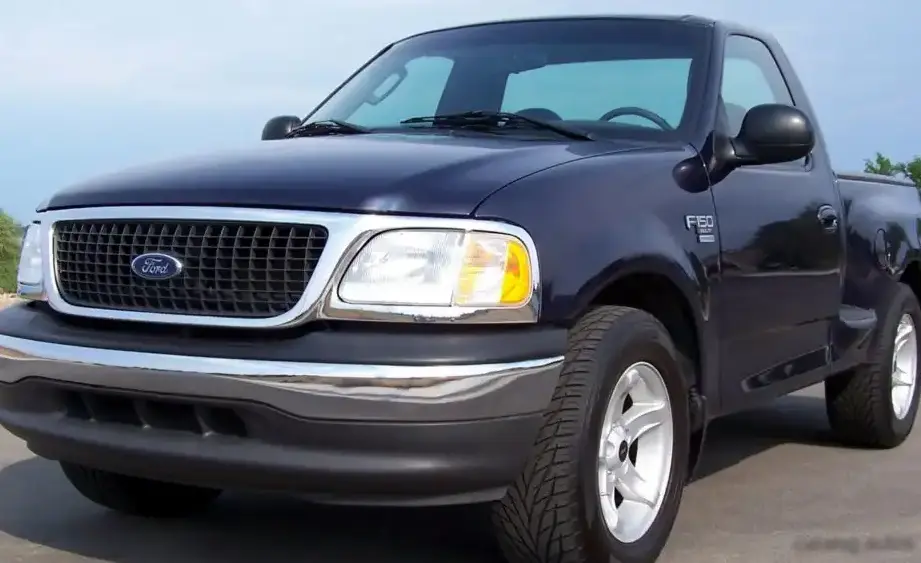
The Ford F-150 SVT Lightning, specifically the 1999-2000 model year iteration powered by the 5.4-liter supercharged V8 engine and a 4-speed automatic transmission, represents a significant chapter in the performance truck segment. Positioned as the high-performance variant of the tenth-generation F-150 (1997-2003), the Lightning aimed to deliver sports car-like acceleration and handling in a full-size pickup package. This generation marked a return to the Lightning nameplate after a hiatus, and it quickly established itself as a benchmark for factory-built performance trucks. It was offered exclusively in a regular cab configuration, emphasizing its focus on speed and agility rather than utility.
Technical Specifications
| Brand | Ford |
| Model | F-Series F-150 |
| Generation | F-Series F-150 X Regular Cab |
| Type (Engine) | SVT Lightning 5.4 V8 (360 Hp) Automatic |
| Start of production | 1999 |
| End of production | 2000 |
| Powertrain Architecture | Internal Combustion engine |
| Body type | Pick-up |
| Seats | 3 |
| Doors | 2 |
| Fuel Type | Petrol (Gasoline) |
| Power | 360 Hp @ 4750 rpm |
| Power per litre | 66.6 Hp/l |
| Torque | 597 Nm @ 3250 rpm / 440.32 lb.-ft. @ 3250 rpm |
| Maximum engine speed | 5250 rpm |
| Engine layout | Front, Longitudinal |
| Engine displacement | 5408 cm3 / 330.02 cu. in. |
| Number of cylinders | 8 |
| Engine configuration | V-engine |
| Cylinder Bore | 90.2 mm / 3.55 in. |
| Piston Stroke | 105.8 mm / 4.17 in. |
| Compression ratio | 8.4:1 |
| Number of valves per cylinder | 2 |
| Fuel injection system | Multi-port manifold injection |
| Engine aspiration | Supercharger |
| Valvetrain | SOHC |
| Engine oil capacity | 5.7 l / 6.02 US qt | 5.02 UK qt |
| Coolant | 22.6 l / 23.88 US qt | 19.89 UK qt |
| Permitted trailer load with brakes (12%) | 2268 kg / 5000.08 lbs. |
| Drivetrain Architecture | The Internal combustion engine (ICE) drives the rear wheels of the vehicle. |
| Drive wheel | Rear wheel drive |
| Number of gears and type of gearbox | 4 gears, automatic transmission |
| Front suspension | Independent coil spring, Transverse stabilizer |
| Rear suspension | Leaf spring |
| Front brakes | Ventilated discs, 307 mm |
| Rear brakes | Ventilated discs, 333 mm |
| Tires size | 295/45 ZR18 |
| Wheel rims size | 9.5J x 18 |
Powertrain & Engine Architecture
The heart of the 1999-2000 SVT Lightning is the 5.4-liter, 32-valve Triton V8 engine. What set this engine apart was the addition of a roots-type supercharger manufactured by Eaton. This supercharger, coupled with an intercooler, boosted output to 360 horsepower and 440 lb-ft of torque. The engine utilized multi-port fuel injection and a single overhead camshaft (SOHC) design. The engine block itself was cast iron, providing a robust foundation for the forced induction. The 4R70W four-speed automatic transmission was specifically calibrated for the Lightning, featuring a heavy-duty torque converter and strengthened internals to handle the increased power. The transmission was designed for quick, firm shifts, contributing to the truck’s performance feel.
Driving Characteristics
The Lightning’s driving experience was markedly different from standard F-150s. The supercharger provided instant and substantial torque, resulting in impressive acceleration. Independent front suspension, along with a lowered ride height and stiffer springs, significantly improved handling compared to other F-150 models. While not a corner carver in the sports car sense, the Lightning offered a level of control and responsiveness rarely found in a full-size pickup. The 4-speed automatic transmission, while not as sophisticated as modern transmissions, provided adequate gear ratios for maximizing the engine’s power band. The rear-wheel-drive configuration and relatively light weight (for a full-size truck) contributed to a lively and engaging driving experience. Compared to a standard F-150 with a V6 or smaller V8, the Lightning felt dramatically faster and more capable. Compared to a manual transmission F-150, the automatic offered convenience but sacrificed some driver control.
Equipment & Trim Levels
The SVT Lightning came relatively well-equipped, though options were limited. Standard features included a unique exterior styling package with a color-matched composite fender flares, a mesh grille, and 18-inch wheels. Inside, the Lightning featured sport seats with unique upholstery, a leather-wrapped steering wheel, and a premium sound system. Air conditioning, power windows and locks, and cruise control were also standard. Optional extras were relatively sparse, typically limited to a sliding rear window and a towing package. The interior was focused on functionality and a sporty aesthetic rather than outright luxury.
Chassis & Braking
The chassis of the Lightning was heavily modified to handle the increased power and improve handling. The front suspension featured coil springs and a transverse stabilizer bar, while the rear retained leaf springs but with a stiffer spring rate. The ride height was lowered approximately two inches, lowering the center of gravity. Braking duties were handled by ventilated disc brakes at all four corners, with larger rotors than those found on standard F-150s. The tires, specifically designed for the Lightning, were 295/45 ZR18 Goodyear Eagle F1s, providing excellent grip.
Market Reception & Comparison
The 1999-2000 Ford F-150 SVT Lightning was generally well-received by automotive critics. It was praised for its impressive performance, improved handling, and unique styling. However, some critics noted the relatively basic interior and the limited availability of options. Compared to other performance trucks of the era, such as the Chevrolet Silverado SS, the Lightning offered a more focused and aggressive driving experience. Fuel economy was understandably lower than standard F-150s, averaging around 14 mpg in city driving and 17 mpg on the highway. Reliability was generally good, though the supercharger did require more frequent maintenance than a naturally aspirated engine.
Legacy
The 1999-2000 Ford F-150 SVT Lightning remains a popular and sought-after vehicle among truck enthusiasts. The 5.4-liter supercharged engine, while not without its quirks, has proven to be relatively durable with proper maintenance. The Lightning’s combination of performance, handling, and unique styling has cemented its place as a classic in the performance truck segment. Today, well-maintained examples command a premium in the used car market, and the Lightning continues to be a popular platform for modifications and customization. The Lightning paved the way for future generations of performance trucks from Ford and other manufacturers, demonstrating the demand for high-performance pickups.