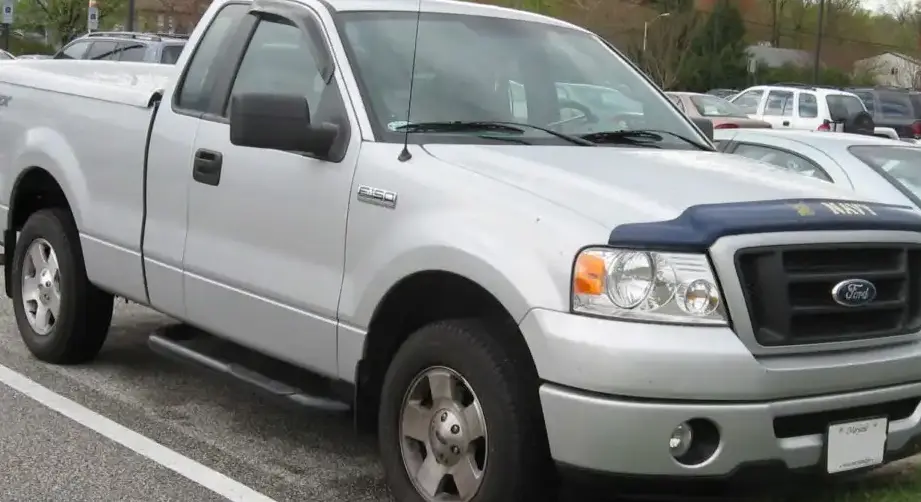
The Ford F-150 XI Regular Cab, equipped with the 4.6-liter V8 Triton engine and a four-speed automatic transmission, was a mainstay of Ford’s full-size pickup truck lineup from 2004 to 2006. Representing the eleventh generation of the F-Series (codenamed F-150 XI), this configuration occupied a middle ground in the trim levels offered, providing a balance between capability, affordability, and convenience. It served as a workhorse for many American consumers, offering a robust powertrain and the versatility expected of a traditional full-size pickup. This variant was particularly popular in regions where four-wheel drive was essential for navigating varied terrain or inclement weather.
Technical Specifications
| Brand | Ford |
| Model | F-Series F-150 |
| Generation | F-Series F-150 XI Regular Cab |
| Type (Engine) | 4.6 V8 Triton (231 Hp) 4×4 Automatic |
| Start of production | 2004 |
| End of production | 2006 |
| Powertrain Architecture | Internal Combustion engine |
| Body type | Pick-up |
| Seats | 3 |
| Doors | 2 |
| Fuel Type | Petrol (Gasoline) |
| Weight-to-power ratio | 9.8 kg/Hp, 101.8 Hp/tonne |
| Weight-to-torque ratio | 5.7 kg/Nm, 174.9 Nm/tonne |
| Power | 231 Hp @ 4750 rpm |
| Power per litre | 50.2 Hp/l |
| Torque | 397 Nm @ 3500 rpm (292.81 lb.-ft. @ 3500 rpm) |
| Engine layout | Front, Longitudinal |
| Engine displacement | 4605 cm3 (281.01 cu. in.) |
| Number of cylinders | 8 |
| Engine configuration | V-engine |
| Cylinder Bore | 90.17 mm (3.55 in.) |
| Piston Stroke | 89.92 mm (3.54 in.) |
| Compression ratio | 9.3:1 |
| Number of valves per cylinder | 2 |
| Fuel injection system | Multi-port manifold injection |
| Engine aspiration | Naturally aspirated engine |
| Valvetrain | SOHC |
| Engine oil capacity | 5.7 l (6.02 US qt | 5.02 UK qt) |
| Coolant | 19.4 l (20.5 US qt | 17.07 UK qt) |
| Kerb Weight | 2270-2331 kg (5004.49 – 5138.98 lbs.) |
| Max. weight | 3152 kg (6948.97 lbs.) |
| Max load | 821-882 kg (1810 – 1944.48 lbs.) |
| Fuel tank capacity | 98-135 l (25.89 – 35.66 US gal | 21.56 – 29.7 UK gal) |
| Permitted trailer load with brakes (12%) | 3084 kg (6799.06 lbs.) |
| Length | 5364-5837 mm (211.18 – 229.8 in.) |
| Width | 2004 mm (78.9 in.) |
| Height | 1875-1920 mm (73.82 – 75.59 in.) |
| Wheelbase | 3200-3670 mm (125.98 – 144.49 in.) |
| Front track | 1702 mm (67.01 in.) |
| Rear (Back) track | 1702 mm (67.01 in.) |
| Minimum turning circle (turning diameter) | 12.7-14.1 m (41.67 – 46.26 ft.) |
| Drivetrain Architecture | All wheel drive (4×4). Internal Combustion engine. |
| Drive wheel | All wheel drive (4×4) |
| Number of gears and type of gearbox | 4 gears, automatic transmission |
| Front suspension | Double wishbone |
| Rear suspension | Leaf spring |
| Front brakes | Ventilated discs, 330 mm |
| Rear brakes | Ventilated discs, 348 mm |
| Assisting systems | ABS (Anti-lock braking system) |
| Steering type | Steering rack and pinion |
| Power steering | Electric Steering |
| Tires size | 235/70 R17; 275/65 R18 |
| Wheel rims size | 17; 18 |
Powertrain & Engine Architecture
The heart of this F-150 variant was the 4.6-liter Triton V8 engine. This engine, part of Ford’s modular engine family, featured a single overhead camshaft (SOHC) design and a 9.3:1 compression ratio. The engine utilized multi-port fuel injection to deliver fuel to the cylinders, optimizing combustion efficiency. The 4.6L Triton was known for its relatively smooth operation and decent power output for its displacement. The four-speed automatic transmission (typically the 4R70W) was chosen for its durability and suitability for towing and hauling. While not the most technologically advanced transmission available at the time, it provided smooth shifts and reliable performance. The transmission’s gear ratios were optimized for both on-road cruising and off-road capability, providing adequate torque multiplication for challenging terrain.
Driving Characteristics
The 4.6L V8 with the four-speed automatic delivered a respectable, though not exhilarating, driving experience. Acceleration was adequate for everyday driving and moderate towing, but it lacked the punch of the larger 5.4-liter Triton V8 or the diesel options. The automatic transmission, while smooth, could sometimes feel sluggish during quick acceleration. The 4×4 system provided enhanced traction in slippery conditions, making it a capable work truck and recreational vehicle. Compared to the manual transmission versions of the F-150, the automatic offered greater convenience, particularly in stop-and-go traffic, but at the expense of some fuel efficiency and driver engagement. The leaf spring rear suspension, while robust, provided a firmer ride compared to coil-spring setups.
Equipment & Trim Levels
The F-150 XI Regular Cab with the 4.6L engine and automatic transmission typically came standard with features such as air conditioning, a basic audio system, and vinyl upholstery. Higher trim levels, such as the XLT and Lariat, added features like power windows and locks, upgraded audio systems, cloth or leather upholstery, and chrome exterior trim. Optional extras included a towing package, upgraded wheels, and a sunroof. The Regular Cab configuration offered a no-frills interior focused on functionality and durability. The dashboard layout was straightforward and easy to use, with large, clearly marked controls.
Chassis & Braking
The F-150 XI utilized a body-on-frame construction, providing a robust and durable platform. The front suspension featured a double wishbone design, while the rear suspension employed leaf springs. This setup was designed to handle heavy loads and provide a stable ride. Braking duties were handled by ventilated disc brakes on all four wheels, with ABS (Anti-lock Braking System) as standard equipment. The braking system provided adequate stopping power for the vehicle’s weight, but it wasn’t particularly refined compared to more modern braking systems.
Market Reception & Comparison
The 4.6L V8 automatic F-150 was generally well-received by consumers and critics alike. It was praised for its reliability, affordability, and capability. However, some reviewers noted that the engine lacked the power and refinement of the larger V8 options. Fuel economy was average for a full-size pickup truck of that era. Compared to the 5.4L Triton V8, the 4.6L offered better fuel economy but less power. The diesel options provided superior torque for heavy towing but came with a higher price tag. The 4.6L automatic configuration struck a balance between these extremes, making it a popular choice for buyers who needed a capable and reliable truck without breaking the bank.
Legacy
The 4.6L Triton V8 engine, while prone to some issues like spark plug breakage in earlier iterations, proved to be a relatively durable and long-lasting powertrain when properly maintained. Today, these F-150s can be found in the used car market at affordable prices. They remain popular choices for those seeking a capable and reliable work truck. While not as sought-after as some of the higher-performance or more luxurious F-150 trims, the 4.6L automatic variant represents a solid and dependable option for those who prioritize practicality and value. Regular maintenance, including oil changes and transmission fluid flushes, is crucial for ensuring the continued reliability of these trucks.