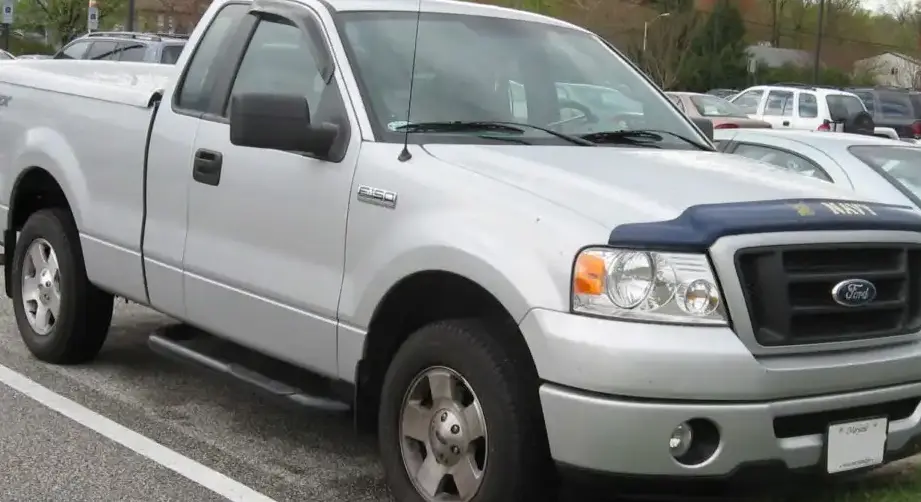
The Ford F-150 XI Regular Cab, equipped with the 4.6-liter V8 Triton engine and a four-speed automatic transmission, represented a work-focused configuration within the eleventh generation of the Ford F-Series. Produced from 2007 through mid-2008, this variant served as a mainstay for buyers prioritizing capability and affordability in a full-size pickup. It occupied a position below the more powerful 5.4-liter V8 and the diesel options, targeting customers who didn’t require maximum towing or hauling capacity but still desired the robustness of a Ford truck. This model year marked a significant transition for the F-150, with a fully redesigned frame and body, enhancing its strength and interior refinement.
Technical Specifications
| Brand | Ford |
| Model | F-Series F-150 |
| Generation | F-Series F-150 XI Regular Cab |
| Type (Engine) | 4.6 V8 Triton (248 Hp) Automatic |
| Start of production | 2007 |
| End of production | July, 2008 |
| Powertrain Architecture | Internal Combustion engine |
| Body type | Pick-up |
| Seats | 3 |
| Doors | 2 |
| Fuel consumption (urban) | 15.7 l/100 km (15 US mpg / 18 UK mpg) |
| Fuel consumption (extra urban) | 11.8 l/100 km (19.9 US mpg / 23.9 UK mpg) |
| Fuel Type | Petrol (Gasoline) |
| Weight-to-power ratio | 8.4 kg/Hp |
| Weight-to-torque ratio | 5.2 kg/Nm |
| Power | 248 Hp @ 4750 rpm |
| Torque | 399 Nm @ 4000 rpm (294.29 lb.-ft. @ 4000 rpm) |
| Engine layout | Front, Longitudinal |
| Engine displacement | 4605 cm3 (281.01 cu. in.) |
| Number of cylinders | 8 |
| Engine configuration | V-engine |
| Cylinder Bore | 90.17 mm (3.55 in.) |
| Piston Stroke | 89.92 mm (3.54 in.) |
| Compression ratio | 9.4:1 |
| Number of valves per cylinder | 2 |
| Fuel injection system | Multi-port manifold injection |
| Engine aspiration | Naturally aspirated |
| Valvetrain | SOHC |
| Engine oil capacity | 5.7 l (6.02 US qt / 5.02 UK qt) |
| Coolant capacity | 19.4 l (20.5 US qt / 17.07 UK qt) |
| Kerb Weight | 2092-2154 kg (4612.07 – 4748.76 lbs.) |
| Max. weight | 3084 kg (6799.06 lbs.) |
| Max load | 930-992 kg (2050.3 – 2186.99 lbs.) |
| Fuel tank capacity | 98-135 l (25.89 – 35.66 US gal / 21.56 – 29.7 UK gal) |
| Permitted trailer load with brakes (12%) | 3266 kg (7200.3 lbs.) |
| Length | 5364-5837 mm (211.18 – 229.8 in.) |
| Width | 2004 mm (78.9 in.) |
| Height | 1872 mm (73.7 in.) |
| Wheelbase | 3200-3670 mm (125.98 – 144.49 in.) |
| Front track | 1702 mm (67.01 in.) |
| Rear track | 1702 mm (67.01 in.) |
| Minimum turning circle | 12.7-14.1 m (41.67 – 46.26 ft.) |
| Drivetrain | Rear wheel drive |
| Number of gears | 4 |
| Gearbox type | Automatic transmission |
| Front suspension | Double wishbone |
| Rear suspension | Leaf spring |
| Front brakes | Ventilated discs, 330 mm |
| Rear brakes | Ventilated discs, 348 mm |
| Assisting systems | ABS (Anti-lock braking system) |
| Steering type | Steering rack and pinion |
| Power steering | Electric |
| Tires size | 235/70 R17; 265/60 R18 |
| Wheel rims size | 17; 18 |
Powertrain & Engine Architecture
The heart of this F-150 variant was the 4.6-liter Triton V8, specifically the engine code used during this period. This engine featured a single overhead camshaft (SOHC) design with two valves per cylinder. The multi-port fuel injection system delivered fuel directly to each intake port, optimizing combustion efficiency. The 9.4:1 compression ratio was a compromise between performance and the ability to run on readily available gasoline. The four-speed automatic transmission, a mainstay of Ford trucks for years, was chosen for its durability and simplicity. While not offering the refinement of newer transmissions, it provided adequate performance for typical work duties. The transmission’s gear ratios were optimized for towing and hauling, prioritizing low-end torque over outright acceleration.
Driving Characteristics
The 4.6-liter V8 with the four-speed automatic delivered a respectable, if not exhilarating, driving experience. Acceleration was adequate for everyday driving, but the engine felt strained when pushed hard, especially when loaded. The automatic transmission’s shift points were calibrated for fuel economy and smooth operation, sometimes at the expense of responsiveness. Compared to the 5.4-liter V8, the 4.6-liter lacked the extra power needed for heavy towing or aggressive driving. However, it offered a noticeable improvement in fuel economy. The rear-wheel-drive configuration provided a traditional truck feel, with predictable handling and good traction in dry conditions.
Equipment & Trim Levels
The F-150 XI Regular Cab with the 4.6-liter engine typically came standard with basic features such as air conditioning, a CD player, and vinyl upholstery. Power windows and locks were often optional extras. The interior was functional and durable, designed to withstand the rigors of work-truck use. Higher trim levels, such as the XLT, added features like cloth upholstery, cruise control, and upgraded audio systems. Options included power seats, a towing package, and various appearance upgrades.
Chassis & Braking
The F-150 XI Regular Cab featured a robust fully-boxed frame, a significant upgrade from previous generations. The front suspension utilized a double wishbone design, providing a comfortable ride and good handling. The rear suspension employed leaf springs, which were well-suited for carrying heavy loads. Braking duties were handled by ventilated discs on all four wheels, with ABS as standard equipment. The braking system was adequate for the truck’s weight and performance, but it lacked the stopping power of more modern systems.
Market Reception & Comparison
The 4.6-liter F-150 was generally well-received by critics and buyers alike. It was praised for its affordability, durability, and capability. However, some reviewers noted its lack of refinement and its relatively low power output compared to the 5.4-liter V8. Fuel economy was considered average for a full-size pickup. In terms of reliability, the 4.6-liter Triton engine proved to be generally dependable, although some owners reported issues with spark plug breakage and timing chain tensioner failure. Compared to the diesel options, the 4.6-liter offered lower upfront cost but significantly less torque and fuel efficiency.
Legacy
The Ford F-150 XI Regular Cab with the 4.6-liter V8 and automatic transmission remains a popular choice in the used truck market. Its affordability and proven reliability make it an attractive option for buyers seeking a capable and dependable work truck. While not as desirable as the more powerful trims, it offers a good value proposition for those who don’t require maximum performance. The 4.6-liter Triton engine, despite its known issues, is relatively easy to maintain and repair, ensuring that these trucks will continue to see service for years to come.