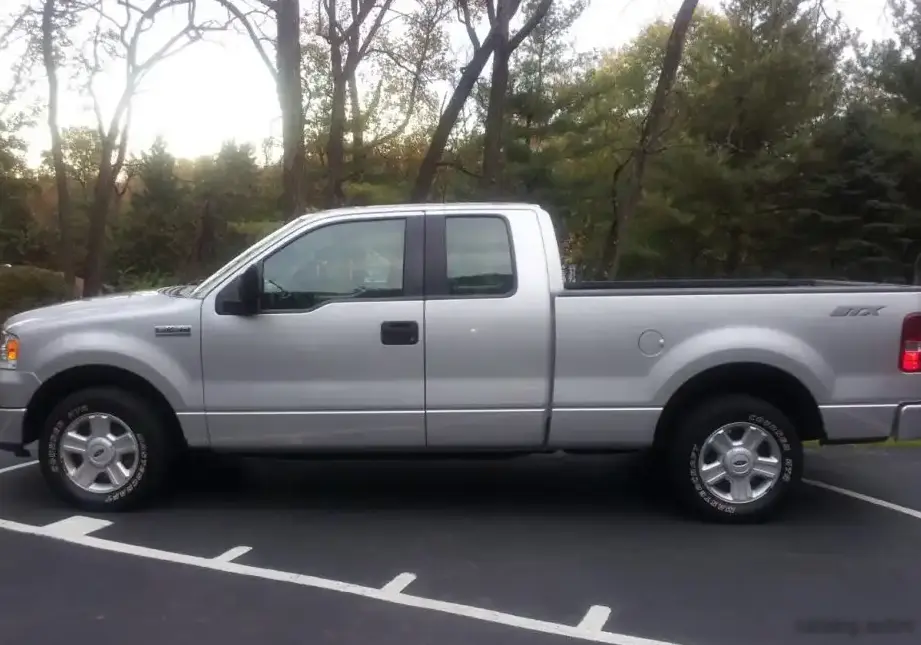
The Ford F-150 XI SuperCab, produced from 2004 to 2006, represented a continuation of the popular F-Series lineage, specifically the tenth generation (2004-2008). This iteration of the F-150 aimed to balance capability with a degree of comfort and convenience, catering to both work and personal use. The 4.6-liter V8 Triton engine paired with an automatic transmission was a common configuration, positioned as a step up from the base V6 models but below the more powerful 5.4-liter V8 options. It served as a versatile choice for buyers needing substantial towing and hauling capacity without the premium price tag of the larger engine.
Technical Specifications
| Brand | Ford |
| Model | F-Series F-100/F-150 |
| Generation | F-Series F-150 XI SuperCab |
| Type (Engine) | 4.6 V8 Triton (231 Hp) Automatic |
| Start of production | 2004 |
| End of production | 2006 |
| Powertrain Architecture | Internal Combustion engine |
| Body type | Pick-up |
| Seats | 5-6 |
| Doors | 2 |
| Fuel consumption (urban) | 15.7 l/100 km (15 US mpg, 18 UK mpg) |
| Fuel consumption (extra urban) | 12.4 l/100 km (19 US mpg, 22.8 UK mpg) |
| Fuel Type | Petrol (Gasoline) |
| Weight-to-power ratio | 9.8 kg/Hp, 102.3 Hp/tonne |
| Weight-to-torque ratio | 5.7 kg/Nm, 175.8 Nm/tonne |
| Power | 231 Hp @ 4750 rpm |
| Power per litre | 50.2 Hp/l |
| Torque | 397 Nm @ 3500 rpm (292.81 lb.-ft. @ 3500 rpm) |
| Engine layout | Front, Longitudinal |
| Engine displacement | 4605 cm3 (281.01 cu. in.) |
| Number of cylinders | 8 |
| Engine configuration | V-engine |
| Cylinder Bore | 90.17 mm (3.55 in.) |
| Piston Stroke | 89.92 mm (3.54 in.) |
| Compression ratio | 9.3:1 |
| Number of valves per cylinder | 2 |
| Fuel injection system | Multi-port manifold injection |
| Engine aspiration | Naturally aspirated engine |
| Valvetrain | SOHC |
| Engine oil capacity | 5.7 l (6.02 US qt | 5.02 UK qt) |
| Coolant | 19.4 l (20.5 US qt | 17.07 UK qt) |
| Kerb Weight | 2258-2297 kg (4978.04 – 5064.02 lbs.) |
| Max. weight | 3039 kg (6699.85 lbs.) |
| Max load | 742-781 kg (1635.83 – 1721.81 lbs.) |
| Fuel tank capacity | 98-135 l (25.89 – 35.66 US gal | 21.56 – 29.7 UK gal) |
| Permitted trailer load with brakes (12%) | 3130 kg (6900.47 lbs.) |
| Length | 5532-5837 mm (217.8 – 229.8 in.) |
| Width | 2004 mm (78.9 in.) |
| Height | 1867-1943 mm (73.5 – 76.5 in.) |
| Wheelbase | 3366-3670 mm (132.52 – 144.49 in.) |
| Front track | 1702 mm (67.01 in.) |
| Rear (Back) track | 1702 mm (67.01 in.) |
| Minimum turning circle | 13.3-14.1 m (43.64 – 46.26 ft.) |
| Drivetrain Architecture | Rear wheel drive |
| Number of gears and type of gearbox | 4 gears, automatic transmission |
| Front suspension | Double wishbone |
| Rear suspension | Leaf spring |
| Front brakes | Ventilated discs, 330 mm |
| Rear brakes | Ventilated discs, 348 mm |
| Assisting systems | ABS (Anti-lock braking system) |
| Steering type | Steering rack and pinion |
| Power steering | Electric Steering |
| Tires size | 235/70 R17; 265/60 R18 |
| Wheel rims size | 17; 18 |
Powertrain & Engine Architecture
The heart of this F-150 variant was the 4.6-liter Triton V8, specifically the engine code often associated with this generation being the 2V. This engine was a member of Ford’s modular engine family, known for its relatively compact size and robust construction. It featured a single overhead camshaft (SOHC) design with two valves per cylinder. The multi-port fuel injection system delivered fuel directly to each intake port, optimizing combustion efficiency. The 9.3:1 compression ratio was a compromise between performance and the ability to run on readily available gasoline. The automatic transmission was typically a 4-speed unit, designed for durability and ease of use. While not offering the most advanced gear ratios, it provided smooth shifts and adequate performance for most everyday driving scenarios.
Driving Characteristics
The 4.6-liter V8 with the 4-speed automatic delivered a respectable, if not exhilarating, driving experience. Acceleration was adequate for highway merging and passing, but it lacked the punch of the 5.4-liter V8. The automatic transmission’s gear ratios were tuned for towing and hauling, meaning that initial acceleration felt somewhat leisurely. However, once underway, the engine provided sufficient torque for maintaining speed even when carrying a load. Compared to the manual transmission versions, the automatic offered greater convenience, particularly in stop-and-go traffic. However, it did result in a slight reduction in fuel economy and a less engaging driving experience. The weight distribution, typical of body-on-frame trucks, contributed to a noticeable body roll in corners.
Equipment & Trim Levels
The F-150 XI SuperCab 4.6L Automatic typically came standard with features like air conditioning, power windows and locks, and an AM/FM radio with a CD player. The SuperCab configuration offered extended rear seating, providing more passenger space than the standard cab. Upholstery was usually cloth, with optional leather available on higher trim levels. Popular options included a power-adjustable driver’s seat, a premium sound system, and a towing package. The XL trim was the base model, while the XLT offered more comfort and convenience features. The Lariat trim represented the top-of-the-line offering, with luxurious appointments and advanced technology.
Chassis & Braking
The F-150 XI SuperCab utilized a traditional body-on-frame construction, providing a robust and durable platform. The front suspension featured a double wishbone design, while the rear suspension employed leaf springs. This setup prioritized load-carrying capacity and ride comfort over sporty handling. Braking duties were handled by ventilated disc brakes on all four wheels, with ABS (Anti-lock Braking System) as standard equipment. The braking system was adequately sized for the vehicle’s weight and intended use, providing reliable stopping power in most conditions. The rear leaf spring suspension was tuned to handle heavier loads, sometimes resulting in a slightly harsher ride when the truck was unloaded.
Market Reception & Comparison
The 4.6-liter V8 automatic F-150 was generally well-received by critics and consumers alike. It offered a good balance of power, fuel economy, and affordability. Compared to the V6 models, the V8 provided a significant boost in performance and towing capacity. However, it wasn’t as fuel-efficient as the V6. Compared to the 5.4-liter V8, it offered less power but was more affordable and slightly more fuel-efficient. Reliability was generally good, although some owners reported issues with spark plug breakage, a common problem with the Triton V8 engines. Overall, it was considered a practical and dependable choice for buyers needing a capable full-size pickup truck.
Legacy
The 4.6-liter Triton V8, while eventually superseded by more modern engines, proved to be a durable and reliable powerplant. Many examples of the 2004-2006 F-150 with this engine configuration are still on the road today, a testament to its longevity. In the used car market, these trucks represent a relatively affordable option for buyers needing a capable workhorse. While maintenance costs can increase with age, the readily available parts and relatively simple mechanical design make them relatively easy to repair. The 4.6L F-150 remains a popular choice for those seeking a dependable and capable pickup truck without the complexities of newer, more technologically advanced models.