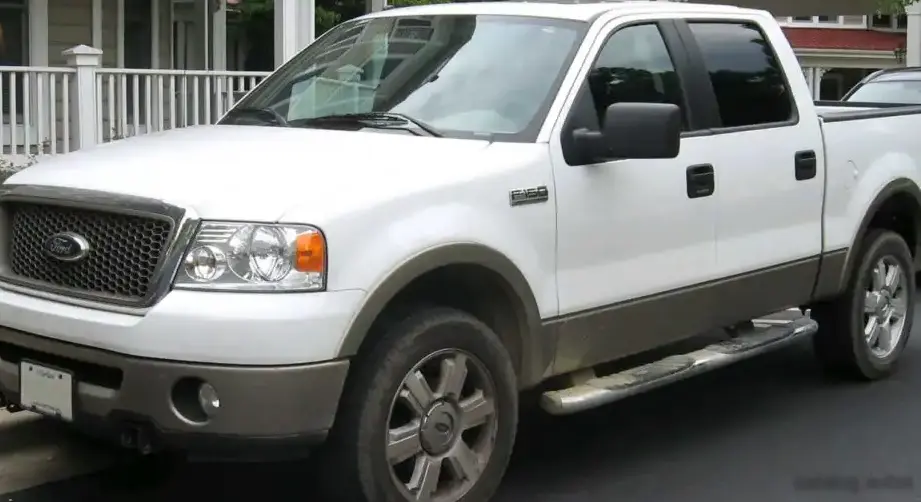
The Ford F-150 XI SuperCrew, produced from 2004 through July 2008, represented a significant iteration of Ford’s long-running and immensely popular F-Series pickup truck. This generation (designated the F-150 XI) marked a substantial departure from previous models, introducing a fully boxed frame for increased strength and rigidity, a redesigned interior, and a range of updated powertrain options. The SuperCrew configuration, specifically with the 5.4-liter V8 Triton engine and a four-speed automatic transmission, occupied a sweet spot in the lineup, offering a balance of capability, comfort, and affordability for American truck buyers. It was positioned as a step up from the base V6 models, appealing to those needing more power for towing and hauling, but without the premium price tag of the higher-trim levels or the larger engine options.
Technical Specifications
| Brand | Ford |
| Model | F-Series F-150 |
| Generation | F-Series F-150 XI SuperCrew |
| Type (Engine) | 5.4 V8 Triton (300 Hp) 4×4 Automatic |
| Start of production | 2004 |
| End of production | July, 2008 |
| Powertrain Architecture | Internal Combustion engine |
| Body type | Pick-up |
| Seats | 5-6 |
| Doors | 4 |
| Fuel consumption (urban) | 16.8 l/100 km (14 US mpg, 16.8 UK mpg) |
| Fuel consumption (extra urban) | 13.1 l/100 km (18 US mpg, 21.6 UK mpg) |
| Fuel Type | Petrol (Gasoline) |
| Weight-to-power ratio | 8.4 kg/Hp, 118.6 Hp/tonne |
| Weight-to-torque ratio | 5.1 kg/Nm, 195.7 Nm/tonne |
| Power | 300 Hp @ 5000 rpm |
| Power per litre | 55.5 Hp/l |
| Torque | 495 Nm @ 3750 rpm (365.09 lb.-ft. @ 3750 rpm) |
| Engine layout | Front, Longitudinal |
| Engine displacement | 5408 cm3 (330.02 cu. in.) |
| Number of cylinders | 8 |
| Engine configuration | V-engine |
| Cylinder Bore | 90.17 mm (3.55 in.) |
| Piston Stroke | 105.92 mm (4.17 in.) |
| Compression ratio | 9.8:1 |
| Number of valves per cylinder | 3 |
| Fuel injection system | Multi-port manifold injection |
| Engine aspiration | Naturally aspirated engine |
| Valvetrain | SOHC, VCT |
| Engine oil capacity | 6.6 l (6.97 US qt | 5.81 UK qt) |
| Coolant | 19.8 l (20.92 US qt | 17.42 UK qt) |
| Kerb Weight | 2530 kg (5577.7 lbs.) |
| Max. weight | 3266 kg (7200.3 lbs.) |
| Max load | 736 kg (1622.6 lbs.) |
| Fuel tank capacity | 114 l (30.12 US gal | 25.08 UK gal) |
| Permitted trailer load with brakes (12%) | 4173 kg (9199.89 lbs.) |
| Length | 5690 mm (224.02 in.) |
| Width | 2004 mm (78.9 in.) |
| Height | 1930 mm (75.98 in.) |
| Wheelbase | 3518 mm (138.5 in.) |
| Front track | 1702 mm (67.01 in.) |
| Rear (Back) track | 1702 mm (67.01 in.) |
| Minimum turning circle (turning diameter) | 13.7 m (44.95 ft.) |
| Drivetrain Architecture | All wheel drive (4×4). Internal Combustion engine. |
| Drive wheel | All wheel drive (4×4) |
| Number of gears and type of gearbox | 4 gears, automatic transmission |
| Front suspension | Double wishbone |
| Rear suspension | Leaf spring |
| Front brakes | Ventilated discs, 330 mm |
| Rear brakes | Ventilated discs, 348 mm |
| Assisting systems | ABS (Anti-lock braking system) |
| Steering type | Steering rack and pinion |
| Power steering | Electric Steering |
| Tires size | 235/70 R17; 275/65 R18 |
| Wheel rims size | 17; 18 |
Powertrain & Engine Architecture
The heart of this F-150 variant was the 5.4-liter Triton V8 engine. This engine, part of Ford’s modular engine family, featured a cast-iron block with aluminum cylinder heads. The “Triton” name signified the use of overhead camshafts (SOHC) and variable valve timing (VCT) on both intake and exhaust valves, enhancing both power and fuel efficiency. The engine utilized a multi-port fuel injection system, delivering fuel directly to each cylinder. The 300 horsepower output at 5000 rpm and 495 lb-ft of torque at 3750 rpm provided ample power for everyday driving and towing. Paired with this engine was a four-speed automatic transmission, a common choice for F-150s of this era. While not as sophisticated as newer transmissions with more gears, it offered smooth shifting and reliable performance. The transmission was electronically controlled, adapting to driving conditions for optimal efficiency.
Driving Characteristics
The 5.4-liter V8 and four-speed automatic combination delivered a comfortable and capable driving experience. Acceleration was adequate, though not particularly brisk, with a 0-60 mph time estimated around 7.5-8.5 seconds. The automatic transmission’s gear ratios were tuned for towing and hauling, prioritizing low-end torque over outright speed. Compared to the 4.6-liter V8, the 5.4 offered a noticeable increase in power and towing capacity. However, it wasn’t as responsive as the higher-output versions of the 5.4 or the optional 6.0-liter V8. The four-wheel-drive system provided enhanced traction in various conditions, making it suitable for both on-road and off-road use. The SuperCrew’s larger cabin and increased weight did slightly impact fuel economy compared to the standard cab models.
Equipment & Trim Levels
The F-150 XI SuperCrew with the 5.4-liter engine typically came standard with features like air conditioning, power windows and locks, an AM/FM stereo, and cloth upholstery. The SuperCrew configuration itself was a significant upgrade, offering a spacious four-door cabin with seating for up to six passengers. Optional extras included leather upholstery, a premium sound system, power-adjustable seats, a sunroof, and various towing packages. Trim levels, such as XLT and Lariat, added further refinements, including chrome exterior accents, upgraded interior materials, and additional convenience features.
Chassis & Braking
The F-150 XI SuperCrew featured a fully boxed frame, a major improvement over previous generations, providing increased strength and durability. The front suspension utilized an independent double wishbone design, while the rear suspension employed a traditional leaf spring setup. This combination offered a good balance of ride comfort and load-carrying capacity. Braking duties were handled by ventilated disc brakes on all four wheels, providing adequate stopping power. An Anti-lock Braking System (ABS) was standard, enhancing safety during emergency braking situations. Steering was rack-and-pinion with power assist, offering precise and responsive handling.
Market Reception & Comparison
The F-150 XI SuperCrew 5.4L 4×4 Automatic was well-received by critics and consumers alike. It was praised for its spacious cabin, comfortable ride, and strong towing capabilities. Fuel economy, however, was a common criticism, typical for a full-size pickup truck of that era. Compared to the 4.6-liter V8 models, the 5.4 offered a significant performance boost, making it a popular choice for those needing more power. The 5.4 also proved to be more reliable than the later 6.0-liter V8, which was prone to head gasket issues. The SuperCrew configuration, while more expensive than the standard cab models, offered a level of practicality and comfort that appealed to families and those who frequently carried passengers.
Legacy
The 5.4-liter Triton V8, while not without its quirks (such as potential spark plug issues in earlier years), proved to be a relatively durable and long-lasting engine. Many examples of the 2004-2008 F-150 SuperCrew 5.4L 4×4 are still on the road today, a testament to its overall reliability. In the used car market, these trucks remain popular due to their affordability, capability, and spaciousness. Regular maintenance, including oil changes and spark plug replacements, is crucial for ensuring the longevity of these engines. The F-150 XI SuperCrew 5.4L 4×4 Automatic represents a pivotal moment in Ford F-150 history, bridging the gap between traditional work trucks and more modern, comfortable pickups.