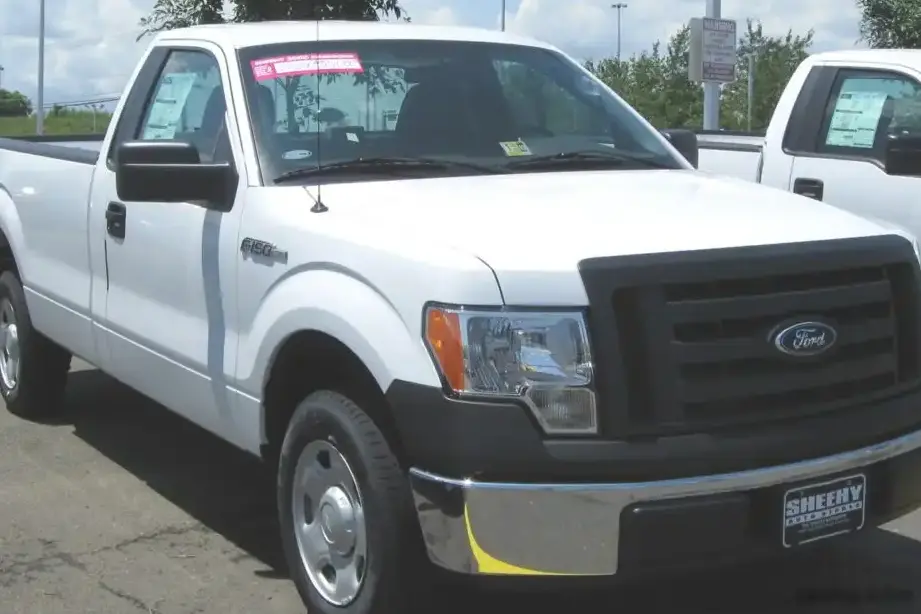
The Ford F-150, a cornerstone of the American automotive landscape, entered its twelfth generation with the 2011 model year. This generation marked a significant shift for the F-Series, introducing a more refined interior, improved ride quality, and a new range of engines. Among these, the 3.7L V6 paired with a six-speed automatic transmission offered a compelling blend of capability and efficiency, positioned as the entry-level engine option for buyers seeking a versatile full-size pickup. Production of this specific configuration ran from 2011 through 2014, serving as a popular choice for both personal and commercial use.
Technical Specifications
| Brand | Ford |
| Model | F-Series F-150 |
| Generation | F-Series F-150 XII Regular Cab |
| Type (Engine) | 3.7 V6 (302 Hp) 4×4 Automatic |
| Start of production | 2011 |
| End of production | 2014 |
| Powertrain Architecture | Internal Combustion engine |
| Body type | Pick-up |
| Seats | 3 |
| Doors | 2 |
| Fuel Type | Petrol (Gasoline) |
| Weight-to-power ratio | 7.4 kg/Hp, 135.2 Hp/tonne |
| Weight-to-torque ratio | 5.9 kg/Nm, 168.8 Nm/tonne |
| Power | 302 Hp @ 6500 rpm |
| Power per litre | 81.6 Hp/l |
| Torque | 377 Nm @ 4000 rpm (278.06 lb.-ft. @ 4000 rpm) |
| Engine layout | Front, Longitudinal |
| Engine displacement | 3703 cm3 (225.97 cu. in.) |
| Number of cylinders | 6 |
| Engine configuration | V-engine |
| Compression ratio | 10.5:1 |
| Number of valves per cylinder | 4 |
| Fuel injection system | Multi-port manifold injection |
| Engine aspiration | Naturally aspirated engine |
| Valvetrain | DOHC, Ti-VCT |
| Engine oil capacity | 5.7 l (6.02 US qt | 5.02 UK qt) |
| Coolant | 15.1 l (15.96 US qt | 13.29 UK qt) |
| Kerb Weight | 2234-2265 kg (4925.13 – 4993.47 lbs.) |
| Max. weight | 3152 kg (6948.97 lbs.) |
| Max load | 887-918 kg (1955.5 – 2023.84 lbs.) |
| Fuel tank capacity | 98-136 l (25.89 – 35.93 US gal | 21.56 – 29.92 UK gal) |
| Permitted trailer load with brakes (12%) | 2676 kg (5899.57 lbs.) |
| Length | 5415-5890 mm (213.19 – 231.89 in.) |
| Width | 2012 mm (79.21 in.) |
| Width including mirrors | 2464 mm (97.01 in.) |
| Height | 1930 mm (75.98 in.) |
| Wheelbase | 3198-3670 mm (125.91 – 144.49 in.) |
| Front track | 1702 mm (67.01 in.) |
| Rear (Back) track | 1702 mm (67.01 in.) |
| Minimum turning circle | 12.7-14.3 m (41.67 – 46.92 ft.) |
| Drivetrain Architecture | All wheel drive (4×4). ICE drives rear wheels, front wheels engaged via clutch. |
| Number of gears and type of gearbox | 6 gears, automatic transmission |
| Front suspension | Double wishbone |
| Rear suspension | Leaf spring |
| Front brakes | Ventilated discs, 351×34 mm |
| Rear brakes | Ventilated discs, 348×25 mm |
| Assisting systems | ABS (Anti-lock braking system) |
| Steering type | Steering rack and pinion |
| Power steering | Electric Steering |
| Tires size | 255/70 R17; 265/60 R18; 275/55 R20 |
| Wheel rims size | 7.5J x 17; 7.5J x 18; 8.5J x 20 |
Powertrain & Engine Architecture
The heart of this F-150 variant is the 3.7-liter Ti-VCT V6 engine. This engine, designated within Ford as the 3.7L Duratec, is a naturally aspirated powerplant featuring a 60-degree V-angle. It utilizes a dual overhead camshaft (DOHC) design with variable valve timing (Ti-VCT) on both intake and exhaust valves, optimizing performance and efficiency across the rev range. The multi-port fuel injection system delivers fuel directly to the intake ports, ensuring precise fuel delivery. The engine produces 302 horsepower at 6500 rpm and 278 lb-ft of torque at 4000 rpm. This engine was designed to offer a balance between power and fuel economy, a step down from the larger V8 options but providing ample capability for everyday tasks and moderate towing. The six-speed automatic transmission, a crucial component of this setup, was chosen for its smooth shifting and ability to keep the engine operating in its optimal power band. The transmission’s gear ratios were tuned to provide adequate acceleration and towing capacity without sacrificing fuel efficiency.
Driving Characteristics
The 3.7L V6 and six-speed automatic combination in the F-150 delivered a noticeably different driving experience compared to the larger V8 engines. While lacking the immediate grunt of the 5.0L or 6.2L V8s, the 3.7L offered a smoother, more refined driving experience. Acceleration was adequate for most situations, and the automatic transmission shifted smoothly and predictably. The gear ratios were optimized for everyday driving, providing sufficient power for highway cruising and city commuting. However, when heavily loaded or towing, the engine could feel strained, requiring more frequent downshifts. Compared to the manual transmission options, the automatic provided greater convenience but sacrificed some driver control and potentially a slight amount of fuel economy. The 4×4 system provided enhanced traction in inclement weather and off-road conditions, making it a versatile choice for a wide range of applications.
Equipment & Trim Levels
The 3.7L V6 engine was typically offered in the base XL and mid-range XLT trim levels of the F-150. The XL trim was a work-oriented model, featuring basic amenities such as vinyl upholstery, air conditioning, and a basic audio system. The XLT trim added more comfort and convenience features, including cloth upholstery, power windows and locks, and an upgraded audio system. Optional extras available for this trim included a trailer towing package, a navigation system, and leather upholstery. The interior design was functional and durable, prioritizing practicality over luxury. The regular cab configuration offered seating for three passengers and a spacious interior for its class.
Chassis & Braking
The F-150’s chassis was designed for durability and capability. The front suspension utilized a double wishbone design, providing a comfortable ride and good handling characteristics. The rear suspension employed a traditional leaf spring setup, which was well-suited for carrying heavy loads. Braking duties were handled by ventilated disc brakes on all four wheels, providing ample stopping power. An Anti-lock Braking System (ABS) was standard, enhancing safety and control during emergency braking situations. The 4×4 system featured an electronically controlled transfer case, allowing the driver to easily switch between two-wheel drive and four-wheel drive modes. The frame was fully boxed, contributing to the truck’s overall rigidity and strength.
Market Reception & Comparison
The 3.7L V6 F-150 received mixed reviews from automotive critics. While praised for its fuel efficiency and smooth ride, it was often criticized for its lack of power compared to the V8 options. Fuel economy was a key selling point, offering a noticeable improvement over the larger engines. In terms of reliability, the 3.7L Duratec engine proved to be generally dependable, with few major issues reported. Compared to the 5.0L V8, the 3.7L offered lower initial cost and better fuel economy, but at the expense of performance and towing capacity. The 3.5L EcoBoost V6, introduced later in the generation, offered a compelling alternative, combining V8-like power with improved fuel efficiency.
Legacy
The 3.7L V6 F-150 remains a popular choice in the used car market, particularly for buyers seeking an affordable and reliable full-size pickup. The engine’s relatively simple design and proven durability contribute to its long-term reliability. While not as sought after as the V8 models, the 3.7L F-150 offers a practical and capable option for those who prioritize fuel economy and everyday usability. The 2011-2014 F-150 generation, as a whole, is considered a significant step forward for the F-Series, setting the stage for the continued success of this iconic American pickup truck.