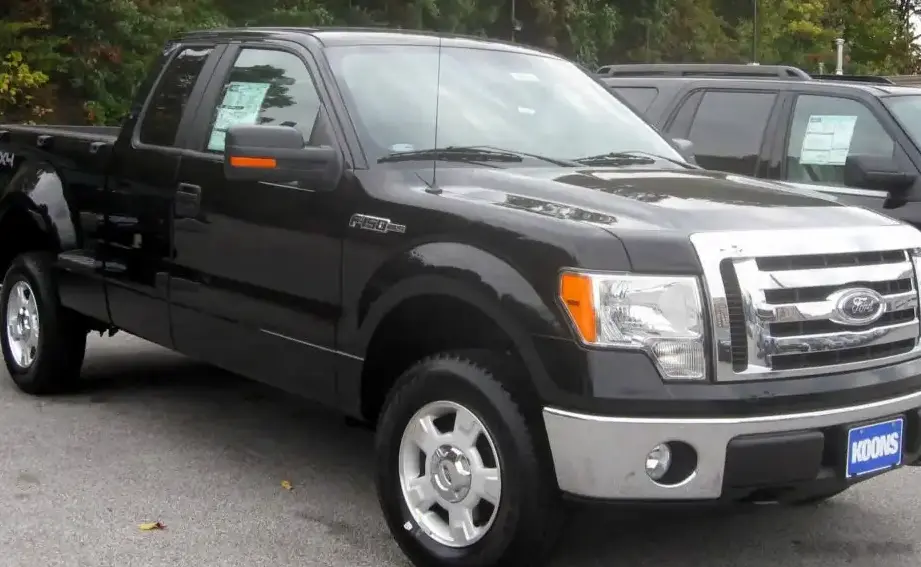
The Ford F-150, consistently America’s best-selling vehicle, entered its twelfth generation with the 2011 model year. This generation, designated the F-150 XII, represented a significant evolution of the iconic pickup truck, offering increased capability, refinement, and a wider range of powertrain options. Among these, the 3.7L V6 paired with a six-speed automatic transmission occupied a unique position in the lineup, serving as the entry-level engine choice for buyers prioritizing affordability and everyday usability. Production of this specific configuration ran from 2011 through 2014.
Technical Specifications
| Brand | Ford |
| Model | F-Series F-150 |
| Generation | F-Series F-150 XII SuperCab |
| Type (Engine) | 3.7 V6 (302 Hp) Automatic |
| Start of production | 2011 |
| End of production | 2014 |
| Powertrain Architecture | Internal Combustion engine |
| Body type | Pick-up |
| Seats | 5-6 |
| Doors | 2 |
| Fuel consumption (urban) | 13.8 l/100 km (17 US mpg) |
| Fuel consumption (extra urban) | 10.2 l/100 km (23.1 US mpg) |
| Fuel consumption (combined) | 12.4 l/100 km (19 US mpg) |
| Fuel Type | Petrol (Gasoline) |
| Weight-to-power ratio | 7.6 kg/Hp |
| Weight-to-torque ratio | 6.1 kg/Nm |
| Power | 302 Hp @ 6500 rpm |
| Power per litre | 81.6 Hp/l |
| Torque | 377 Nm @ 4000 rpm (278.06 lb.-ft. @ 4000 rpm) |
| Engine layout | Front, Longitudinal |
| Engine displacement | 3703 cm3 (225.97 cu. in.) |
| Number of cylinders | 6 |
| Engine configuration | V-engine |
| Compression ratio | 10.5:1 |
| Number of valves per cylinder | 4 |
| Fuel injection system | Multi-port manifold injection |
| Engine aspiration | Naturally aspirated engine |
| Valvetrain | DOHC, Ti-VCT |
| Engine oil capacity | 5.7 l (6.02 US qt | 5.02 UK qt) |
| Coolant capacity | 15.1 l (15.96 US qt | 13.29 UK qt) |
| Kerb Weight | 2287 kg (5041.97 lbs.) |
| Max. weight | 3039 kg (6699.85 lbs.) |
| Max load | 752 kg (1657.88 lbs.) |
| Fuel tank capacity | 98 l (25.89 US gal | 21.56 UK gal) |
| Permitted trailer load with brakes (12%) | 2631 kg (5800.36 lbs.) |
| Length | 5890 mm (231.89 in.) |
| Width | 2012 mm (79.21 in.) |
| Width including mirrors | 2464 mm (97.01 in.) |
| Height | 1910 mm (75.2 in.) |
| Wheelbase | 3670 mm (144.49 in.) |
| Front track | 1702 mm (67.01 in.) |
| Rear track | 1702 mm (67.01 in.) |
| Minimum turning circle | 14.3 m (46.92 ft.) |
| Drivetrain | Rear wheel drive |
| Number of gears | 6 |
| Gearbox type | Automatic transmission |
| Front suspension | Double wishbone |
| Rear suspension | Leaf spring |
| Front brakes | Ventilated discs, 351×34 mm |
| Rear brakes | Ventilated discs, 348×25 mm |
| Steering type | Steering rack and pinion |
| Power steering | Electric |
| Tires size | 255/70 R17; 265/60 R18; 275/55 R20 |
| Wheel rims size | 7.5J x 17; 7.5j x 18; 8.5J x 20 |
INTRODUCTION
The 2011-2014 Ford F-150 SuperCab equipped with the 3.7L V6 and six-speed automatic transmission represented a strategic entry point into the full-size pickup market. Positioned below the more powerful 5.0L V8 and the 3.5L EcoBoost V6, this configuration aimed to attract buyers seeking a capable truck for daily driving and light-duty tasks without the higher price tag and fuel consumption of its siblings. The SuperCab body style offered extended rear seating, increasing passenger capacity compared to the standard cab models, making it suitable for families or crews. This F-150 generation was built on the 1HX0 platform, known for its robust frame and improved ride quality.
Powertrain & Engine Architecture
The heart of this F-150 variant is the 3.7L “Cyclone” V6 engine, internally designated as the 3.7L Ti-VCT. This engine featured a 60-degree V-angle, dual overhead camshafts (DOHC), and variable valve timing (Ti-VCT) on both intake and exhaust valves. This technology optimized engine performance across the rev range and contributed to improved fuel efficiency. The engine utilized multi-port fuel injection, delivering fuel directly to the intake ports. The 3.7L produced 302 horsepower at 6500 rpm and 278 lb-ft of torque at 4000 rpm. Paired with this engine was a six-speed 6R80 automatic transmission. This transmission offered smooth shifting and helped to maximize fuel economy. The 6R80 was a robust unit, designed to handle the torque output of the V6 and provide a comfortable driving experience.
Driving Characteristics
The 3.7L V6-powered F-150 offered a noticeably different driving experience compared to the V8 and EcoBoost models. While lacking the outright acceleration of its more powerful counterparts, the 3.7L provided adequate power for everyday driving and typical pickup truck tasks. The six-speed automatic transmission was well-tuned, offering smooth and predictable shifts. The gear ratios were optimized for fuel economy and usability, rather than outright performance. Compared to the manual transmission options available on other F-150 trims, the automatic offered greater convenience, particularly in urban driving. However, it did result in a slight reduction in fuel economy and a less engaging driving experience. The truck felt less strained during highway cruising, but passing maneuvers required more planning.
Equipment & Trim Levels
The 3.7L V6 engine was typically offered in the base XL and mid-range XLT trim levels. The XL trim was fairly basic, featuring standard amenities such as air conditioning, a basic audio system, and vinyl upholstery. The XLT trim added features like power windows and locks, keyless entry, and an upgraded interior with cloth upholstery. Optional extras included a trailer towing package, a navigation system, and a premium sound system. The SuperCab configuration added extended rear seating, increasing passenger capacity. Interior materials were generally durable and practical, reflecting the truck’s work-oriented nature.
Chassis & Braking
The F-150 XII utilized a fully boxed frame construction, providing a solid foundation for the truck. The front suspension featured an independent double wishbone design, while the rear suspension employed a traditional leaf spring setup. This combination offered a good balance of ride comfort and load-carrying capability. Braking duties were handled by ventilated disc brakes on all four wheels. Anti-lock braking system (ABS) was standard. The rear brakes were slightly smaller in diameter compared to the front brakes. Steering was provided by an electric power-assisted rack and pinion system, offering precise and responsive handling.
Market Reception & Comparison
Critics generally viewed the 3.7L V6-powered F-150 as a competent and affordable option for buyers who didn’t require the maximum towing or hauling capacity. Fuel economy was a key selling point, with the 3.7L offering better gas mileage than the V8 engines. However, some reviewers noted that the engine felt underpowered when fully loaded or when towing heavy trailers. Compared to the 5.0L V8, the 3.7L offered significantly less power and torque. The EcoBoost V6 provided a compelling alternative, offering V8-like performance with better fuel economy. In terms of reliability, the 3.7L engine proved to be generally dependable, although some owners reported issues with the timing chain tensioners.
Legacy
The 3.7L V6 engine was discontinued after the 2014 model year, replaced by the more powerful and efficient 3.5L V6. However, the 3.7L-powered F-150 remains a popular choice in the used car market, particularly for buyers seeking an affordable and reliable full-size pickup. The 6R80 automatic transmission has proven to be durable and long-lasting. While not the most powerful or feature-rich F-150 variant, the 3.7L V6 SuperCab offers a practical and capable solution for everyday tasks, making it a solid value proposition for budget-conscious buyers.