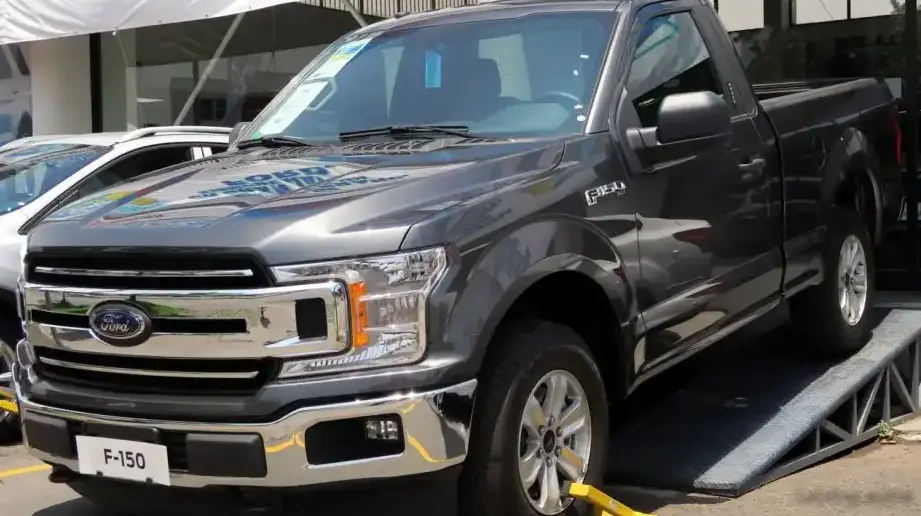
The Ford F-150, a mainstay of the American automotive landscape, saw a significant refresh in 2018 as part of its thirteenth generation (2015-2020). This facelift brought updated styling, enhanced technology, and continued powertrain options, including the 3.3-liter V6 paired with a six-speed automatic transmission. Produced from 2018 through October 2020, this configuration occupied a key position in the F-150 lineup, offering a balance of capability and affordability for buyers seeking a versatile full-size pickup. The Regular Cab version, with its two doors and three-passenger seating, catered to those prioritizing work-truck functionality and a more compact footprint compared to SuperCab and SuperCrew models.
Technical Specifications
| Brand | Ford |
| Model | F-Series F-150 |
| Generation | F-Series F-150 XIII Regular Cab (facelift 2018) |
| Type (Engine) | 3.3 V6 (290 Hp) Automatic |
| Start of production | 2018 |
| End of production | October, 2020 |
| Powertrain Architecture | Internal Combustion engine |
| Body type | Pick-up |
| Seats | 3 |
| Doors | 2 |
| Fuel consumption (urban) | 12.4 l/100 km (19 US mpg) |
| Fuel consumption (extra urban) | 9.4 l/100 km (25 US mpg) |
| Fuel consumption (combined) | 10.7 l/100 km (22 US mpg) |
| Fuel Type | Petrol (Gasoline) |
| Power | 290 Hp @ 6500 rpm |
| Torque | 359 Nm @ 4000 rpm (264.78 lb.-ft. @ 4000 rpm) |
| Engine layout | Front, Longitudinal |
| Engine displacement | 3300 cm3 (201.38 cu. in.) |
| Number of cylinders | 6 |
| Engine configuration | V-engine |
| Number of valves per cylinder | 4 |
| Fuel injection system | Direct injection |
| Engine oil capacity | 5.7 l (6.02 US qt | 5.02 UK qt) |
| Coolant capacity | 12.86 l (13.59 US qt | 11.32 UK qt) |
| Trunk (boot) space (minimum) | 1495 l (52.8 cu. ft.) |
| Fuel tank capacity | 87 l (22.98 US gal | 19.14 UK gal) |
| Length | 5316-5789 mm (209.29 – 227.91 in.) |
| Width | 2029 mm (79.88 in.) |
| Width with mirrors folded | 2121 mm (83.5 in.) |
| Width including mirrors | 2459 mm (96.81 in.) |
| Height | 1908-1918 mm (75.12 – 75.51 in.) |
| Wheelbase | 3109-3584 mm (122.4 – 141.1 in.) |
| Ride height (ground clearance) | 218-224 mm (8.58 – 8.82 in.) |
| Drivetrain Architecture | Rear wheel drive |
| Number of gears and type of gearbox | 6 gears, automatic transmission |
| Front suspension | Independent coil spring |
| Rear suspension | Leaf spring |
| Front brakes | Ventilated discs |
| Rear brakes | Ventilated discs |
| Assisting systems | ABS (Anti-lock braking system) |
| Steering type | Steering rack and pinion |
| Power steering | Electric Steering |
| Tires size | 245/70 R17 |
| Wheel rims size | 17 |
Powertrain & Engine Architecture
The heart of this F-150 variant is Ford’s 3.3-liter Ti-VCT V6 engine. This engine, part of Ford’s “EcoBoost” family despite not being turbocharged, utilizes direct fuel injection and a dual overhead camshaft (DOHC) valvetrain with four valves per cylinder. The engine code is generally identified as the third generation of the 3.7L V6, refined for improved efficiency and reliability. The six-speed automatic transmission (6R80) was a workhorse unit used across various Ford and Lincoln vehicles. It’s known for its durability and relatively smooth shifting characteristics. The transmission is electronically controlled, adapting shift points based on driving conditions and throttle input. The longitudinal engine placement and rear-wheel-drive configuration are traditional for full-size American pickups, providing a solid foundation for towing and hauling.
Driving Characteristics
The 290 horsepower and 264 lb-ft of torque produced by the 3.3L V6 and 6-speed automatic combination delivered adequate, though not exhilarating, performance. Acceleration was sufficient for everyday driving and moderate towing, but it lagged behind the more powerful EcoBoost turbocharged engines and the 5.0L V8. The automatic transmission’s gear ratios were tuned for fuel efficiency and usability, prioritizing smooth cruising over aggressive acceleration. Compared to the manual transmission options available on other F-150 trims, the automatic offered greater convenience, particularly in stop-and-go traffic. However, it sacrificed some driver engagement and control. The Regular Cab configuration, being lighter than extended or crew cab models, helped to mitigate some of the performance deficit.
Equipment & Trim Levels
The 3.3L V6 automatic was typically offered on the base XL and mid-range XLT trim levels of the F-150 Regular Cab. The XL trim focused on affordability, featuring standard vinyl upholstery, a basic infotainment system, and manual climate control. The XLT added features like cloth upholstery, power windows and locks, and an upgraded infotainment system with a larger touchscreen. Optional extras included the SYNC 3 infotainment system with Apple CarPlay and Android Auto compatibility, a trailer tow package, and various convenience features like a power-adjustable driver’s seat and remote start. The interior design was functional and durable, prioritizing practicality over luxury.
Chassis & Braking
The F-150’s chassis utilized a fully boxed frame constructed from high-strength steel, providing a robust foundation for demanding tasks. The front suspension featured independent coil springs, while the rear suspension employed leaf springs, a traditional setup for pickup trucks. This configuration balanced ride comfort with load-carrying capacity. Braking duties were handled by ventilated discs at all four corners, providing adequate stopping power for the vehicle’s weight. An Anti-lock Braking System (ABS) was standard equipment. The rear leaf springs and standard brake setup were generally sufficient for typical use, but heavier loads or frequent towing benefited from the optional trailer tow package, which included upgraded brakes and a heavy-duty suspension.
Market Reception & Comparison
Critics generally viewed the 3.3L V6 F-150 as a sensible choice for buyers who didn’t require the maximum towing or hauling capacity offered by the more powerful engines. Its fuel economy, rated at 22 mpg combined, was a strong point, particularly compared to the V8 options. However, some reviewers found the engine to be underpowered when fully loaded or towing a significant trailer. Compared to the 2.7L EcoBoost V6, the 3.3L offered less horsepower and torque, but it was often more affordable. The 3.5L EcoBoost and 5.0L V8 provided significantly more performance but came at a higher price and with lower fuel economy. Reliability was generally good, with the 3.3L V6 proving to be a durable and dependable engine.
Legacy
The 3.3L V6 F-150, while not the most powerful or feature-rich variant, established itself as a reliable and affordable workhorse. In the used car market, these models represent a good value for buyers seeking a capable full-size pickup without breaking the bank. The 6R80 transmission has proven to be exceptionally durable, and the 3.3L engine, while not known for its blistering performance, is generally considered to be a long-lasting powertrain. These F-150s continue to be popular choices for those needing a dependable truck for everyday tasks, light-duty hauling, and occasional towing. Their simplicity and relatively low maintenance costs contribute to their enduring appeal.