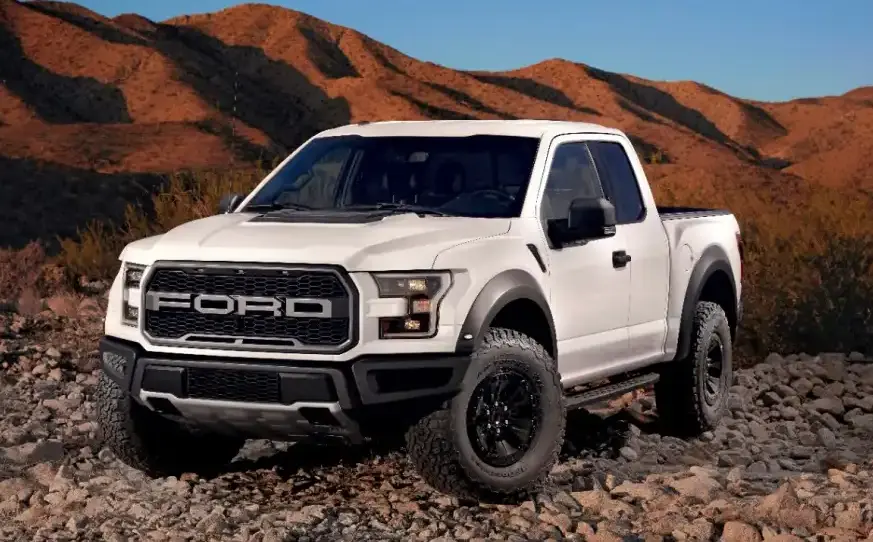
The Ford F-150 XIII SuperCab, specifically equipped with the 2.7-liter V6 engine producing 325 horsepower and paired with a six-speed automatic transmission and four-wheel drive, was a significant offering in the American full-size pickup truck market from 2015 to 2017. This variant occupied a middle ground within the F-150 lineup, providing a balance between capability, fuel efficiency, and price. It represented Ford’s move towards smaller, turbocharged engines in a segment traditionally dominated by larger displacement naturally aspirated powerplants. The SuperCab configuration offered extended passenger space, making it a popular choice for families and those needing occasional rear-seat access.
Technical Specifications
| Brand | Ford |
| Model | F-Series F-150 |
| Generation | F-Series F-150 XIII SuperCab |
| Type (Engine) | 2.7 V6 (325 Hp) 4×4 Automatic |
| Start of production | 2015 |
| End of production | 2017 |
| Powertrain Architecture | Internal Combustion engine |
| Body type | Pick-up |
| Seats | 5-6 |
| Doors | 2 |
| Fuel consumption (economy) – urban (NEDC) | 13.1 l/100 km (18 US mpg, 21.6 UK mpg, 7.6 km/l) |
| Fuel consumption (economy) – extra urban (NEDC) | 10.2 l/100 km (23.1 US mpg, 27.7 UK mpg, 9.8 km/l) |
| Fuel consumption (economy) – combined (NEDC) | 11.8 l/100 km (19.9 US mpg, 23.9 UK mpg, 8.5 km/l) |
| Fuel Type | Petrol (Gasoline) |
| Weight-to-power ratio | 6.7 kg/Hp, 149.8 Hp/tonne |
| Weight-to-torque ratio | 4.3 kg/Nm, 234.2 Nm/tonne |
| Power | 325 Hp @ 5750 rpm |
| Power per litre | 121 Hp/l |
| Torque | 508 Nm @ 3000 rpm (374.68 lb.-ft. @ 3000 rpm) |
| Engine layout | Front, Longitudinal |
| Engine displacement | 2687 cm3 (163.97 cu. in.) |
| Number of cylinders | 6 |
| Engine configuration | V-engine |
| Cylinder Bore | 83 mm (3.27 in.) |
| Piston Stroke | 83 mm (3.27 in.) |
| Compression ratio | 10:1 |
| Number of valves per cylinder | 4 |
| Fuel injection system | Direct injection |
| Engine aspiration | Twin-Turbo, Intercooler |
| Engine oil capacity | 5.7 l (6.02 US qt | 5.02 UK qt) |
| Coolant | 15.5 l (16.38 US qt | 13.64 UK qt) |
| Kerb Weight | 2169 kg (4781.83 lbs.) |
| Trunk (boot) space – minimum | 1495 l (52.8 cu. ft.) |
| Trunk (boot) space – maximum | 2200 l (77.69 cu. ft.) |
| Fuel tank capacity | 87 l (22.98 US gal | 19.14 UK gal) |
| Length | 5890-6363 mm (231.89 – 250.51 in.) |
| Width | 2029 mm (79.88 in.) |
| Width with mirrors folded | 2121 mm (83.5 in.) |
| Width including mirrors | 2459 mm (96.81 in.) |
| Height | 1956-1961 mm (77.01 – 77.2 in.) |
| Wheelbase | 3683-4158 mm (145 – 163.7 in.) |
| Front track | 1717 mm (67.6 in.) |
| Rear (Back) track | 1717 mm (67.6 in.) |
| Front overhang | 960 mm (37.8 in.) |
| Rear overhang | 1247 mm (49.09 in.) |
| Ride height (ground clearance) | 236-239 mm (9.29 – 9.41 in.) |
| Approach angle | 25.8-26.1° |
| Departure angle | 26.0-26.1° |
| Ramp-over (brakeover) angle | 19.0-21.1° |
| Drive wheel | All wheel drive (4×4) |
| Number of gears and type of gearbox | 6 gears, automatic transmission |
| Front suspension | Double wishbone |
| Rear suspension | Leaf spring |
| Front brakes | Ventilated discs |
| Rear brakes | Ventilated discs |
| Assisting systems | ABS (Anti-lock braking system) |
| Steering type | Steering rack and pinion |
| Power steering | Electric Steering |
| Tires size | 265/70 R17 |
| Wheel rims size | 17 |
Powertrain & Engine Architecture
The heart of this F-150 variant is the 2.7-liter EcoBoost V6 engine, designated as the third-generation “Dragon” engine family by Ford. This engine utilizes a compact graphite iron (CGI) block for increased strength and reduced weight. The engine employs twin turbochargers, providing enhanced low-end torque and overall power output. Direct fuel injection is used to precisely meter fuel into the cylinders, optimizing combustion efficiency. The engine’s valvetrain features dual independent variable camshaft timing (Ti-VCT), further enhancing performance and fuel economy. The six-speed automatic transmission, a workhorse unit developed by Ford, is specifically tuned to handle the engine’s torque characteristics. It features a wide gear ratio spread to optimize both acceleration and fuel efficiency.
Driving Characteristics
The 2.7L EcoBoost F-150 SuperCab offered a noticeably different driving experience compared to the traditional V8-powered models. While lacking the raw, immediate power of a larger engine, the twin-turbo V6 delivered a broad and usable torque curve. This resulted in strong acceleration from a standstill and confident passing power. The automatic transmission shifted smoothly and responsively, although some drivers noted a slight hesitation during downshifts. Compared to the 3.5L EcoBoost or the 5.0L V8, this variant prioritized fuel economy and everyday usability over outright performance. The 4×4 system provided excellent traction in various conditions, making it a capable work truck and recreational vehicle.
Equipment & Trim Levels
The 2.7L EcoBoost engine was available on several F-150 trim levels, including the XLT and Lariat. Standard equipment typically included air conditioning, power windows and locks, a basic infotainment system with a touchscreen display, and a rearview camera. Higher trim levels, like the Lariat, added features such as leather upholstery, heated and ventilated front seats, a premium sound system, and advanced safety technologies. Optional extras included a trailer tow package, a sunroof, and various appearance packages.
Chassis & Braking
The F-150 XIII SuperCab utilized a fully boxed frame constructed from high-strength steel, providing a solid foundation for the vehicle. The front suspension featured an independent double-wishbone design, while the rear suspension employed a leaf spring setup. This configuration balanced ride comfort with load-carrying capacity. Braking duties were handled by ventilated discs at all four corners, providing ample stopping power. An Anti-lock Braking System (ABS) was standard equipment. The SuperCab configuration offered a comfortable ride and adequate handling for everyday use, although it wasn’t designed for aggressive cornering.
Market Reception & Comparison
The 2.7L EcoBoost F-150 received generally positive reviews from automotive critics. It was praised for its fuel efficiency, strong torque output, and comfortable ride. However, some reviewers noted that the engine’s sound was less appealing than that of a traditional V8. Compared to the 3.5L EcoBoost, the 2.7L offered better fuel economy but less overall power. Against the 5.0L V8, it traded some performance for improved efficiency and a lower price point. The 2.7L proved to be a popular choice for buyers who prioritized practicality and fuel economy over outright performance.
Legacy
The 2.7L EcoBoost engine has proven to be a reliable and durable powerplant in the F-150. While early models experienced some minor issues with the turbochargers, these were addressed through software updates and design revisions. Today, well-maintained examples of the 2015-2017 F-150 with the 2.7L EcoBoost engine command reasonable prices on the used car market. Its combination of capability, fuel efficiency, and affordability has made it a popular choice among truck buyers, and it helped pave the way for the widespread adoption of turbocharged engines in the full-size pickup truck segment.