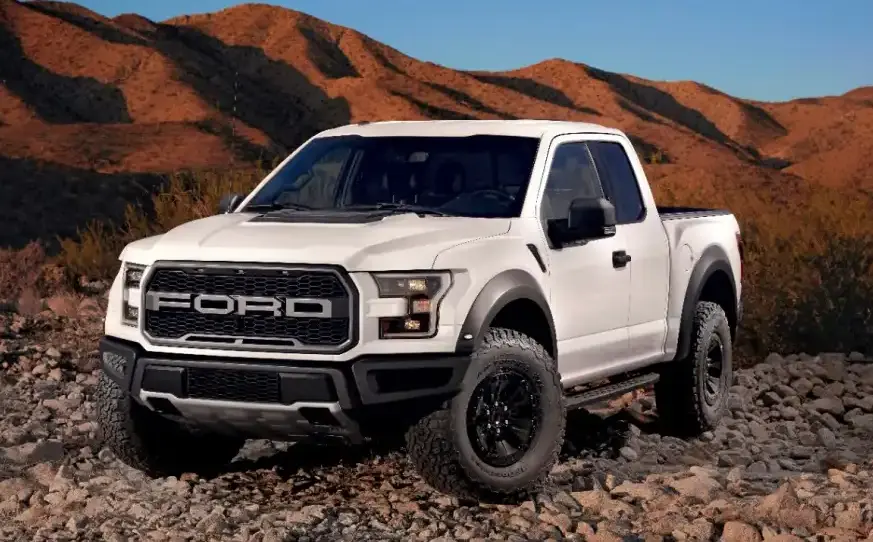
The Ford F-150 is a full-size pickup truck manufactured by Ford Motor Company, and has been the best-selling vehicle in the United States for over four decades. The thirteenth generation, produced from 2015 to 2017, represented a significant shift in F-150 construction, utilizing a high-strength, military-grade aluminum alloy body on a fully boxed steel frame. This particular variant, the SuperCab configuration equipped with the 3.5-liter V6 engine producing 282 horsepower paired with a six-speed automatic transmission and four-wheel drive, occupied a middle ground in the F-150 lineup, offering a balance of capability, fuel efficiency, and affordability. It aimed to appeal to buyers needing a versatile truck for both work and personal use.
Technical Specifications
| Brand | Ford |
| Model | F-Series F-100/F-150 |
| Generation | F-Series F-150 XIII SuperCab |
| Type (Engine) | 3.5 V6 (282 Hp) 4×4 Automatic |
| Start of production | 2015 |
| End of production | 2017 |
| Powertrain Architecture | Internal Combustion engine |
| Body type | Pick-up |
| Seats | 5-6 |
| Doors | 2 |
| Fuel consumption (economy) – urban (NEDC) | 13.8 l/100 km (17 US mpg, 20.5 UK mpg, 7.2 km/l) |
| Fuel consumption (economy) – extra urban (NEDC) | 10.2 l/100 km (23.1 US mpg, 27.7 UK mpg, 9.8 km/l) |
| Fuel consumption (economy) – combined (NEDC) | 12.4 l/100 km (19 US mpg, 22.8 UK mpg, 8.1 km/l) |
| Fuel Type | Petrol (Gasoline) |
| Weight-to-power ratio | 7.5 kg/Hp, 133.8 Hp/tonne |
| Weight-to-torque ratio | 6.1 kg/Nm, 162.7 Nm/tonne |
| Power | 282 Hp @ 6250 rpm |
| Power per litre | 80.3 Hp/l |
| Torque | 343 Nm @ 4250 rpm (252.98 lb.-ft. @ 4250 rpm) |
| Engine layout | Front, Longitudinal |
| Engine displacement | 3514 cm3 (214.44 cu. in.) |
| Number of cylinders | 6 |
| Engine configuration | V-engine |
| Cylinder Bore | 92.4 mm (3.64 in.) |
| Piston Stroke | 87.6 mm (3.45 in.) |
| Compression ratio | 10.8:1 |
| Number of valves per cylinder | 4 |
| Fuel injection system | Multi-port manifold injection |
| Engine aspiration | Naturally aspirated engine |
| Engine oil capacity | 6 l (6.34 US qt | 5.28 UK qt) |
| Coolant | 14.25 l (15.06 US qt | 12.54 UK qt) |
| Kerb Weight | 2108 kg (4647.34 lbs.) |
| Trunk (boot) space – minimum | 1495 l (52.8 cu. ft.) |
| Trunk (boot) space – maximum | 2200 l (77.69 cu. ft.) |
| Fuel tank capacity | 87 l (22.98 US gal | 19.14 UK gal) |
| Length | 5890-6363 mm (231.89 – 250.51 in.) |
| Width | 2029 mm (79.88 in.) |
| Width with mirrors folded | 2121 mm (83.5 in.) |
| Width including mirrors | 2459 mm (96.81 in.) |
| Height | 1956-1961 mm (77.01 – 77.2 in.) |
| Wheelbase | 3683-4158 mm (145 – 163.7 in.) |
| Front track | 1717 mm (67.6 in.) |
| Rear (Back) track | 1717 mm (67.6 in.) |
| Front overhang | 960 mm (37.8 in.) |
| Rear overhang | 1247 mm (49.09 in.) |
| Ride height (ground clearance) | 236-239 mm (9.29 – 9.41 in.) |
| Approach angle | 25.8-26.1° |
| Departure angle | 26.0-26.1° |
| Ramp-over (brakeover) angle | 19.0-21.1° |
| Drive wheel | All wheel drive (4×4) |
| Number of gears and type of gearbox | 6 gears, automatic transmission |
| Front suspension | Double wishbone |
| Rear suspension | Leaf spring |
| Front brakes | Ventilated discs |
| Rear brakes | Ventilated discs |
| Assisting systems | ABS (Anti-lock braking system) |
| Steering type | Steering rack and pinion |
| Power steering | Electric Steering |
| Tires size | 265/70 R17 |
| Wheel rims size | 17 |
Powertrain & Engine Architecture
The 3.5-liter Ti-VCT V6 engine, part of Ford’s EcoBoost family, was a key component of this F-150 variant. While not the top-tier engine option (the 3.5L EcoBoost with turbocharging offered significantly more power), it provided a solid balance of performance and fuel economy. The engine utilized a 60-degree V-angle, contributing to a smoother running character. It featured multi-port fuel injection and a variable valve timing system (Ti-VCT) on both intake and exhaust valves, optimizing engine breathing across the rev range. The engine code is generally identified as the 38R. The six-speed automatic transmission (6R80) was specifically tuned to work with the V6, offering smooth shifts and adequate responsiveness. The transmission featured a torque converter lock-up clutch to improve fuel efficiency at highway speeds. The 4×4 system employed an electronic shift-on-the-fly mechanism, allowing the driver to easily switch between two-wheel drive and four-wheel drive modes depending on road conditions.
Driving Characteristics
The 282 horsepower and 343 lb-ft of torque provided by the 3.5L V6 and 6-speed automatic combination resulted in a capable, though not exceptionally quick, driving experience. Acceleration from 0 to 60 mph typically took around 7.5-8.5 seconds. The automatic transmission was programmed for smooth, comfortable shifts, prioritizing ease of use over aggressive performance. Compared to the more powerful EcoBoost variants, this engine felt less strained during acceleration and towing. The gear ratios were optimized for everyday driving and highway cruising, with a relatively tall final drive ratio contributing to improved fuel economy. However, this also meant that the engine could feel somewhat underpowered when fully loaded or climbing steep hills. The SuperCab configuration, with its extended rear doors, offered improved access to the rear seats compared to the standard cab models.
Equipment & Trim Levels
The 3.5L V6 4×4 SuperCab was typically offered in the XLT and Lariat trim levels. The XLT trim included standard features such as air conditioning, power windows and locks, a basic audio system, and steel wheels. The Lariat trim added features like alloy wheels, a more advanced audio system, heated front seats, and leather upholstery. Optional extras included a navigation system, a sunroof, and various driver-assistance technologies. The SuperCab offered seating for up to six passengers, with a split-folding rear bench seat providing flexibility for carrying both passengers and cargo. Interior materials were generally durable and practical, reflecting the truck’s work-oriented nature.
Chassis & Braking
The F-150’s chassis featured a fully boxed steel frame designed for strength and rigidity. The front suspension utilized an independent double-wishbone design, providing a comfortable ride and good handling characteristics. The rear suspension employed a traditional leaf spring setup, which was well-suited for carrying heavy loads. Braking duties were handled by ventilated discs at all four corners, providing adequate stopping power. An Anti-lock Braking System (ABS) was standard equipment. The steering system was a rack-and-pinion setup with electric power steering, offering responsive and precise steering feel.
Market Reception & Comparison
The 3.5L V6 F-150 SuperCab 4×4 was generally well-received by critics as a practical and affordable option for buyers who didn’t require the extra power of the EcoBoost engines. Fuel economy was considered competitive for a full-size pickup truck, averaging around 19 mpg in combined driving. Compared to the 3.5L EcoBoost, the naturally aspirated V6 offered lower maintenance costs due to the absence of turbochargers. However, it lacked the EcoBoost’s impressive towing capacity and acceleration. Compared to the diesel options, the 3.5L V6 was quieter and smoother, but offered less torque for heavy-duty tasks.
Legacy
The 3.5L V6 engine in the 2015-2017 F-150 proved to be a reliable and durable powertrain. While not as sought-after as the EcoBoost models, these trucks represent a good value on the used car market. Common maintenance items include regular oil changes, spark plug replacements, and transmission fluid flushes. The aluminum body panels, while reducing weight, can be more susceptible to dents and scratches than traditional steel bodies. Overall, the 3.5L V6 F-150 SuperCab 4×4 remains a capable and dependable truck for a wide range of applications, offering a blend of practicality, affordability, and Ford’s renowned toughness.