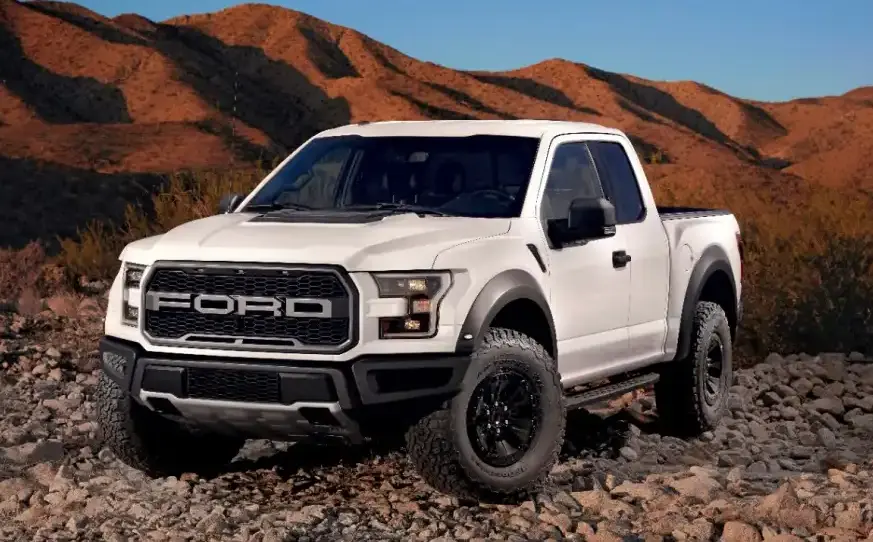
The Ford F-150, consistently the best-selling full-size pickup truck in the United States, entered its thirteenth generation with the 2015 model year. This generation marked a significant shift in construction, utilizing a high-strength, military-grade aluminum alloy body on a fully-boxed steel frame – a first for the F-150. The 3.5L V6 engine paired with a six-speed automatic transmission represented a key offering within the lineup, positioned as a balance between capability and fuel efficiency. Production of this specific configuration ran from 2015 to 2017, serving as a popular choice for buyers seeking a modern, capable truck without the higher price tag of the more powerful engine options.
Technical Specifications
| Brand | Ford |
| Model | F-Series F-150 |
| Generation | F-Series F-150 XIII SuperCab |
| Type (Engine) | 3.5 V6 (282 Hp) Automatic |
| Start of production | 2015 |
| End of production | 2017 |
| Powertrain Architecture | Internal Combustion engine |
| Body type | Pick-up |
| Seats | 5-6 |
| Doors | 2 |
| Fuel consumption (economy) – urban (NEDC) | 13.1 l/100 km (18 US mpg, 21.6 UK mpg, 7.6 km/l) |
| Fuel consumption (economy) – extra urban (NEDC) | 9.8 l/100 km (24 US mpg, 28.8 UK mpg, 10.2 km/l) |
| Fuel consumption (economy) – combined (NEDC) | 11.8 l/100 km (19.9 US mpg, 23.9 UK mpg, 8.5 km/l) |
| Fuel Type | Petrol (Gasoline) |
| Weight-to-power ratio | 7.1 kg/Hp, 141.5 Hp/tonne |
| Weight-to-torque ratio | 5.8 kg/Nm, 172.1 Nm/tonne |
| Power | 282 Hp @ 6250 rpm |
| Power per litre | 80.3 Hp/l |
| Torque | 343 Nm @ 4250 rpm (252.98 lb.-ft. @ 4250 rpm) |
| Engine layout | Front, Longitudinal |
| Engine displacement | 3514 cm3 (214.44 cu. in.) |
| Number of cylinders | 6 |
| Engine configuration | V-engine |
| Cylinder Bore | 92.4 mm (3.64 in.) |
| Piston Stroke | 87.6 mm (3.45 in.) |
| Compression ratio | 10.8:1 |
| Number of valves per cylinder | 4 |
| Fuel injection system | Multi-port manifold injection |
| Engine aspiration | Naturally aspirated engine |
| Engine oil capacity | 6 l (6.34 US qt | 5.28 UK qt) |
| Coolant | 14.25 l (15.06 US qt | 12.54 UK qt) |
| Kerb Weight | 1993 kg (4393.81 lbs.) |
| Trunk (boot) space – minimum | 1495 l (52.8 cu. ft.) |
| Trunk (boot) space – maximum | 2200 l (77.69 cu. ft.) |
| Fuel tank capacity | 87 l (22.98 US gal | 19.14 UK gal) |
| Length | 5890-6363 mm (231.89 – 250.51 in.) |
| Width | 2029 mm (79.88 in.) |
| Width with mirrors folded | 2121 mm (83.5 in.) |
| Width including mirrors | 2459 mm (96.81 in.) |
| Height | 1918 mm (75.51 in.) |
| Wheelbase | 3683-4158 mm (145 – 163.7 in.) |
| Front track | 1717 mm (67.6 in.) |
| Rear (Back) track | 1717 mm (67.6 in.) |
| Front overhang | 960 mm (37.8 in.) |
| Rear overhang | 1247 mm (49.09 in.) |
| Ride height (ground clearance) | 221 mm (8.7 in.) |
| Approach angle | 24.4-24.5° |
| Departure angle | 24.0-24.4° |
| Ramp-over (brakeover) angle | 16.8-18.5° |
| Drivetrain Architecture | The Internal combustion engine (ICE) drives the rear wheels of the vehicle. |
| Drive wheel | Rear wheel drive |
| Number of gears and type of gearbox | 6 gears, automatic transmission |
| Front suspension | Double wishbone |
| Rear suspension | Leaf spring |
| Front brakes | Ventilated discs |
| Rear brakes | Ventilated discs |
| Assisting systems | ABS (Anti-lock braking system) |
| Steering type | Steering rack and pinion |
| Power steering | Electric Steering |
| Tires size | 245/70 R17 |
| Wheel rims size | 17 |
Powertrain & Engine Architecture
The 3.5L Ti-VCT V6 engine, designated as the second-generation “EcoBoost” engine, was a significant upgrade over previous Ford V6 offerings. While not a turbocharged engine like the higher-output 3.5L EcoBoost, this naturally aspirated version utilized twin independent variable camshaft timing (Ti-VCT) to optimize performance and efficiency. The engine featured a 60-degree V-angle, contributing to a smoother running character. Fuel delivery was handled by multi-port fuel injection, and the engine boasted a compression ratio of 10.8:1. The six-speed automatic transmission (6R80) was a workhorse unit, known for its durability and smooth shifts. It was calibrated to provide adequate acceleration and maintain reasonable fuel economy. The transmission featured a torque converter lock-up clutch to improve efficiency at cruising speeds.
Driving Characteristics
The 282 horsepower and 262 lb-ft of torque provided by the 3.5L V6 and 6R80 automatic combination delivered respectable performance for everyday driving. Acceleration was adequate, though not as brisk as the turbocharged EcoBoost variants or the V8 options. The automatic transmission was tuned for comfort and efficiency, with gear changes generally smooth and unobtrusive. The gear ratios were optimized for towing and hauling, but this sometimes resulted in slightly higher engine speeds at highway cruising. Compared to the manual transmission equipped F-150s, the automatic offered a more relaxed driving experience, particularly in stop-and-go traffic. However, the manual transmission provided more driver control and slightly better fuel economy.
Equipment & Trim Levels
The 3.5L V6 automatic was available on a range of F-150 trim levels, including the XL, XLT, and Lariat. The base XL trim offered a no-frills approach, with standard features like air conditioning, a basic audio system, and vinyl upholstery. The XLT trim added features such as alloy wheels, cruise control, and power windows and locks. The Lariat trim offered a more luxurious experience, with leather upholstery, heated and ventilated front seats, and a premium audio system. Optional extras included a navigation system, a sunroof, and various driver-assistance technologies.
Chassis & Braking
The F-150’s fully-boxed steel frame provided a solid foundation for the truck’s capabilities. The front suspension utilized a double-wishbone design, while the rear suspension employed leaf springs. This configuration offered a good balance of ride comfort and load-carrying capacity. Braking duties were handled by ventilated discs at all four corners, providing ample stopping power. An Anti-lock Braking System (ABS) was standard equipment. The SuperCab configuration offered a larger rear seating area compared to the regular cab models, enhancing passenger comfort.
Market Reception & Comparison
The 3.5L V6 F-150 was generally well-received by critics and consumers alike. It was praised for its smooth engine, comfortable ride, and reasonable fuel economy. However, some reviewers noted that it lacked the outright power of the turbocharged EcoBoost engines. Compared to the 5.0L V8, the 3.5L V6 offered slightly better fuel economy but less towing capacity. The 3.5L V6 was often seen as a sweet spot in the F-150 lineup, offering a good balance of performance, efficiency, and affordability.
Legacy
The 3.5L V6 engine proved to be a reliable and durable powertrain. While not as sought-after as the EcoBoost variants, the naturally aspirated 3.5L F-150s hold their value reasonably well in the used car market. The 6R80 automatic transmission is also known for its longevity. These trucks continue to be popular choices for buyers seeking a capable and affordable full-size pickup. The aluminum body construction, while initially met with some skepticism, proved to be a successful innovation, reducing weight and improving fuel economy without sacrificing strength or durability.