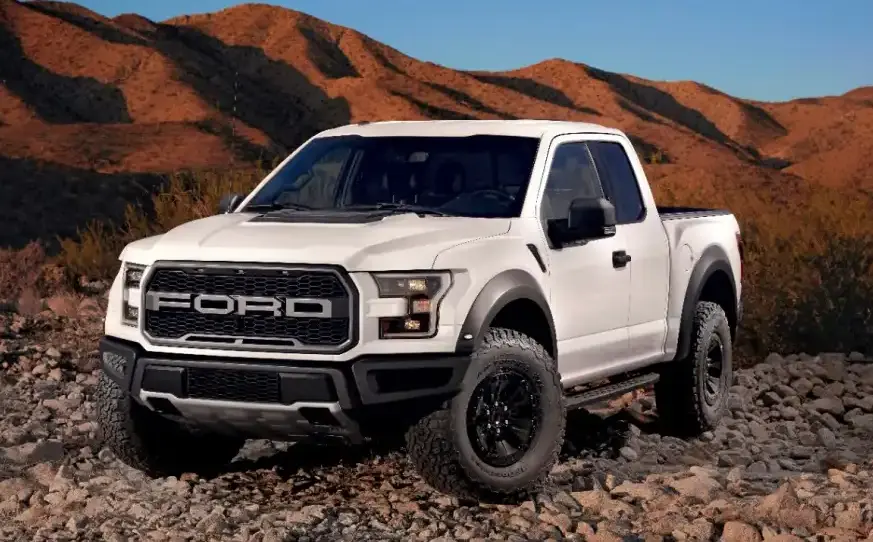
The Ford F-150 is a full-size pickup truck manufactured by Ford Motor Company, and has been the best-selling vehicle in the United States for over four decades. The thirteenth generation, produced from 2015 to 2017, represented a significant shift in F-150 construction, utilizing a high-strength, military-grade aluminum alloy body on a fully boxed steel frame. Within this generation, the SuperCab configuration offered extended passenger space, and the 3.5-liter V6 engine paired with a ten-speed automatic transmission was a popular choice, delivering a balance of power, capability, and fuel efficiency. This particular variant, producing 375 horsepower, occupied a mid-to-upper position in the F-150 lineup, appealing to buyers needing substantial towing and hauling capacity without opting for the larger, more expensive engines.
Technical Specifications
| Brand | Ford |
| Model | F-Series F-150 |
| Generation | F-Series F-150 XIII SuperCab |
| Type (Engine) | 3.5 V6 (375 Hp) Automatic |
| Start of production | 2015 |
| End of production | 2017 |
| Powertrain Architecture | Internal Combustion engine |
| Body type | Pick-up |
| Seats | 5-6 |
| Doors | 2 |
| Fuel consumption (economy) – urban (NEDC) | 13.1 l/100 km (18 US mpg, 21.6 UK mpg, 7.6 km/l) |
| Fuel consumption (economy) – extra urban (NEDC) | 9.4 l/100 km (25 US mpg, 30.1 UK mpg, 10.6 km/l) |
| Fuel consumption (economy) – combined (NEDC) | 11.2 l/100 km (21 US mpg, 25.2 UK mpg, 8.9 km/l) |
| Fuel Type | Petrol (Gasoline) |
| Weight-to-power ratio | 5.5 kg/Hp, 180.5 Hp/tonne |
| Weight-to-torque ratio | 3.3 kg/Nm, 306.5 Nm/tonne |
| Power | 375 Hp @ 5000 rpm |
| Power per litre | 106.7 Hp/l |
| Torque | 637 Nm @ 3500 rpm (469.83 lb.-ft. @ 3500 rpm) |
| Engine layout | Front, Longitudinal |
| Engine displacement | 3514 cm3 (214.44 cu. in.) |
| Number of cylinders | 6 |
| Engine configuration | V-engine |
| Cylinder Bore | 92.4 mm (3.64 in.) |
| Piston Stroke | 87.6 mm (3.45 in.) |
| Compression ratio | 10.5:1 |
| Number of valves per cylinder | 4 |
| Fuel injection system | Direct injection |
| Engine aspiration | BiTurbo, Intercooler |
| Engine oil capacity | 5.7 l (6.02 US qt | 5.02 UK qt) |
| Coolant | 14.75 l (15.59 US qt | 12.98 UK qt) |
| Kerb Weight | 2078-2149 kg (4581.21 – 4737.73 lbs.) |
| Trunk (boot) space – minimum | 1495 l (52.8 cu. ft.) |
| Trunk (boot) space – maximum | 2200 l (77.69 cu. ft.) |
| Fuel tank capacity | 87 l (22.98 US gal | 19.14 UK gal) |
| Length | 5890-6363 mm (231.89 – 250.51 in.) |
| Width | 2029 mm (79.88 in.) |
| Width with mirrors folded | 2121 mm (83.5 in.) |
| Width including mirrors | 2459 mm (96.81 in.) |
| Height | 1918 mm (75.51 in.) |
| Wheelbase | 3683-4158 mm (145 – 163.7 in.) |
| Front track | 1717 mm (67.6 in.) |
| Rear (Back) track | 1717 mm (67.6 in.) |
| Front overhang | 960 mm (37.8 in.) |
| Rear overhang | 1247 mm (49.09 in.) |
| Ride height (ground clearance) | 221 mm (8.7 in.) |
| Approach angle | 24.4-24.5° |
| Departure angle | 24.0-24.4° |
| Ramp-over (brakeover) angle | 16.8-18.5° |
| Drivetrain Architecture | The Internal combustion engine (ICE) drives the rear wheels of the vehicle. |
| Drive wheel | Rear wheel drive |
| Number of gears and type of gearbox | 10 gears, automatic transmission |
| Front suspension | Double wishbone |
| Rear suspension | Leaf spring |
| Front brakes | Ventilated discs |
| Rear brakes | Ventilated discs |
| Assisting systems | ABS (Anti-lock braking system) |
| Steering type | Steering rack and pinion |
| Power steering | Electric Steering |
| Tires size | 245/70 R17 |
| Wheel rims size | 17 |
Powertrain & Engine Architecture
The heart of this F-150 variant is the 3.5-liter EcoBoost V6 engine, internally designated as the third generation of the engine. This engine utilizes a 60-degree V-engine configuration, featuring twin turbochargers and direct fuel injection. The twin-turbo setup provides increased power and torque across a wider RPM range, mitigating turbo lag. The direct injection system precisely meters fuel into the combustion chambers, improving efficiency and reducing emissions. The engine produces 375 horsepower at 5000 rpm and a substantial 637 lb-ft of torque at 3500 rpm. Paired with this engine is Ford’s 10-speed automatic transmission, a significant advancement over the previous six-speed unit. This transmission offers closer gear ratios, improving acceleration and fuel economy. The transmission’s sophisticated control algorithms optimize shift points based on driving conditions and driver input.
Driving Characteristics
The 3.5L EcoBoost V6 with the 10-speed automatic delivers a noticeably different driving experience compared to the base V6 or the 5.0L V8 options. The twin-turbochargers provide strong low-end torque, making it capable for towing and hauling. The ten-speed transmission keeps the engine in its optimal power band, resulting in responsive acceleration. While not as raw or visceral as the V8, the EcoBoost offers a refined and capable driving experience. The gear ratios are well-matched for both highway cruising and demanding work tasks. Compared to manual transmission equipped F-150s, the automatic prioritizes ease of use and convenience, making it ideal for daily driving and those less experienced with manual transmissions.
Equipment & Trim Levels
The 3.5L EcoBoost engine was available on several F-150 trim levels, including XLT, Lariat, and King Ranch. The XLT trim typically included standard features such as air conditioning, power windows and locks, a basic infotainment system, and steel wheels. Lariat trims added features like leather upholstery, heated and ventilated front seats, a more advanced infotainment system with an 8-inch touchscreen, and alloy wheels. The King Ranch trim offered premium features such as unique exterior styling, upgraded leather interiors, and advanced safety technologies. Optional extras included a sunroof, navigation system, and various driver-assistance features.
Chassis & Braking
The F-150’s chassis features a fully boxed steel frame designed for strength and durability. The front suspension utilizes an independent double-wishbone design, while the rear suspension employs a leaf spring setup. This combination provides a comfortable ride and good load-carrying capacity. Braking duties are handled by ventilated discs on all four wheels, providing ample stopping power. An Anti-lock Braking System (ABS) is standard, enhancing safety during emergency braking situations. The SuperCab configuration offers extended rear passenger space, making it suitable for families or crews.
Market Reception & Comparison
The 3.5L EcoBoost V6 quickly gained popularity among F-150 buyers, praised for its combination of power, efficiency, and capability. Critics noted its strong towing capacity and smooth power delivery. Fuel economy figures of around 21 mpg combined were competitive for a full-size pickup truck. Compared to the 5.0L V8, the EcoBoost offered similar power but with better fuel economy. The EcoBoost also provided a more refined driving experience than the base V6. However, some critics noted that the EcoBoost engine could be more complex and potentially more expensive to repair than the naturally aspirated engines.
Legacy
The 3.5L EcoBoost V6 has become a mainstay in the Ford F-150 lineup, and continues to be refined and improved with each generation. The engine’s combination of power, efficiency, and technology has made it a popular choice among truck buyers. While early versions of the engine experienced some issues with timing chain tensioners, these problems were addressed in later model years. Today, well-maintained examples of the 2015-2017 F-150 with the 3.5L EcoBoost engine are considered reliable and capable trucks, holding their value well in the used car market. The ten-speed automatic transmission has also proven to be durable and efficient, contributing to the overall longevity of these vehicles.