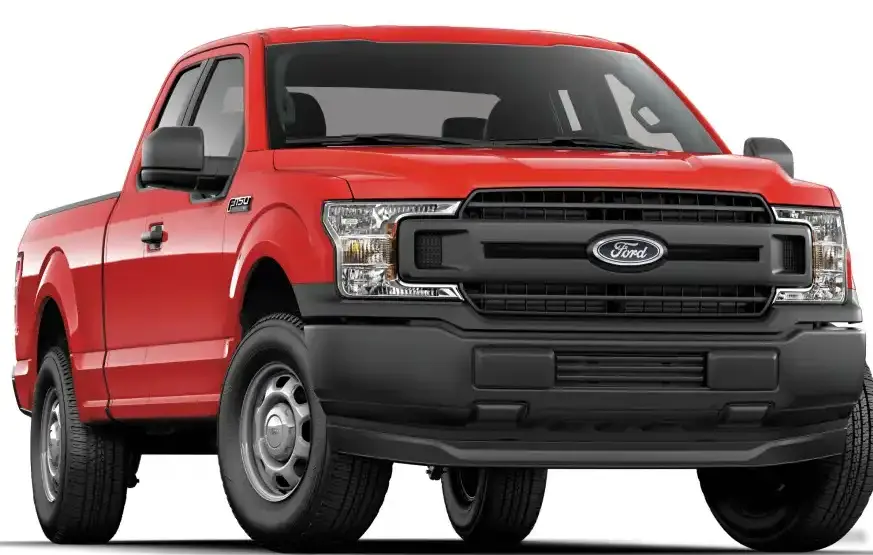
The Ford F-150 is a full-size pickup truck manufactured by Ford Motor Company, and has been the best-selling vehicle in the United States for over four decades. The thirteenth generation, introduced in 2015, received a significant facelift in 2018, bringing updated styling, technology, and powertrain options. This article focuses on the 2018-2020 F-150 SuperCab configuration equipped with the 5.0-liter V8 engine producing 395 horsepower, paired with a ten-speed automatic transmission and a four-wheel-drive system. This particular variant occupied a strong mid-range position within the F-150 lineup, appealing to buyers seeking a balance of capability, comfort, and performance.
Technical Specifications
| Brand | Ford |
| Model | F-Series F-150 |
| Generation | F-Series F-150 XIII SuperCab (facelift 2018) |
| Type (Engine) | 5.0 V8 (395 Hp) 4×4 Automatic |
| Start of production | 2018 |
| End of production | October, 2020 |
| Powertrain Architecture | Internal Combustion engine |
| Body type | Pick-up |
| Seats | 5-6 |
| Doors | 2 |
| Fuel consumption (urban) | 14.7 l/100 km (16 US mpg, 19.2 UK mpg, 6.8 km/l) |
| Fuel consumption (extra urban) | 10.7 l/100 km (22 US mpg, 26.4 UK mpg, 9.3 km/l) |
| Fuel consumption (combined) | 13.1 l/100 km (18 US mpg, 21.6 UK mpg, 7.6 km/l) |
| Fuel Type | Petrol (Gasoline) |
| Power | 395 Hp @ 5750 rpm |
| Power per litre | 79.8 Hp/l |
| Torque | 542 Nm @ 4500 rpm (399.76 lb.-ft. @ 4500 rpm) |
| Engine layout | Front, Longitudinal |
| Engine displacement | 4949 cm3 (302.01 cu. in.) |
| Number of cylinders | 8 |
| Engine configuration | V-engine |
| Number of valves per cylinder | 4 |
| Fuel injection system | Direct injection |
| Engine oil capacity | 8.3 l (8.77 US qt | 7.3 UK qt) |
| Coolant capacity | 13.2 l (13.95 US qt | 11.61 UK qt) |
| Trunk (boot) space (minimum) | 1764 l (62.3 cu. ft.) |
| Fuel tank capacity | 87 l (22.98 US gal | 19.14 UK gal) |
| Length | 5890-6363 mm (231.89 – 250.51 in.) |
| Width | 2029 mm (79.88 in.) |
| Width with mirrors folded | 2121 mm (83.5 in.) |
| Width including mirrors | 2459 mm (96.81 in.) |
| Height | 1956-1961 mm (77.01 – 77.2 in.) |
| Wheelbase | 3683-4158 mm (145 – 163.7 in.) |
| Ride height (ground clearance) | 236-239 mm (9.29 – 9.41 in.) |
| Drive wheel | All wheel drive (4×4) |
| Number of gears and type of gearbox | 10 gears, automatic transmission |
| Front suspension | Independent coil spring |
| Rear suspension | Leaf spring |
| Front brakes | Ventilated discs |
| Rear brakes | Ventilated discs |
| Assisting systems | ABS (Anti-lock braking system) |
| Steering type | Steering rack and pinion |
| Power steering | Electric Steering |
| Tires size | 265/70 R17; 275/65 R18; 275/55 R20 |
| Wheel rims size | 17; 18; 20 |
Powertrain & Engine Architecture
The heart of this F-150 variant is Ford’s naturally aspirated 5.0-liter “Coyote” V8 engine. This engine, internally designated as the fifth generation of the Coyote family, features a 92.2mm bore and 92.0mm stroke. It utilizes a deep-skirted cast iron block with aluminum cylinder heads, four valves per cylinder, and a variable valve timing system on both intake and exhaust camshafts. Direct fuel injection, operating at a maximum pressure of approximately 2,100 psi, contributes to improved fuel efficiency and power delivery. The engine produces 395 horsepower at 5,750 rpm and 400 lb-ft of torque at 4,500 rpm. The ten-speed automatic transmission, co-developed with General Motors, is a key component of this powertrain. Its wide gear ratio spread allows for both strong acceleration and efficient highway cruising. The transmission features a sophisticated control system that adapts to driving conditions and driver input.
Driving Characteristics
The combination of the 5.0L V8 and the ten-speed automatic delivers a compelling driving experience. While not as quick as the turbocharged EcoBoost engines offered in the F-150, this configuration provides ample power for towing, hauling, and everyday driving. The ten-speed transmission keeps the engine in its optimal power band, resulting in responsive acceleration. The 4×4 system provides excellent traction in various conditions, making it suitable for both on-road and off-road use. Compared to the 3.5L EcoBoost, the V8 offers a more traditional truck feel with a linear power delivery. The lower-end torque is readily available, making it easier to control a loaded trailer. Compared to the 2.7L EcoBoost, the 5.0L provides a more robust and confident feel, particularly when subjected to heavy workloads.
Equipment & Trim Levels
The 2018-2020 F-150 SuperCab 5.0L 4×4 was available in several trim levels, including XLT, Lariat, and King Ranch. The XLT trim served as the entry point, offering standard features such as air conditioning, a basic infotainment system with a 4.2-inch display, and cloth upholstery. The Lariat trim added leather upholstery, heated and ventilated front seats, a larger 8-inch touchscreen infotainment system with Apple CarPlay and Android Auto compatibility, and a power-adjustable driver’s seat. The King Ranch trim elevated the luxury with premium leather, unique exterior styling cues, and advanced safety features. Optional extras included a panoramic sunroof, a Bang & Olufsen sound system, and a variety of driver-assistance technologies like adaptive cruise control and lane-keeping assist.
Chassis & Braking
The F-150’s chassis utilizes a high-strength steel frame, contributing to its impressive towing and payload capacity. The front suspension features independent coil springs, while the rear suspension employs leaf springs. This configuration provides a comfortable ride while maintaining robust load-carrying capabilities. Braking duties are handled by ventilated discs on all four wheels, providing ample stopping power. The anti-lock braking system (ABS) is standard. The SuperCab configuration, with its extended cab, offers increased rear passenger space compared to the regular cab models. Stabilizer bars are included to reduce body roll during cornering.
Market Reception & Comparison
The 5.0L V8-equipped F-150 received generally positive reviews. Critics praised its strong performance, comfortable ride, and user-friendly technology. Fuel economy, however, was a common criticism, as the V8 engine consumes more fuel than the turbocharged EcoBoost options. Compared to the 3.5L EcoBoost, the V8 offered a lower price point and a more traditional engine sound, appealing to buyers who preferred a naturally aspirated engine. The 5.0L also proved to be a reliable powertrain, with fewer reported issues compared to some of the more complex EcoBoost engines. Its fuel economy figures of 13.1 l/100 km combined were typical for a full-size V8 pickup truck of that era.
Legacy
The 2018-2020 Ford F-150 5.0L V8 4×4 remains a popular choice in the used car market. Its proven reliability, strong performance, and comfortable ride make it a desirable option for buyers seeking a capable and dependable full-size pickup truck. The Coyote V8 engine has earned a reputation for durability and longevity, and with proper maintenance, these engines can provide many years of reliable service. While newer F-150 models offer more advanced technology and improved fuel efficiency, the 2018-2020 variant represents a sweet spot in terms of value, capability, and proven dependability.