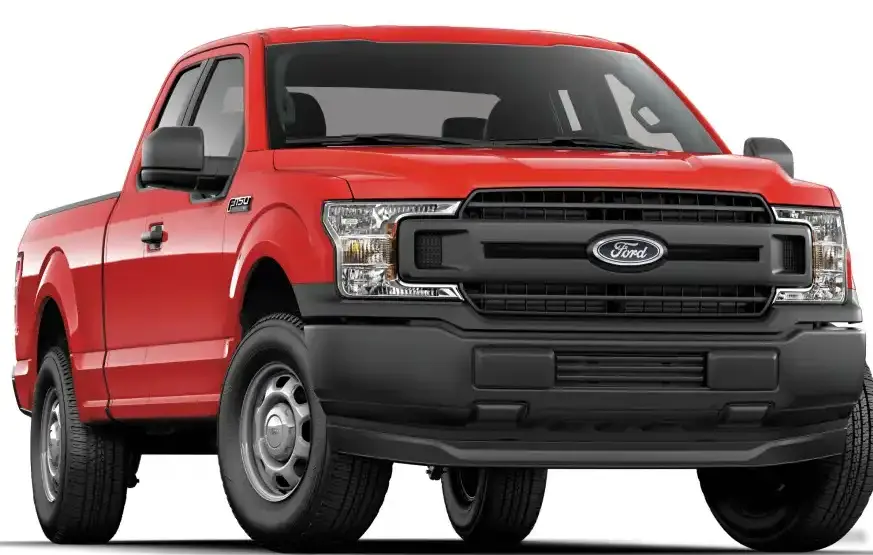
The Ford F-150 Raptor, specifically the SuperCab configuration produced from 2018 to 2020 following a mid-cycle refresh, represents a high-performance, off-road focused variant of the best-selling F-Series pickup truck. This iteration, powered by a 3.5-liter EcoBoost V6 engine producing 450 horsepower and paired with a 10-speed automatic transmission, solidified the Raptor’s position as a benchmark for factory-built performance trucks. It built upon the foundation of the thirteenth generation F-150 (2015-2020), offering a significantly enhanced capability compared to standard F-150 models.
Technical Specifications
| Brand | Ford |
| Model | F-Series F-150 |
| Generation | F-Series F-150 XIII SuperCab (facelift 2018) |
| Type (Engine) | Raptor 3.5 V6 (450 Hp) 4×4 Automatic |
| Start of production | 2018 |
| End of production | October, 2020 |
| Powertrain Architecture | Internal Combustion engine |
| Body type | Pick-up |
| Seats | 5-6 |
| Doors | 2 |
| Fuel consumption (urban) | 15.7 l/100 km (15 US mpg, 18 UK mpg, 6.4 km/l) |
| Fuel consumption (extra urban) | 13.1 l/100 km (18 US mpg, 21.6 UK mpg, 7.6 km/l) |
| Fuel consumption (combined) | 14.7 l/100 km (16 US mpg, 19.2 UK mpg, 6.8 km/l) |
| Fuel Type | Petrol (Gasoline) |
| Weight-to-power ratio | 5.6 kg/Hp, 179.6 Hp/tonne |
| Weight-to-torque ratio | 3.6 kg/Nm, 275.7 Nm/tonne |
| Power | 450 Hp @ 5000 rpm |
| Power per litre | 128.7 Hp/l |
| Torque | 691 Nm @ 3500 rpm (509.66 lb.-ft. @ 3500 rpm) |
| Engine layout | Front, Longitudinal |
| Engine Model/Code | EcoBoost |
| Engine displacement | 3497 cm3 (213.4 cu. in.) |
| Number of cylinders | 6 |
| Engine configuration | V-engine |
| Cylinder Bore | 92.5 mm (3.64 in.) |
| Piston Stroke | 86.6 mm (3.41 in.) |
| Compression ratio | 10:1 |
| Number of valves per cylinder | 4 |
| Fuel injection system | Direct injection |
| Engine aspiration | Twin-Turbo, Intercooler |
| Engine oil capacity | 5.7 l (6.02 US qt | 5.02 UK qt) |
| Coolant capacity | 14.35 l (15.16 US qt | 12.63 UK qt) |
| Kerb Weight | 2506 kg (5524.78 lbs.) |
| Trunk (boot) space – minimum | 1495 l (52.8 cu. ft.) |
| Fuel tank capacity | 87 l (22.98 US gal | 19.14 UK gal) |
| Length | 5588 mm (220 in.) |
| Width | 2192 mm (86.3 in.) |
| Width with mirrors folded | 2192 mm (86.3 in.) |
| Width including mirrors | 2455 mm (96.65 in.) |
| Height | 1994 mm (78.5 in.) |
| Wheelbase | 3409 mm (134.21 in.) |
| Front track | 1877 mm (73.9 in.) |
| Rear (Back) track | 1869 mm (73.58 in.) |
| Front overhang | 942 mm (37.09 in.) |
| Rear overhang | 1237 mm (48.7 in.) |
| Ride height (ground clearance) | 292 mm (11.5 in.) |
| Approach angle | 30.2° |
| Departure angle | 23.1° |
| Ramp-over (brakeover) angle | 22.9° |
| Drive wheel | All wheel drive (4×4) |
| Number of gears and type of gearbox | 10 gears, automatic transmission |
| Front suspension | Independent coil spring |
| Rear suspension | Leaf spring |
| Front brakes | Ventilated discs |
| Rear brakes | Ventilated discs |
| Assisting systems | ABS (Anti-lock braking system) |
| Steering type | Steering rack and pinion |
| Power steering | Electric Steering |
| Tires size | 265/70 R17 |
| Wheel rims size | 17 |
Introduction
The 2018-2020 Ford F-150 Raptor, equipped with the 3.5-liter EcoBoost V6 and 10-speed automatic, represented a significant leap forward in performance and off-road capability for the F-150 line. Positioned as the top-tier performance variant, it catered to enthusiasts seeking a truck capable of both high-speed desert running and challenging terrain. The SuperCab configuration offered increased rear passenger space compared to the standard cab, making it a more practical option for those needing to carry both passengers and gear. This model year saw a facelift to the thirteenth-generation F-150, bringing updated styling and technology to the Raptor.
Powertrain & Engine Architecture
At the heart of the Raptor is Ford’s 3.5-liter EcoBoost V6 engine, internally designated as the third-generation EcoBoost. This engine utilizes direct injection and twin turbochargers to deliver 450 horsepower at 5000 rpm and 691 lb-ft of torque at 3500 rpm. The engine’s architecture features a compacted graphite iron (CGI) cylinder block for increased strength and reduced weight. The 10-speed automatic transmission, co-developed with General Motors, provides a wide gear ratio spread, optimizing both acceleration and fuel efficiency. The transmission’s programming is specifically tuned for the Raptor, offering quick and precise shifts. The engine’s sophisticated engine management system allows for precise control over fuel delivery, ignition timing, and turbocharger boost, maximizing performance and efficiency.
Driving Characteristics
The 2018-2020 F-150 Raptor with the 3.5L EcoBoost and 10-speed automatic delivers a markedly different driving experience compared to lower-trim F-150s. The wide gear ratios of the transmission allow for strong acceleration from a standstill, while also providing comfortable cruising at highway speeds. The turbochargers provide minimal turbo lag, delivering a responsive and linear power delivery. The Raptor’s off-road prowess is enhanced by its advanced four-wheel-drive system, featuring selectable drive modes tailored for various terrains, including sand, snow, and rock. While the Raptor isn’t known for exceptional fuel economy, the 10-speed transmission helps mitigate some of the fuel consumption associated with the powerful V6 engine.
Equipment & Trim Levels
The Raptor came standard with a comprehensive suite of features designed for both comfort and capability. Interior appointments included unique cloth or leather upholstery with distinctive Raptor badging, aluminum pedal covers, and a premium sound system. Standard technology features included Ford’s SYNC 3 infotainment system with an 8-inch touchscreen, Apple CarPlay and Android Auto compatibility, and a navigation system. Optional extras included a panoramic sunroof, heated and ventilated front seats, and a suite of driver-assistance technologies, such as adaptive cruise control and lane-keeping assist.
Chassis & Braking
The Raptor’s chassis is significantly upgraded compared to standard F-150s. It features a high-strength steel frame, upgraded suspension components, and FOX Racing shocks. The front suspension utilizes an independent coil-spring setup, while the rear suspension employs a leaf-spring design. The Raptor’s wider track and increased ride height contribute to its enhanced stability and off-road capability. Braking duties are handled by ventilated discs at all four corners, providing ample stopping power. The anti-lock braking system (ABS) is standard, enhancing safety and control in various driving conditions.
Market Reception & Comparison
The 2018-2020 F-150 Raptor was widely praised by automotive critics for its exceptional performance, off-road capability, and aggressive styling. Compared to other F-150 trims, the Raptor offered a significantly more focused and capable driving experience. While the fuel economy was a common criticism, reviewers acknowledged that the Raptor’s performance justified the trade-off. Compared to the standard F-150 models with smaller engines, the Raptor offered a substantial increase in power and torque, making it a compelling choice for those seeking a high-performance pickup truck.
Legacy
The 2018-2020 Ford F-150 Raptor has established itself as a highly desirable and collectible vehicle in the used car market. The 3.5-liter EcoBoost V6 and 10-speed automatic transmission have proven to be relatively reliable, although regular maintenance is crucial. The Raptor’s robust construction and durable components contribute to its long-term durability. As a result, well-maintained examples command a premium price on the used market, reflecting the Raptor’s enduring appeal and reputation as a benchmark for performance trucks.