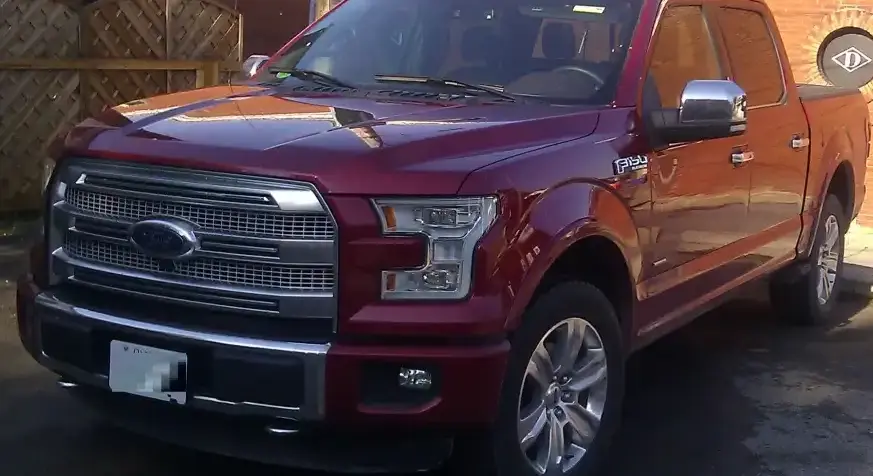
The Ford F-150 SuperCrew 2.7L V6 4×4 Automatic, produced from 2015 to 2017, represents a significant iteration of Ford’s long-running and best-selling F-Series pickup truck. This variant falls within the thirteenth generation (F-150 XIII) of the F-Series, a generation notable for its extensive use of high-strength steel and aluminum alloy body panels, contributing to a substantial weight reduction compared to its predecessor. The SuperCrew configuration designates a four-door, crew cab body style, offering increased passenger space and comfort. Positioned as a mid-range offering, the 2.7L EcoBoost engine and automatic transmission combination aimed to balance capability, fuel efficiency, and affordability within the expansive F-150 lineup.
Technical Specifications
| Brand | Ford |
| Model | F-Series F-100/F-150 |
| Generation | F-Series F-150 XIII SuperCrew |
| Type (Engine) | 2.7 V6 (325 Hp) 4×4 Automatic |
| Start of production | 2015 |
| End of production | 2017 |
| Powertrain Architecture | Internal Combustion engine |
| Body type | Pick-up |
| Seats | 5-6 |
| Doors | 4 |
| Fuel consumption (urban) | 13.1 l/100 km (18 US mpg, 21.6 UK mpg, 7.6 km/l) |
| Fuel consumption (extra urban) | 10.2 l/100 km (23.1 US mpg, 27.7 UK mpg, 9.8 km/l) |
| Fuel consumption (combined) | 11.8 l/100 km (19.9 US mpg, 23.9 UK mpg, 8.5 km/l) |
| Fuel Type | Petrol (Gasoline) |
| Weight-to-power ratio | 6.7 kg/Hp, 149.8 Hp/tonne |
| Weight-to-torque ratio | 4.3 kg/Nm, 234.2 Nm/tonne |
| Power | 325 Hp @ 5750 rpm |
| Power per litre | 121 Hp/l |
| Torque | 508 Nm @ 3000 rpm (374.68 lb.-ft. @ 3000 rpm) |
| Engine layout | Front, Longitudinal |
| Engine displacement | 2687 cm3 (163.97 cu. in.) |
| Number of cylinders | 6 |
| Engine configuration | V-engine |
| Cylinder Bore | 83 mm (3.27 in.) |
| Piston Stroke | 83 mm (3.27 in.) |
| Compression ratio | 10:1 |
| Number of valves per cylinder | 4 |
| Fuel injection system | Direct injection |
| Engine aspiration | Twin-Turbo, Intercooler |
| Engine oil capacity | 5.7 l (6.02 US qt | 5.02 UK qt) |
| Coolant | 15.5 l (16.38 US qt | 13.64 UK qt) |
| Kerb Weight | 2169 kg (4781.83 lbs.) |
| Trunk (boot) space – minimum | 1495 l (52.8 cu. ft.) |
| Trunk (boot) space – maximum | 2200 l (77.69 cu. ft.) |
| Fuel tank capacity | 87 l (22.98 US gal | 19.14 UK gal) |
| Length | 5890-6190 mm (231.89 – 243.7 in.) |
| Width | 2029 mm (79.88 in.) |
| Width with mirrors folded | 2121 mm (83.5 in.) |
| Width including mirrors | 2459 mm (96.81 in.) |
| Height | 1961-1963 mm (77.2 – 77.28 in.) |
| Wheelbase | 3683-3983 mm (145 – 156.81 in.) |
| Front track | 1717 mm (67.6 in.) |
| Rear (Back) track | 1717 mm (67.6 in.) |
| Front overhang | 960 mm (37.8 in.) |
| Rear overhang | 1247 mm (49.09 in.) |
| Ride height (ground clearance) | 236-239 mm (9.29 – 9.41 in.) |
| Approach angle | 25.5° |
| Departure angle | 26.0-26.4° |
| Ramp-over (brakeover) angle | 19.7-21.0° |
| Drive wheel | All wheel drive (4×4) |
| Number of gears and type of gearbox | 6 gears, automatic transmission |
| Front suspension | Double wishbone |
| Rear suspension | Leaf spring |
| Front brakes | Ventilated discs |
| Rear brakes | Ventilated discs |
| Assisting systems | ABS (Anti-lock braking system) |
| Steering type | Steering rack and pinion |
| Power steering | Electric Steering |
| Tires size | 265/70 R17 |
| Wheel rims size | 17 |
Powertrain & Engine Architecture
The heart of this F-150 variant is the 2.7-liter EcoBoost V6 engine, internally designated as the 3.5L EcoBoost. This engine is a 24-valve, dual overhead camshaft (DOHC) design featuring direct fuel injection and twin turbochargers. The use of direct injection allows for precise fuel delivery, optimizing combustion efficiency and power output. The twin-turbo setup, with a single turbocharger per cylinder bank, minimizes turbo lag and provides a broad, flat torque curve. The engine utilizes a cast iron block with aluminum cylinder heads, balancing durability with weight savings. The 6-speed automatic transmission, a Ford-developed unit, is specifically tuned to complement the engine’s characteristics, providing smooth and responsive shifting. This transmission features a wide gear ratio spread, optimizing both acceleration and fuel economy.
Driving Characteristics
The 2.7L EcoBoost F-150 SuperCrew 4×4 delivers a noticeably different driving experience compared to the larger displacement V8 options available in the lineup. While lacking the raw, immediate power of the 5.0L or 6.2L engines, the 2.7L provides ample torque for everyday driving and towing. The twin-turbochargers contribute to a responsive feel, with peak torque available from a relatively low 3000 rpm. The automatic transmission shifts smoothly and efficiently, although it may occasionally hunt for the optimal gear when under heavy load. Compared to manual transmission equipped F-150s, the automatic offers greater convenience, particularly in urban environments. The 4×4 system provides enhanced traction in challenging conditions, making it suitable for both on-road and off-road use.
Equipment & Trim Levels
The 2.7L EcoBoost SuperCrew 4×4 was typically offered in the XLT and Lariat trim levels. The XLT trim included standard features such as air conditioning, power windows and locks, a basic audio system, and steel wheels. The Lariat trim added more luxurious appointments, including leather upholstery, heated and ventilated front seats, a premium audio system, and alloy wheels. Optional extras included a navigation system, a sunroof, and various driver-assistance technologies. The SuperCrew configuration provided ample space for passengers in both the front and rear seats, making it a comfortable choice for families or those who frequently transport passengers.
Chassis & Braking
The F-150’s chassis features a fully boxed frame constructed from high-strength steel, providing a robust and rigid foundation. The front suspension utilizes an independent double wishbone design, while the rear suspension employs a leaf spring setup. This combination offers a balance of ride comfort and load-carrying capacity. Braking duties are handled by ventilated disc brakes on all four wheels, providing ample stopping power. An Anti-lock Braking System (ABS) is standard, enhancing safety and control during emergency braking situations. The 4×4 system utilizes an electronic shift-on-the-fly transfer case, allowing the driver to easily switch between two-wheel drive and four-wheel drive modes.
Market Reception & Comparison
The 2.7L EcoBoost F-150 was generally well-received by critics and consumers alike. It was praised for its combination of fuel efficiency, capability, and affordability. Compared to the V8-powered F-150s, the 2.7L offered comparable towing capacity for many applications, while delivering significantly better fuel economy. However, some critics noted that the 2.7L lacked the visceral appeal and outright power of the larger engines. In terms of reliability, the 2.7L EcoBoost engine has proven to be generally reliable, although some owners have reported issues with the turbochargers and fuel injectors.
Legacy
The 2.7L EcoBoost engine has become a mainstay in the Ford F-150 lineup, and continues to be offered in current models. Its success has demonstrated the viability of smaller displacement, turbocharged engines in full-size pickup trucks. On the used car market, the 2015-2017 F-150 SuperCrew 2.7L 4×4 Automatic represents a compelling value proposition, offering a blend of capability, comfort, and fuel efficiency at a reasonable price point. Properly maintained examples are expected to provide many years of reliable service, making them a popular choice among truck buyers.